I hope that folks in NYC will join me for the MULTIFAITH POETRY FESTIVAL. I'm honored to host:
KATIE FORD, winner of a 2003 Academy of American Poets Prize, is the author of Deposition, published by Graywolf Press. Ford holds a Masters of Divinity from Harvard and her poems have appeared in Ploughshares, The Partisan Review,The Seneca Review, Poets & Writers and other journals. She teaches at Loyola University in New Orleans, and is associate poetry editor of The New Orleans Review.
KAZIM ALI’S poems and essays have appeared in such journals as The Iowa Review and Catamaran, and in the anthologies Writing the Lines of Our Hands and Risen From the East. A graduate of the NYU Creative Writing Program, he is the author of a novel,Quinn’s Passage. His most recent book, The Far Mosque, was published October, 2005.
EVE GRUBIN’S poems have appeared inThe American Poetry Review, Barrow Street, LIT, and The New Republic. She is the poetry editor at Lyric, she teaches at The New School University and the Drisha Institute in New York City, and she is the programs director at the Poetry Society of America. Her book, Morning Prayer, will be published in December, 2005.
21.11.05
Here's a Herald News report on the Masjid Beit Ul-Wahid event
Fostering tolerance goal of multifaith discussion
Monday, November 21, 2005 By TOM MEAGHER
HERALD NEWS
FAIRFIELD - As many North Jerseyans sat rapt in front of televisions cheering on football teams Sunday, nearly 100 others gathered to discuss a different kind of rapture.
Men and women of different religions sat in the ballroom of the Wellesley Inn to listen to spiritual leaders from seven faiths discuss their perspectives on salvation. The purpose, according to the conference's organizer, Aamir Khokhar, was to promote social harmony and religious tolerance at a time of political and spiritual turmoil.
"No religion preaches hate and violence. It's important for people of different faiths to come together," Khokhar told the audience.
Khokhar belongs to the Clifton chapter of the Worldwide Ahmadiyya Muslim Association. The movement is a denomination of Islam founded in India in the late 1800s and devoted to peace, brotherhood and devotion to Allah. Each year, the local chapter hosts the interfaith conference to draw people together.
Vinay Vakani of the Jain Society of New Jersey in Essex Falls began the discussion by comparing the different religions to the old parable of a group of blind men inspecting an elephant.
"Each one of us sees things from our own point of view. Consequently, we acquire a view that is only partially correct," Vakani said.
He stressed that the Jain religion, which was founded in India in the sixth century B.C., is based on non-violence and acceptance of opposing viewpoints.
The Rev. Joseph Doyle,pastor of St. Anne's Roman Catholic Church in Fair Lawn, said forgiveness is necessary for salvation and in society. He referred to the sectarian violence that has long plagued Northern Ireland as an example of humankind's failure to forgive.
"We all think we have the right to punish the wrongdoer. When we do it, we think God is on our side," Doyle said. "We can no longer victimize anyone, because the victim is the face of God."
As children squirmed in their seats and thumb-wrestled one another, the adults listened attentively for more than two hours as each religious leader shared his insights into faith and salvation.
Rabbi Daniel Brenner, director of the Center for Multifaith Education at Auburn Theological Seminary in New York, said that in Judaism, the path to salvation rests in the present world and by helping the impoverished and those in need.
"The only way to do it is to dedicate ourselves to God," Brenner said. "The only way to dedicate ourselves to God is to dedicate ourselves to the work of fixing the world."
After the presentations, Larry Walpert, a Nichiren Buddhist from Leonia, said he was pleased with the messages he heard from each religion - messages of inclusion, respect and love.
"If this discussion today is any kind of reflection of society on a larger level, we are moving in the right direction, and I am pleased," Walpert said.
Monday, November 21, 2005 By TOM MEAGHER
HERALD NEWS
FAIRFIELD - As many North Jerseyans sat rapt in front of televisions cheering on football teams Sunday, nearly 100 others gathered to discuss a different kind of rapture.
Men and women of different religions sat in the ballroom of the Wellesley Inn to listen to spiritual leaders from seven faiths discuss their perspectives on salvation. The purpose, according to the conference's organizer, Aamir Khokhar, was to promote social harmony and religious tolerance at a time of political and spiritual turmoil.
"No religion preaches hate and violence. It's important for people of different faiths to come together," Khokhar told the audience.
Khokhar belongs to the Clifton chapter of the Worldwide Ahmadiyya Muslim Association. The movement is a denomination of Islam founded in India in the late 1800s and devoted to peace, brotherhood and devotion to Allah. Each year, the local chapter hosts the interfaith conference to draw people together.
Vinay Vakani of the Jain Society of New Jersey in Essex Falls began the discussion by comparing the different religions to the old parable of a group of blind men inspecting an elephant.
"Each one of us sees things from our own point of view. Consequently, we acquire a view that is only partially correct," Vakani said.
He stressed that the Jain religion, which was founded in India in the sixth century B.C., is based on non-violence and acceptance of opposing viewpoints.
The Rev. Joseph Doyle,pastor of St. Anne's Roman Catholic Church in Fair Lawn, said forgiveness is necessary for salvation and in society. He referred to the sectarian violence that has long plagued Northern Ireland as an example of humankind's failure to forgive.
"We all think we have the right to punish the wrongdoer. When we do it, we think God is on our side," Doyle said. "We can no longer victimize anyone, because the victim is the face of God."
As children squirmed in their seats and thumb-wrestled one another, the adults listened attentively for more than two hours as each religious leader shared his insights into faith and salvation.
Rabbi Daniel Brenner, director of the Center for Multifaith Education at Auburn Theological Seminary in New York, said that in Judaism, the path to salvation rests in the present world and by helping the impoverished and those in need.
"The only way to do it is to dedicate ourselves to God," Brenner said. "The only way to dedicate ourselves to God is to dedicate ourselves to the work of fixing the world."
After the presentations, Larry Walpert, a Nichiren Buddhist from Leonia, said he was pleased with the messages he heard from each religion - messages of inclusion, respect and love.
"If this discussion today is any kind of reflection of society on a larger level, we are moving in the right direction, and I am pleased," Walpert said.


18.11.05
photo essay/poetry in progress

I was inspired by the film Born into Brothels. In the film, street kids were given cameras to photograph their everyday wanderings. The next day I grabbed my camera and started to photograph my daily trek. Then I added a few words. Here is what I have so far.
10.11.05
Happy 40th Nostra Aetate!
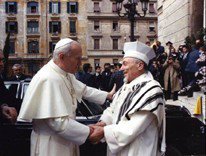
Last night I had the opportunity to host Sister Mary Boys, Father James Loughran, Dr. Alan Mittleman, and Rabbi Ron Kronish for a discussion of Nostra Aetate - the groundbreaking 1965 Vatican II document that recognized religious traditions outside of the Catholic Church. While Boys and Kronish spoke of the experiences in inter-religious dialogue that Nostra Aetate spawned, Mittleman and Loughran both pointed to ways in which Catholics and Jews are growing farther apart. Loughran hinted that the charge against Jews of deicide that Vatican II hoped to erase has subtley been replaced in certain conservative Catholic circles by a charge of 'abortionist' -- killing baby Jesus rather than thirty-something year old Jesus. He also spoke of emerging anti-zionism in the Catholic Church. Mittleman pointed to the ways in which Catholics continue to push for public ritual in America - creches, ten commandments, etc and Jews attempt to squash these rituals. "The New Deal once united us" Mittleman said "now Jews, Latinos, and Blacks are the only ones hanging onto Roosevelt's vision."
Among the crowd, which was about half seminary students from Princeton, Union, Drew, and JTS, was Luna Kaufman- a concentration camp survivor who was one of the 100 survivors invited by John Paul II to visit the Vatican in 1995. She approached me at the end of the evening - "This was an honest dialogue," she said, "and it is so good to see that the next generation cares."
4.11.05
Der Punjabi Rebbe -- Masjid Bait-ul Wahid Invite

I just recieved a wonderful invitation from the Ahmadiyya Islamic community (aPunjabi branch of Islam) to speak at an inter-faith conference on Salvation. While inter-faith conferences are nothing new - it is still very rare to see a Muslim community in America serve as the cheif organizers. For those who are interested, the event is at the Wellesley Inn, 38 Two Bridges Road Fairfield NJ on Sunday November 20th 2pm-5:30 pm. Vegetarian refreshments will be served!
21.10.05
Kuala Lampur
My piece on Heschel and the Dalai Lama was just picked up by The Buddhist Channel -- a Malaysian web-zine. It runs with a lovely photo of His Holiness.
20.10.05
Ushpizin

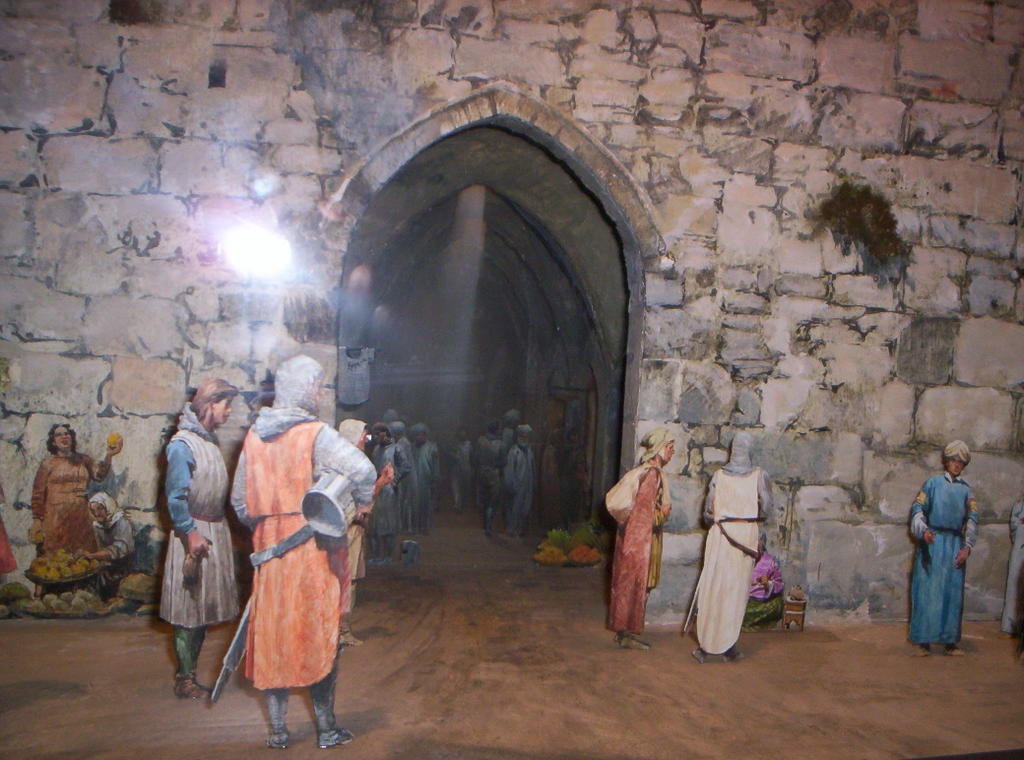
Delivered by Rabbi Daniel S. Brenner at Union Theological Seminary, Noon Chapel, October 20th, 2005.
The Zohar, the foremost book of Jewish mysticism, explains that the Sukkah generates such an intense concentration of spiritual energy, that the divine presence manifests itself in this fragile earthbound tent. During Sukkot we are told that the souls of the seven ancestral shepherds of Israel leave Gan Eden to partake in the divine light of the earthly festival (Zohar - Emor 103a). These transcendent guests are known as Ushpizin, the Aramaic word meaning "guests." And we welcome
Abraham who represents love and kindness
Isaac who represents restraint and personal strength
Jacob who represents beauty and truth
Moses who represents the power of Torah
Aaron who represents empathy and receptivity to divine splendor
Joseph who represents holiness and the spiritual foundation
David who represents the establishment of the kingdom of heaven on earth.
Some Sephardic Jews even have the custom of setting aside an ornately-decorated chair covered with fine cloth and holy books for these men, at a Jewish meal books belong on the table.
I should also note that since the 16th century women have also been invited for Ushpizin; According to the kabbalist Menachem Azariah, known as the Ramah of Fano, the seven female figures to be invited are: Sara, Miriam, Debora, Hanna, Abigail, Hulda and Esther.
For all of us Jews, Christians and Muslims who are spiritual descendents of Sarah, Hagar, and Abraham and those who came after them, Sukkot is a time to welcome in the spirit of these ancestors. And as a Jew, I have been taught to look on these seven shepherds not as simply spiritual forbearers – but as my actual ancestors.
But what do ancestors mean to us today?
I raise this question because I believe that there is a great tension in our progressive world between identity politics with its notion of honoring indigenous peoples – people connected to a place and a land, and on some deep level to the bones of their ancestors that lie under that land – and the ideas born from international socialism that to create peace the world most go beyond borders, nationalities, tribes, and ultimately ancestry.
Does it matter if you had ancestors in a certain place? Does it grant you any claim to that place? Is it blood that links you? Color? Genes? Why does that matter? Does anyone have claim to ancestral land? And conversely - Is the erasing of ancestry simply another way in which the homogenizing dominant powers lay claim to more territorial control?
Seventeen years ago, as an idealistic college student, I was arrested in Tonopah Nevada at a nuclear test site as part of a protest I engaged in with the chief of the Western Shoshone nation. After the arrest, I returned to the campsite where I was told that there would be two drumming circles –one for members of the tribe and one for ‘friends’ of the tribe. Since I come from a rather tribal people, this did not phase me – but my friend who I had traveled with was enraged – On a hike we took the next morning he said “I come all the way out here in the middle of the desert and I get myself arrested for them and now I’m told that I have to go play drums with the White people?” He was seriously pained. That night at dinner, he approached one of the tribal elders with his broken spirit. The elder told of the trail of tears and of the chain of tradition that was passed down to him from his grandfather – and he said that on this weekend he was now passing it down to his son. My friend, and I, understood.
Another experience:
A gay couple in our community is adopting a girl from a Chinese orphanage– it was a very complicated adoption -now they want to include her in the family, to raise her as a Jewish girl and send her to Hebrew School and teach her the aleph bet. During Shabbat services we call them up to the Torah and they weep openly when she is given her Hebrew name. Her blood and ancestry have been put aside to become a daughter of Israel – and we welcome a new family member in the midst.
There is a place in my heart for both stories. Stories in which one is faithful to ancestors and stories in which someone’s ancestry is altered by the love ties of a new family.
In Judaism, much remains tribal – and I felt very much like the Shoshone chief when I circumcised my sons. But the Talmud counters with numerous examples that teach that the relationship between student and teacher is more important than son and father. And later on traditions of conversion broke down the old categories of Jew and Gentile. In the end, love, and the expansion of the family, counters blood ties.
Maybe I’m wrong, but from my outsiders perspective it seems that Christianity has a similar tension. On the one hand, the Christian scriptures go to great length to trace Jesus’ ancestry – to trace him in the line that extends back to David, our last Ushpizin guest. And yet at times Jesus himself taught that ancestry was irrelevant – Jew or Greek – he saw all people as born of Adam and Eve – a deeply humanist teaching.
I am one of those people who is very wary of saying that we live in an unprecedented time – the Torah has it right - there is nothing new under the sun – but we do live in the first era of human existence when the biological child of one couple can be birthed into the world by any woman on the planet capable of childbearing. In the last decade, scientific advancements have trumped the ancestral cycle. And at the same time, science is making clear that genetic history – inheriting our ancestors genes – makes a huge contribution to our levels of depression, susceptibility to addiction and disease, and general abilities. Ancestry matters and does not matter more than it ever did.
So is there room for ushpizin - this ritual of recalling biblical ancestors? Or must it be discarded as too exclusivist and tribal or be universalized beyond the Abraham and Sarahs to include all peoples?
Allow me one excursion into theory – One way out of questions of blood and history is by saying that both collective narratives - tribal and universal - are impossible. There is no one definitive story of Morningside Heights, there are stories of Morningside Heights. There is no white people or black people or even man or woman. Post-Modernity privileges the personal and the biographical and relegates the tribal, universal and gendered to constructs – they are reduced to semiotic metaphors or reflections of the inner psyche.
In ancient times, the exact opposite was true – when we were in need of healing, we called on the merit of an ancestor who bravely faced illness to heal us – when we were powerless, we recalled their triumphs, when we were downtrodden, we remembered their joy. Our lives were simply one generation in a great chain that stretched back to the beginning of the tribe.
As moderns, we begin our adult lives by breaking away from ancestors – critiquing the patriarchy, distancing ourselves from mistakes made by earlier generations – we are to be self-made and self-reliant. And while there is much healing in the freedom that we have been granted with individualization, there is a loss – an empty space where ancestors once spoke to us – and urged us to be righteous, patient, brave.
When I became a parent seven years ago, and I bought life insurance - I began to think that some day, God-willing, I will inevitably be an ancestor. And it crossed my mind that I wanted my sons and daughter to tell the story of my particular family– to say that their ancestors were exiled from the Holy Land, fled to Iraq, to Spain, to Holland, and to Poland, to New York City, and to wherever it is that I’ll rest my bones. And even though I want them to reject the negative traits they inherit, I want them to be able to call on the merit of their great grandmother, and be sustained by her inner strength to overcome poverty and disease. I want them to know her story about getting a college scholarship but not being able to afford the bus fare to school. I want them to feel a sense of obligation to their ancestors.
For me, welcoming Biblical ancestors into the sukkah this week is a way to acknowledge the chain that I have descended from and to draw on the spiritual qualities they possessed. It is a way to say that I am not self-made – but rather a product of many generations who have asked me to carry on their story. Yet like the sukkahs open walls and roof, I am reminded that there is permeability even in connections to ancestry.
And so I end with a story.
Rabbi Pinchas of Koretz loved books – he read everything available and at a young age was considered a great master. After he got married, people began to stop by his tiny shack and interrupt his Torah study with questions – a line formed out his door. He was overwhelmed – how could he turn them away? Yet they were ruining his spiritual life. He turned to his wife who gave him raw onions to eat. But the people did not care – they wanted answers. Then he turned to God –and he said “Please – I do not want people to be attracted to me!” The next day he walked in the streets to the market and everyone averted their eyes. Noone came to his door. He could not have been happier – he studied til late in the night.
Months passed, and soon it was sukkot. Pinchas did not have the tools to build a sukkah. He had to send his wife to borrow some- and she returned and they built a modest hut.
They began their ushpizin and Abraham appeared at the tent’s opening. “Come in!” Rabbi Pinchas motioned to the spirit. Abraham did not come in. “Please, come in!’ he said. Abraham did not budge. “What is it?” Pinchas says. “There are no guests at this table. How can the spirit of loving-kindness enter into such a sukkah?”
Pinchas was distraught. He called out to God to erase his former request and he ran to the market to ask if any of the beggars needed a meal.
The story’s parable is compelling –
There can be no encounter with ancestors unless there is a genuine attitude in this life that welcomes in those who are our neighbors – even those who annoy us. The merit of the ancestors only comes when we enact the principle of hospitality and openness in our lives here and now.
Let this sukkah be a symbol for our hearts this season, open to the sky, and open to the stranger who might walk through the door. May we rush to provide an empty seat for the ushpizin.
11.10.05
Thanks for the Feedback
It is good to know that the scribbles I am making on this laptop are reaching screens far and wide. First off, I got a very nice email from Ambassador Reda Mansour, Bureau For Jewish & Inter-Religious Affairs, Israel Ministry Of Foreign Affairs - who read my Dalai Lama piece. He's doing some incredibly challenging work -- reaching out to Muslim communities in Europe. He also happens to be a poet. Then I got a Google Alert that someone named yoyenta had posted my Yom Kippur poem on her blog. Thanks for the feedback!
6.10.05
Heschel and the Dalai Lama
My latest article appears in today's Jewish Week
(10/07/2005)
The Dalai Lama Traces Heschel’s Footsteps
Daniel S. Brenner
As Rabbi Levi Weiman-Kelman, the rabbi who leads the Kol Haneshama community in Jerusalem, spoke from the lectern, I watched Tenzin Gyatso, the 14th Dalai Lama, as he clasped his hands in meditation and cracked a quiet smile. Sitting a few pews back in the interfaith service at the Upper West Side’s Riverside Church, I could see how Swami Agnivesh ties his turban, how Geshe Lhundup Sopa counts his prayer beads, and how Ephraim Isaac plays with his tzitzit. I could even see that the young Muslim muezzin who called us all to prayer was wearing blue jeans under his robe. “The first time I came to Riverside Church was to hear Rabbi Abraham Joshua Heschel,” Rabbi Weiman-Kelman told the worshipers. “It was during the Vietnam War. It was a very trying time. He came because he believed that peace was possible.” Then the deep-voiced rabbi led the crowd of nearly 2,000 worshipers in singing the Shlomo Carlebach version of “Yehi Shalom B’cheylaych” based on Psalm 122. (Or I should say, led a few of the crowd in an earnest but failed attempt to sing the song. I love listening to non-Hebrew speakers pronouncing ‘ech’.) A few minutes later, the Dalai Lama rose from his seat, clasped his hands, turned his meditative focus to the large golden cross that adorns Riverside’s stage and offered a slight bow. Immediately I thought to myself: Am I seeing the world’s most prominent non-theist venerate the cross? The Dalai Lama then walked to the lectern and his translator placed a glass of water before him. He clasped his hands and bowed to the glass of water. The best part of the Dalai Lama’s speech, which began in Tibetan and then spun into an occasionally undecipherable English, was when he spoke about war. He pointed to the sky. “It is not from the sky,” he said. He pointed to the plants that decorated the lectern — “It is not from the plants.” He pointed to his own heart — “It is from us.” The Dalai Lama then spoke of the spiritual awakening that needs to happen — the consciousness that we are all connected, and that our religious traditions all have teachings within them that can facilitate this idea of our interconnectedness and the compassion for all beings that follows. In that same spot back in 1967, Heschel had also spoken about a spiritual awakening. His words during the Vietnam era focused the direction away from the sky and into the heart. “On what basis do we people of different religious commitments meet one another?” Heschel taught. “First and foremost we meet as human beings who have so much in common: a heart, a face, a voice, the presence of a soul, fears, hope, the ability to trust, a capacity for compassion and understanding, the kinship of being human. My first task in every encounter is to comprehend the personhood of the human being I face, to sense the kinship of being human, solidarity of being.” Sitting in that pew, watching an exiled Tibetan monk captivate the crowd, it occurred to me that Heschel’s spiritual successor at Riverside is the Dalai Lama. In other words, among Christians who yearn for a world without Vietnams and Iraqs, the voice of the religious other is now embodied in a new refugee. The Dalai Lama is the new Heschel. While one might be concerned that Buddhists rather than Jews now occupy a place of honor in such circles, I’d argue that we actually have a great deal to gain from the ways in which the historic Jewish-Christian alliance has branched out to include new religious traditions. As Rabbi Heschel wrote, “no religion is an island” — a teaching that is even more essential at a time when nations are reasserting their island identities. As often happens in interreligious gatherings, the most transcendent, spiritually charged moments come unexpectedly. After the Dalai Lama spoke, a Thai Buddhist nun, a frail woman with a quiet voice and earthen-colored robes, told a story of a dream her mother had. “Two armies were at war,” she said, “and my mother imagined that she took these men in her arms and nursed them both. Before my mother died two years ago, she asked me to fulfill her dream. But I cannot do it alone.” We have come a long way from the night when Heschel and King spoke together in Riverside Church. But in many ways, the world’s needs for moral grandeur and spiritual audacity are even greater. Sitting at Riverside, clapping my hands as gospel singer Kim Harris sang “Shalom, Salaam, Peace,” I watched the Dalai Lama gently sway to the music, and felt that perhaps the dreams of these visionaries are still capable of being fulfilled. n Rabbi Daniel S. Brenner directs the Center for Multifaith Education at Auburn Theological Seminary in New York City.
Special To The Jewish Week
(10/07/2005)
The Dalai Lama Traces Heschel’s Footsteps
Daniel S. Brenner
As Rabbi Levi Weiman-Kelman, the rabbi who leads the Kol Haneshama community in Jerusalem, spoke from the lectern, I watched Tenzin Gyatso, the 14th Dalai Lama, as he clasped his hands in meditation and cracked a quiet smile. Sitting a few pews back in the interfaith service at the Upper West Side’s Riverside Church, I could see how Swami Agnivesh ties his turban, how Geshe Lhundup Sopa counts his prayer beads, and how Ephraim Isaac plays with his tzitzit. I could even see that the young Muslim muezzin who called us all to prayer was wearing blue jeans under his robe. “The first time I came to Riverside Church was to hear Rabbi Abraham Joshua Heschel,” Rabbi Weiman-Kelman told the worshipers. “It was during the Vietnam War. It was a very trying time. He came because he believed that peace was possible.” Then the deep-voiced rabbi led the crowd of nearly 2,000 worshipers in singing the Shlomo Carlebach version of “Yehi Shalom B’cheylaych” based on Psalm 122. (Or I should say, led a few of the crowd in an earnest but failed attempt to sing the song. I love listening to non-Hebrew speakers pronouncing ‘ech’.) A few minutes later, the Dalai Lama rose from his seat, clasped his hands, turned his meditative focus to the large golden cross that adorns Riverside’s stage and offered a slight bow. Immediately I thought to myself: Am I seeing the world’s most prominent non-theist venerate the cross? The Dalai Lama then walked to the lectern and his translator placed a glass of water before him. He clasped his hands and bowed to the glass of water. The best part of the Dalai Lama’s speech, which began in Tibetan and then spun into an occasionally undecipherable English, was when he spoke about war. He pointed to the sky. “It is not from the sky,” he said. He pointed to the plants that decorated the lectern — “It is not from the plants.” He pointed to his own heart — “It is from us.” The Dalai Lama then spoke of the spiritual awakening that needs to happen — the consciousness that we are all connected, and that our religious traditions all have teachings within them that can facilitate this idea of our interconnectedness and the compassion for all beings that follows. In that same spot back in 1967, Heschel had also spoken about a spiritual awakening. His words during the Vietnam era focused the direction away from the sky and into the heart. “On what basis do we people of different religious commitments meet one another?” Heschel taught. “First and foremost we meet as human beings who have so much in common: a heart, a face, a voice, the presence of a soul, fears, hope, the ability to trust, a capacity for compassion and understanding, the kinship of being human. My first task in every encounter is to comprehend the personhood of the human being I face, to sense the kinship of being human, solidarity of being.” Sitting in that pew, watching an exiled Tibetan monk captivate the crowd, it occurred to me that Heschel’s spiritual successor at Riverside is the Dalai Lama. In other words, among Christians who yearn for a world without Vietnams and Iraqs, the voice of the religious other is now embodied in a new refugee. The Dalai Lama is the new Heschel. While one might be concerned that Buddhists rather than Jews now occupy a place of honor in such circles, I’d argue that we actually have a great deal to gain from the ways in which the historic Jewish-Christian alliance has branched out to include new religious traditions. As Rabbi Heschel wrote, “no religion is an island” — a teaching that is even more essential at a time when nations are reasserting their island identities. As often happens in interreligious gatherings, the most transcendent, spiritually charged moments come unexpectedly. After the Dalai Lama spoke, a Thai Buddhist nun, a frail woman with a quiet voice and earthen-colored robes, told a story of a dream her mother had. “Two armies were at war,” she said, “and my mother imagined that she took these men in her arms and nursed them both. Before my mother died two years ago, she asked me to fulfill her dream. But I cannot do it alone.” We have come a long way from the night when Heschel and King spoke together in Riverside Church. But in many ways, the world’s needs for moral grandeur and spiritual audacity are even greater. Sitting at Riverside, clapping my hands as gospel singer Kim Harris sang “Shalom, Salaam, Peace,” I watched the Dalai Lama gently sway to the music, and felt that perhaps the dreams of these visionaries are still capable of being fulfilled. n Rabbi Daniel S. Brenner directs the Center for Multifaith Education at Auburn Theological Seminary in New York City.
Special To The Jewish Week
A Poem for Yom Kippur

Stains
Stains, sins, impurities,
He searches for a liturgy with deep scrubbing action,
All-purpose cleaner,
Not for use on delicates.
But everything is delicate,
A broken zipper over the heart exposes
a balled-up handkerchief soiled with blood, tears, feces, gin spilled from the flask his mother kept in her denim purse after the great unraveling.
Residue.
Memory plays tricks,
But residue retains the stench of it all.
You’d think that the smell would go away as the years stretch on,
the fir trees grow tall as the house, the old neighborhood is gentrified,
but smell is eternal, of God.
Waters of purification, divine bleach,
Flow for me tonight,
Wash over me,
Cleanse me,
Heal me,
I want to tingle again.
I want a fresh scent.
I want to believe in something other than my own cynicism.
I want to feel the radiating spirit of static cling between me and all sentient beings.
28.9.05
Religious Re-runs
Beliefnet is running one of my Rosh Hashannah reflections -- from 5763 -- on its High Holiday special....check out: http://www.beliefnet.com/features/jewishholidays/index.html Nice to see that these things stay fresh.
5766 Poetry Special
This Unit Has Been Refurbished
Teshuvah does not work.
Beat your heart, confess your sins, reflect on your life for ten days straight if you want - but the statistics are convincing -
people do not make significant changes to their personality after the age of thirty.
Your four-valve sack of nature/nurture hardened long ago.
You got what you got.
Deal, cope, manage.
And the distance between you and everyone else grows two kilometers each year.
Self reflection?
Stare deeply into an empty Pringles can.
Personal transformation?
Change your socks.
Rabbis teach:
Teshuvah means returning to God
But what about those of us who never were with God in the first place? Or only visited for a rare weekend?
The King sits in the field, the midrash says – God meets us halfway like visiting a friend at the airport during a layover.
Close your eyes and try for a second to walk in God’s direction – a step closer to the one who is Dayan HaEmet – the judge of all truth.
It ain’t easy.
(It might be easy if you could close your eyes and imagine Santa Claus or that nice old lady from the library – but, fohgettaboutit, that ain’t God.)
God is the truth – with a big T –
what Is.
that which Is.
which includes the truth about you and who you are
– what you are now and what you could be.
Teshuvah might not work. But to God it is the one time of year that the Gates of Righteousness are left opened, the security alarm turned off. Perfect time for a break-in.
This is the New Liturgy
This is the new liturgy
The one that greets the world with that
new hardcover urgency
next year’s model
fresh-baked-out-the-oven nooks and crannies liturgy.
It speaks not of general woes – but of what is broken at this hour
Not a list of historical injustices – but the wrong being committed at this very moment.
It is What Hurts Now.
The early adapters, hipsters, the fashionable, the urban set – they’re all lining up to hear the new liturgy.
And even though you’ve never heard it before it does sound like something you once read.
Traces of ancient love songs,
Hints of a familiar cry,
Was that symbolism pillaged from a medieval homily?
That silence lifted from the meditation of a lost tribe?
Yes! This is the new liturgy!
Freshly scrambled,
Yesterday’s prayerbooks put through the shredder,
This morning’s headlines mixed in,
Strips recycled together and reglued to appear before you as a
new creature,
new creation,
new revelation.
Please turn now to the handout and sing a new song unto God.
Neilah/Closing Time
Attention K-Mart worshippers!
The Gates of Repentance will be closing in fifteen minutes.
Please bring any items you wish to regret to the check-out line at this time.
The Gates of Repentance will be closing in fifteen minutes.
Thank you.
If God were clever,
There would be automatic sliding glass doors that lead into each house of worship.
And you’d put your feet on that black plastic mat
And stand there waiting
but nothing would happen.
And then you’d realize
That it isn’t busted
That your body’s weight has nothing to do with it
All that is being measured is your merit.
Each good deed four measly ounces.
And you’d go back into the parking lot
You’d drive to a dangerous part of town,
and you’d roam the sidewalks, bent on righteousness.
Teshuvah does not work.
Beat your heart, confess your sins, reflect on your life for ten days straight if you want - but the statistics are convincing -
people do not make significant changes to their personality after the age of thirty.
Your four-valve sack of nature/nurture hardened long ago.
You got what you got.
Deal, cope, manage.
And the distance between you and everyone else grows two kilometers each year.
Self reflection?
Stare deeply into an empty Pringles can.
Personal transformation?
Change your socks.
Rabbis teach:
Teshuvah means returning to God
But what about those of us who never were with God in the first place? Or only visited for a rare weekend?
The King sits in the field, the midrash says – God meets us halfway like visiting a friend at the airport during a layover.
Close your eyes and try for a second to walk in God’s direction – a step closer to the one who is Dayan HaEmet – the judge of all truth.
It ain’t easy.
(It might be easy if you could close your eyes and imagine Santa Claus or that nice old lady from the library – but, fohgettaboutit, that ain’t God.)
God is the truth – with a big T –
what Is.
that which Is.
which includes the truth about you and who you are
– what you are now and what you could be.
Teshuvah might not work. But to God it is the one time of year that the Gates of Righteousness are left opened, the security alarm turned off. Perfect time for a break-in.
This is the New Liturgy
This is the new liturgy
The one that greets the world with that
new hardcover urgency
next year’s model
fresh-baked-out-the-oven nooks and crannies liturgy.
It speaks not of general woes – but of what is broken at this hour
Not a list of historical injustices – but the wrong being committed at this very moment.
It is What Hurts Now.
The early adapters, hipsters, the fashionable, the urban set – they’re all lining up to hear the new liturgy.
And even though you’ve never heard it before it does sound like something you once read.
Traces of ancient love songs,
Hints of a familiar cry,
Was that symbolism pillaged from a medieval homily?
That silence lifted from the meditation of a lost tribe?
Yes! This is the new liturgy!
Freshly scrambled,
Yesterday’s prayerbooks put through the shredder,
This morning’s headlines mixed in,
Strips recycled together and reglued to appear before you as a
new creature,
new creation,
new revelation.
Please turn now to the handout and sing a new song unto God.
Neilah/Closing Time
Attention K-Mart worshippers!
The Gates of Repentance will be closing in fifteen minutes.
Please bring any items you wish to regret to the check-out line at this time.
The Gates of Repentance will be closing in fifteen minutes.
Thank you.
If God were clever,
There would be automatic sliding glass doors that lead into each house of worship.
And you’d put your feet on that black plastic mat
And stand there waiting
but nothing would happen.
And then you’d realize
That it isn’t busted
That your body’s weight has nothing to do with it
All that is being measured is your merit.
Each good deed four measly ounces.
And you’d go back into the parking lot
You’d drive to a dangerous part of town,
and you’d roam the sidewalks, bent on righteousness.
Imams and Rabbis for Peace in Print

I got word today that the book from the Brussels conference I participated in is now available. I contributed a little piece. I'm sending off for my copy today.
www.hommesdeparole.org
26.9.05
Peace is Possible

I had a wonderful meeting today with Geshele Sopa, the Tibet Monk who has been charged to carry out the Dalai Lama's work in the United States. He was a professor at my Alma Mater the Univ. of Wisconsin. This afternoon I'll be with the Dalai Lama and the other Peace Councilors at Riverside Church.
For more, see:
http://www.deerparkcenter.org/NewFiles/sopa.html
13.9.05
Alpine E-mail
Few times in my life has an e-mail forced me to stop in my tracks and rejoice over the crazy/beautiful wired world we live in. This one did just that:
Dear Rabbi Daniel S. Brenner
With a double reason I get in contact to you: Firstly, we share almost the same name. Secondly, we share some interest in spirituality and health.
Your work as director of the Multifaith Educational Center is very impressing. I wish you God’s blessings to all your undertakings.
My name is Daniel E. Brenner, MD, MPH (School of Public Health, UC Berkeley) and I am deputy Public Health Officer of the Swiss State of Aargau (with 570’000 inhabitants… of course nothing compared for instance with NYC…). So far, my speciality has layed on health promotion and disease / accident prevention. Since September 1, I am also the head of the Public Health Service including out-patient nursing care which deals frequently with frail and elderly people.
On the spiritual site: I serve as a Priest of the New Apostolic Church, at the congregeation of Thune, Switzerland. *) So, I will buy your very interesting book “Embracing Life and Facing Death.” By the way, because of different reasons I am very interested in Jewish matters. Deeply touched by the Holocaust, I “discovered” in the Jewish Museum in Berline the german translation of Kosher Sex by Rabbi Shmuley Boteach. This book I appreciate very much.
I am very happy if you let me know in case you will visit Switzerland some day. I promise you that I will contact you if I travel to NYC some day.
With kind regards,
Daniel E. Brenner
Dear Rabbi Daniel S. Brenner
With a double reason I get in contact to you: Firstly, we share almost the same name. Secondly, we share some interest in spirituality and health.
Your work as director of the Multifaith Educational Center is very impressing. I wish you God’s blessings to all your undertakings.
My name is Daniel E. Brenner, MD, MPH (School of Public Health, UC Berkeley) and I am deputy Public Health Officer of the Swiss State of Aargau (with 570’000 inhabitants… of course nothing compared for instance with NYC…). So far, my speciality has layed on health promotion and disease / accident prevention. Since September 1, I am also the head of the Public Health Service including out-patient nursing care which deals frequently with frail and elderly people.
On the spiritual site: I serve as a Priest of the New Apostolic Church, at the congregeation of Thune, Switzerland. *) So, I will buy your very interesting book “Embracing Life and Facing Death.” By the way, because of different reasons I am very interested in Jewish matters. Deeply touched by the Holocaust, I “discovered” in the Jewish Museum in Berline the german translation of Kosher Sex by Rabbi Shmuley Boteach. This book I appreciate very much.
I am very happy if you let me know in case you will visit Switzerland some day. I promise you that I will contact you if I travel to NYC some day.
With kind regards,
Daniel E. Brenner
26.8.05
Summer Poetry Special
At Any Given Hour
Inspired by Cesaria Evora
At any given hour men are arguing about the path of a ball.
In, out, goal no goal, each has his opinion.
One says “Let’s get back to work”
At any given hour women are talking about their bodies.
Blood, no blood, sick not sick, each has her own opinion.
One says “It is what it is – it will be what it will be”
And soon it is evening.
They come together over food.
Some talk and some are silent.
A few are laughing.
A man beats his wife because of money.
A man sings a lullaby to a crying baby while his wife sleeps.
Across town a woman slaps a child because of lying.
A woman changes the bandages from her husband’s surgery saying ‘Poor thing.’
A few are laughing to themselves.
Water flows down drains, carrying with it secrets, clues, revelations, remnants.
Something creaks, something crashes, but mostly there is the hum of machines and silence.
The great rush of lovers is felt tonight, the wind roaming the streets to give flight to their hair, the young people are behind bushes in the parks, jeans muddied, locked in every embrace imaginable.
The aide from the hospital lifts the spoon to her lips and she tastes.
Yes. Mint chocolate chip.
Big Love
a new interpretation of Ahavah Rabah
With a huge, whopping, jumbo, king size hunk-a -hunk-a- burning love you have loved us,
Forgiveness a wide-load, florescent orange flags hanging off the sides of a truckload of mercy.
Our Big Daddy, rolling, the Royal Crown, the one who the
great, great, great, thousand times great grandmamma trusted, the teacher of the path, practicing random acts of kindness, a roadmap, guidance.
You gave birth to -
Lord have mercy,
Mercy, Mercy me,
I’m sorry baby,
Please, Please, Don’t Go -
A special delivery to our hearts
To understand and to listen and to learn
To go the extra mile,
To lovingly fulfill the long haul of commitment.
Keep our eyes on the road,
Our hearts stuck on you,
All huddled up together,
Trembling, shivering, safe in your warm embrace.
It says it right here: In God We Trust,
Dancing and laughing
With each passing moment, salvation.
Bring us on home
From the North, South, East and West,
Lead us on home.
And we will say, sing, shout, whisper, in the holiest of tongues, a holy people unto thee: thank you.
Blessed are you, who teaches us to love.
-Daniel S. Brenner
17.8.05
Report from Jerusalem
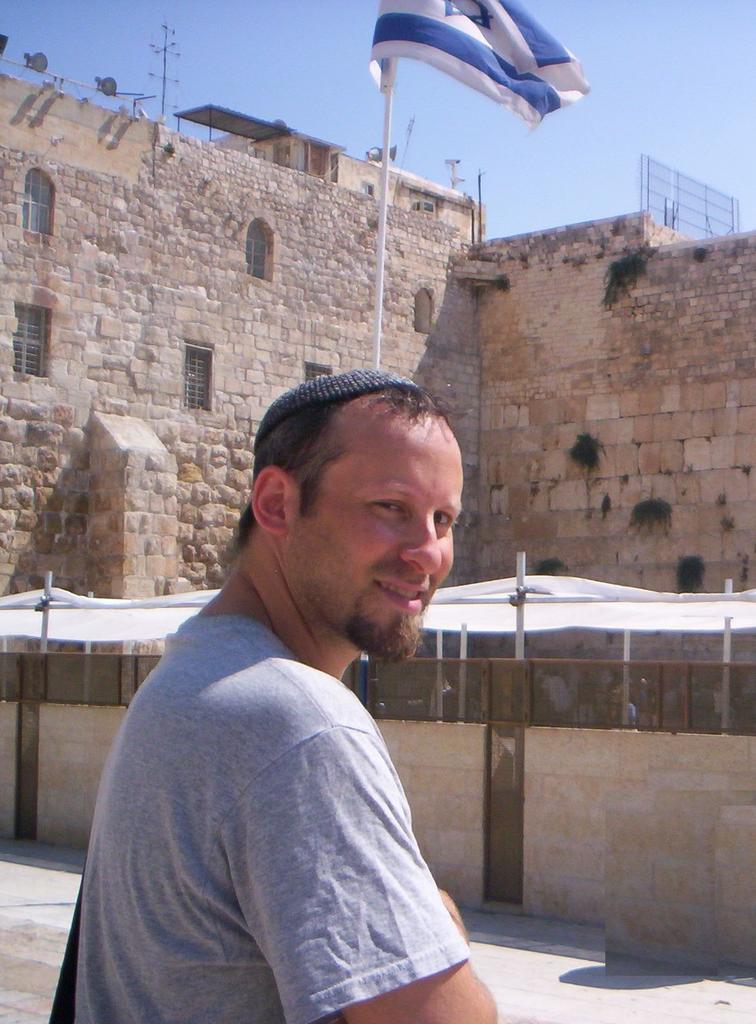
Here I am, wearing my Solomon Schechter T-shirt, standing at the remnant of an outer wall to an ancient place of animal sacrifice. In this photo I am thinking about the contemporary sites of priestly meals: Joy Grill, Olive, Pasha, kukureeku, Doron Falafel, Shnitzi, Take Me Home. O Jerusalem eatires, if I forget ye may my tonugue cleave to the roof of my mouth.
My summer was an intense one – first I spent three weeks working with the young participants of the Face to Face/ Faith to Faith program (I even did the ropes course and zip line some 70 feet above ground.) Then I was off to the Holy Land for a study leave and presentation at the Inter-religious Coordinating Council of Israel. Emek Refaiim Street, where the Inter-religious Coordinating Council’s offices are located is still recovering from the grizzly suicide bombing that left seven dead and fifty wounded at Café Hillel. Yet while every restaurant and café now has a security fence around it and a guard at the entrance, the street is bustling with life. While I was in Jerusalem I had the great pleasure to spend time with one of my inter-religious colleagues in the U.S. – Rev. Paul Rauschenbusch from Princeton University - who is working on promoting inter-religious councils on college campuses. I also met with Palestinian educators, filmmakers, rabbis, and countless others who are working on multifaith projects.
12.7.05
WOR Radio 710

Legendary radio journalist Bill Bertenshaw just interviewed me for Commmunity Concerns - a show on WOR radio 710. It airs September 4th at 5am, so set them alarms and tune in!
11.7.05
Jerusalem or Bust
ICCI cordially invites you to a library seminar
on Wednesday, July 20th, 2005 – 13 Tamuz 5765
12:30 – 14:00
With
Rabbi Daniel Brenner
Director, Center for Multifaith Education, Auburn Theological Seminary
who will speak about
“Imagine No Religion meets Redemption Song: What We've Learned About High School Students and Interreligious Dialogue from the Face to Face/Faith to Faith Program”
at
The ICCI Education Center, 43a Emek Refaim St., Jerusalem
As space is limited, please reserve your place in advance: library@icci.org.il tel: 02-561 1899, fax: 02-563 4148
המועצה הבין-דתית המתאמת בישראל (ICCI)
מתכבדת להזמינכם לסמינר
אשר יתקיים ביום רביעי ה – 20.7.05 (יג' תמוז תשס"ה)
בין השעות 14:00-12:30
ובו נארח את
הרב דניאל ברנר
מהמרכז לחינוך בין-דתי, הסמינריון התיאולוגי אוברן
שישוחח באנגלית על
" תאר לך עולם בלי דתות לעומת שיר הגאולה: מה למדנו על תלמידי התיכון ועל הדיאלוג הבין-דתי
מהתכנית פנים-אל-פנים/ אמונה-מול-אמונה'"
הסמינר יתקיים באנגלית במרכז החינוכי של המועצה הבין דתית, עמק רפאים 43 א' קומה ב'.
מספר המקומות מוגבל! אנא הירשמו מראש: library@icci.org.il טלפון 02-5611899
on Wednesday, July 20th, 2005 – 13 Tamuz 5765
12:30 – 14:00
With
Rabbi Daniel Brenner
Director, Center for Multifaith Education, Auburn Theological Seminary
who will speak about
“Imagine No Religion meets Redemption Song: What We've Learned About High School Students and Interreligious Dialogue from the Face to Face/Faith to Faith Program”
at
The ICCI Education Center, 43a Emek Refaim St., Jerusalem
As space is limited, please reserve your place in advance: library@icci.org.il tel: 02-561 1899, fax: 02-563 4148
המועצה הבין-דתית המתאמת בישראל (ICCI)
מתכבדת להזמינכם לסמינר
אשר יתקיים ביום רביעי ה – 20.7.05 (יג' תמוז תשס"ה)
בין השעות 14:00-12:30
ובו נארח את
הרב דניאל ברנר
מהמרכז לחינוך בין-דתי, הסמינריון התיאולוגי אוברן
שישוחח באנגלית על
" תאר לך עולם בלי דתות לעומת שיר הגאולה: מה למדנו על תלמידי התיכון ועל הדיאלוג הבין-דתי
מהתכנית פנים-אל-פנים/ אמונה-מול-אמונה'"
הסמינר יתקיים באנגלית במרכז החינוכי של המועצה הבין דתית, עמק רפאים 43 א' קומה ב'.
מספר המקומות מוגבל! אנא הירשמו מראש: library@icci.org.il טלפון 02-5611899
3.7.05
The Living Pupik
I just got a fresh batch of The Living Pulpit magazines in the mailbox -- I got a piece on Shavuot in the new issue.
29.6.05
sharing some good news
I just found out from my friend Andrew Silow-Carrol at the NJ Jewish News that I recieved a Simon Rockower Award for Excellence in Jewish Journalism. It was for the commentary I did on the Presby-Israel debate. (Boteach took first place - I took second) I am deeply honored to recieve this recognition.
Thank you Andy for publishing my work!
Thank you Andy for publishing my work!
22.6.05
Here's my latest article -- running in tommorow's Jewish Week
Helping The World’s Poorest Billion People
Daniel S. Brenner
The Talmud teaches that if you see someone drowning in a river, and if you can swim, then you are obligated to jump in and save the person in danger. So considering the fact that a billion people are drowning in a river and you have the opportunity to save them — without even getting wet — why aren’t you throwing a life preserver? This is not a hypothetical question. Last week, sitting with a wonderfully diverse group of religious leaders at the United Nations Church Center, I was faced with its real-life implications. The Church Center has little of the marble glitz of the UN Plaza across the street, but it is the perfect place to ask the most direct questions about the world’s needs: Can we in the world’s wealthiest nations do anything to address the systemic problems of the poorest billion people on the planet. Our work together involved the UN’s Millennium Development Goals. What are they? To be completely honest, I didn’t know about the Millennium Development Goals until I began working at Auburn, a historic Presbyterian seminary on the Upper West Side two years ago. Through my participation in a group called the Consultation for Interfaith Education, the topic crossed my radar screen during a discussion with Sister Joan Kirby, a Catholic activist who works with a nonprofit called the Temple of Understanding. Sister Kirby has helped to transform global missions that once were strictly evangelical operations into social justice ventures that meet the basic food and health needs of people in the developing world. Such Christians feel that faith without works is dead. But can the United Nations actually do anything about extreme poverty? I must confess that like many American Jews, I have held little faith in the United Nations as a political body and find it a startling hypocrisy that human rights violators such as Sudan and Zimbabwe sit on UN human rights commissions. But the Millennium Goals are a different story. Ambassador Eveline Herfkens, the Dutch director of the project and the keynote speaker who addressed us at the Church Center, clarified that the goals are not about making “the impossible possible, but making the possible possible.” And the goals for 2015 are relatively straightforward: Cut in half the number of people living in extreme poverty; insure primary education for all children; promote secondary education for girls; reduce child mortality by two-thirds; improve maternal health; halt the spread of malaria and AIDS; promote environmental sustainability; and create a global development fund. All 189 member states of the United Nations have agreed on the goals, and the European Union states have actually put their share of money behind them. So what does this have to do with the Jewish community? For Christians, Hindus and Muslims, the billion poorest on the planet are co-religionists. Since over 99.99 percent of the poorest are not even remotely part of the Jewish tribe, we might ask ourselves if this is really a Jewish issue. But by the show of Jewish leaders at the Church Center — Conservative, Reform, Reconstructionist and Modern Orthodox — as well as representatives from American Jewish World Service, Mazon and CLAL (whose Michael Gottsegen worked tirelessly to make the conference a success), American Jews apparently do see the needs of the globe’s poorest citizens as being a Jewish concern. Standing side by side with the Evangelical leader Rev. Richard Cizik, Rabbi Irving Greenberg passionately argued, “If the image of God is reflected in humanity, then what does it mean theologically when a woman from Uganda is forced to sell her body for 55 cents to feed her family?” Rabbi Greenberg’s passionate ethical plea was reinforced by the practicality of Professor Don Melnick, a biologist at Columbia University who has been the environmental mastermind behind the UN goals. Melnick’s argument is brilliantly simple — conditions of extreme poverty lead to environmental devastation — especially to the rampant deforestation that is throwing off our planet’s climate and causing ecological disasters worldwide. This poverty also leads to people living in cramped quarters with animals and their filth, which leads to a steady rise in Zoonotic diseases — ones that jump species like SARS and the West Nile virus and AIDS. The dangers of such a virus spreading is increasing as we ignore the plight of the poorest billion. In short, Jewish survival is dependent on planetary survival. And the health of the planet is actually dependent on the health of those billion who are the most in need of our assistance. So the Millennium Goals are a Jewish issue. The bad news, unfortunately, is that the United States, which can take the lead in meeting these goals, is dragging its feet. While our president has been given credit for extending $674 million in emergency aid (mostly to Ethiopia and Eritrea), the reality is that we rank a dismal 21st of the 22 wealthiest nations in generosity. To insure that we reach the goals by 2015, the United States must raise our aid from .016 to .07 percent of our gross national income — a small price to pay for the survival and health of the planet. The G8 summit, which will gather the world leaders in Scotland on July 6, is the window of opportunity for success for the goals program. If it is a mitzvah to save the life of one drowning man, woman or child, I would hope that the Jewish community can join the multifaith efforts now under way across the United States to promote the goals, to encourage our elected representatives to fund them, and to throw a life preserver to the billion and beyond.
Rabbi Daniel S. Brenner directs the Center for Multifaith Education at Auburn Theological Seminary in Manhattan.
Special To The Jewish Week
Daniel S. Brenner
The Talmud teaches that if you see someone drowning in a river, and if you can swim, then you are obligated to jump in and save the person in danger. So considering the fact that a billion people are drowning in a river and you have the opportunity to save them — without even getting wet — why aren’t you throwing a life preserver? This is not a hypothetical question. Last week, sitting with a wonderfully diverse group of religious leaders at the United Nations Church Center, I was faced with its real-life implications. The Church Center has little of the marble glitz of the UN Plaza across the street, but it is the perfect place to ask the most direct questions about the world’s needs: Can we in the world’s wealthiest nations do anything to address the systemic problems of the poorest billion people on the planet. Our work together involved the UN’s Millennium Development Goals. What are they? To be completely honest, I didn’t know about the Millennium Development Goals until I began working at Auburn, a historic Presbyterian seminary on the Upper West Side two years ago. Through my participation in a group called the Consultation for Interfaith Education, the topic crossed my radar screen during a discussion with Sister Joan Kirby, a Catholic activist who works with a nonprofit called the Temple of Understanding. Sister Kirby has helped to transform global missions that once were strictly evangelical operations into social justice ventures that meet the basic food and health needs of people in the developing world. Such Christians feel that faith without works is dead. But can the United Nations actually do anything about extreme poverty? I must confess that like many American Jews, I have held little faith in the United Nations as a political body and find it a startling hypocrisy that human rights violators such as Sudan and Zimbabwe sit on UN human rights commissions. But the Millennium Goals are a different story. Ambassador Eveline Herfkens, the Dutch director of the project and the keynote speaker who addressed us at the Church Center, clarified that the goals are not about making “the impossible possible, but making the possible possible.” And the goals for 2015 are relatively straightforward: Cut in half the number of people living in extreme poverty; insure primary education for all children; promote secondary education for girls; reduce child mortality by two-thirds; improve maternal health; halt the spread of malaria and AIDS; promote environmental sustainability; and create a global development fund. All 189 member states of the United Nations have agreed on the goals, and the European Union states have actually put their share of money behind them. So what does this have to do with the Jewish community? For Christians, Hindus and Muslims, the billion poorest on the planet are co-religionists. Since over 99.99 percent of the poorest are not even remotely part of the Jewish tribe, we might ask ourselves if this is really a Jewish issue. But by the show of Jewish leaders at the Church Center — Conservative, Reform, Reconstructionist and Modern Orthodox — as well as representatives from American Jewish World Service, Mazon and CLAL (whose Michael Gottsegen worked tirelessly to make the conference a success), American Jews apparently do see the needs of the globe’s poorest citizens as being a Jewish concern. Standing side by side with the Evangelical leader Rev. Richard Cizik, Rabbi Irving Greenberg passionately argued, “If the image of God is reflected in humanity, then what does it mean theologically when a woman from Uganda is forced to sell her body for 55 cents to feed her family?” Rabbi Greenberg’s passionate ethical plea was reinforced by the practicality of Professor Don Melnick, a biologist at Columbia University who has been the environmental mastermind behind the UN goals. Melnick’s argument is brilliantly simple — conditions of extreme poverty lead to environmental devastation — especially to the rampant deforestation that is throwing off our planet’s climate and causing ecological disasters worldwide. This poverty also leads to people living in cramped quarters with animals and their filth, which leads to a steady rise in Zoonotic diseases — ones that jump species like SARS and the West Nile virus and AIDS. The dangers of such a virus spreading is increasing as we ignore the plight of the poorest billion. In short, Jewish survival is dependent on planetary survival. And the health of the planet is actually dependent on the health of those billion who are the most in need of our assistance. So the Millennium Goals are a Jewish issue. The bad news, unfortunately, is that the United States, which can take the lead in meeting these goals, is dragging its feet. While our president has been given credit for extending $674 million in emergency aid (mostly to Ethiopia and Eritrea), the reality is that we rank a dismal 21st of the 22 wealthiest nations in generosity. To insure that we reach the goals by 2015, the United States must raise our aid from .016 to .07 percent of our gross national income — a small price to pay for the survival and health of the planet. The G8 summit, which will gather the world leaders in Scotland on July 6, is the window of opportunity for success for the goals program. If it is a mitzvah to save the life of one drowning man, woman or child, I would hope that the Jewish community can join the multifaith efforts now under way across the United States to promote the goals, to encourage our elected representatives to fund them, and to throw a life preserver to the billion and beyond.
Rabbi Daniel S. Brenner directs the Center for Multifaith Education at Auburn Theological Seminary in Manhattan.
Special To The Jewish Week
1.6.05
Festival Cordoba!

There's me --- with Imam Faisal Abdul Rauf, Daisy Khan, and Reb Michael Paley - on stage at the Knitting Factory!
Festival Cordoba:
A Celebration of
Muslim and Jewish Music
@ the KNITTING FACTORY
THURSDAY JUNE 16th 7:30 PM
WITH AMIR VAHAB and PHAROAH's DAUGHTER
Amir Vahab is one of New York’s most celebrated and distinguished composer / vocalists of Persian sacred and folk music. Born in Teheran, he sings in the traditional Persian style, which embodies millennia of the theoretical and mystical traditions of the ancient land of Iran. He has spent more than three decades perfecting his skills under the instruction of some of the most renowned and legendary masters of Persian music. His albums include Rumi: Celebration, Rumi: Meditation, Devotional Songs, Nostalgic Journey, and Amir Vahab Live in Concert. In 2003 he was dubbed by the New York Times as the “master of all musical things Iranian.”
Pharoah’s Daughter Basya Schechter formed the band, Pharaoh's Daughter, in 1995, following her travels in Morocco, the Middle East, South America and Africa. Inspired by these cultures and the Hasidic melodies of her childhood, she began playing her guitar so it would sound like a blend of an Arabic oud and a Turkish saz, with harmonic minor melodies and odd rhythms. Last summer, Pharaoh's Daughter debuted their mix of Middle Eastern, Hasidic and klezmer sounds at Central Park’s Summer Stage. The group has toured internationally, recorded four albums Queen’s Dominion, Exile, Out of the Reeds, Daddy’s Pockets, and is currently working on a fifth, Hagar.
CO-SPONSORS:
ASMA: AMERICAN SOCIETY FOR MUSLIM ADVANCEMENT
AUBURN THEOLOGICAL SEMINARY – CENTER FOR MULTIFAITH EDUCATION
BRONFMAN YOUTH FELLOWSHIP IN ISRAEL
JEWISH COMMUNITY RELATIONS COUNCIL OF NEW YORK
UJA- FEDERATION OF NEW YORK
ISLAMIC CULTURAL CENTER OF NEW YORK
19.5.05
Spring Poetry Special
Poetry is not my life
Ferllenghtti sits perched atop the bathroom radiator
And I savor a page every time my body recycles
Thanking God for the openings and the hollow places
And the subtlety of uncapitalized letters
Though a dozen boxes of notebooks with scribbled fragments of verse
will crush you if you attempt to open my closet door
Poetry is not my life
Though there was a time
When I left my cozy air conditioned world
rode a beat up bicycle to the dangerous part of town
Picked through dumpsters to find relics that spoke truth
Searched for poems in the broken glass under the train tracks
Talked to old folks, bodies reeking of ten varieties of decay,
Untreated wounds festering, discolored,
Rotting teeth clicking a different rhythm for each tale,
The young people called me ain’t from the ghetto
And that, too, I made into a poem
Poetry is not my life
What is?
Let me begin by saying that I’ve changed a thousand diapers
A real man changes a thousand diapers
But my beloved changed two thousand
So I best not open my mouth
Poetry is not my life
I pay bills for natural gas
I insulate the attic – it’s itchy
I work in front of a computer screen
I wash out the thermoses from the kid’s lunchboxes
Poetry is not my life
Thank God I have money
I like those English water crackers with a slice of fancy feta cheese
And my children have health care coverage
And I can do my laundry in machines in my basement
When you have too little or too much
Money plays with your mind
Since I have some money
Poetry is not my life
My life is taking the shortcut through the tire store parking lot to catch the train
My life is trying to change the world by making minor adjustments
My life is trying to get my kids to finish their Cheerios
Oil changes
Dental appointments
E-mails
And though I wish I could end with graceful poetic irony
Poetry is not my life
- Daniel S. Brenner
Ferllenghtti sits perched atop the bathroom radiator
And I savor a page every time my body recycles
Thanking God for the openings and the hollow places
And the subtlety of uncapitalized letters
Though a dozen boxes of notebooks with scribbled fragments of verse
will crush you if you attempt to open my closet door
Poetry is not my life
Though there was a time
When I left my cozy air conditioned world
rode a beat up bicycle to the dangerous part of town
Picked through dumpsters to find relics that spoke truth
Searched for poems in the broken glass under the train tracks
Talked to old folks, bodies reeking of ten varieties of decay,
Untreated wounds festering, discolored,
Rotting teeth clicking a different rhythm for each tale,
The young people called me ain’t from the ghetto
And that, too, I made into a poem
Poetry is not my life
What is?
Let me begin by saying that I’ve changed a thousand diapers
A real man changes a thousand diapers
But my beloved changed two thousand
So I best not open my mouth
Poetry is not my life
I pay bills for natural gas
I insulate the attic – it’s itchy
I work in front of a computer screen
I wash out the thermoses from the kid’s lunchboxes
Poetry is not my life
Thank God I have money
I like those English water crackers with a slice of fancy feta cheese
And my children have health care coverage
And I can do my laundry in machines in my basement
When you have too little or too much
Money plays with your mind
Since I have some money
Poetry is not my life
My life is taking the shortcut through the tire store parking lot to catch the train
My life is trying to change the world by making minor adjustments
My life is trying to get my kids to finish their Cheerios
Oil changes
Dental appointments
E-mails
And though I wish I could end with graceful poetic irony
Poetry is not my life
- Daniel S. Brenner
12.5.05
On Alzheimer's
Rev. Jim Forbes from Riverside Church tells a story about his Father:
When 'Bishop' sat in the nursing home, his mind rattled by demensia, he was called by the nurses "Praise the Lord" -- Why? Because whatever happened he said "Praise the Lord" lunch - PTL, blood drawing time - PTL, light on - PTL, light out -PTL. As the 'dust was shaken off' -- as his memory slipped away and he turned to the 'winter' in his life (with the leaves falling off the tree) his trunk and roots were still soaking in the light of God's presence.
Then Forbes read Psalm 139, emphasisizing the angry screed that comes in the penultimate lines. "That anger," he said, "was for the moment when "praise the Lord" left his mind and he lay confused before dying.
This was one highlight of the Alheimer's Conference today at Auburn.
When 'Bishop' sat in the nursing home, his mind rattled by demensia, he was called by the nurses "Praise the Lord" -- Why? Because whatever happened he said "Praise the Lord" lunch - PTL, blood drawing time - PTL, light on - PTL, light out -PTL. As the 'dust was shaken off' -- as his memory slipped away and he turned to the 'winter' in his life (with the leaves falling off the tree) his trunk and roots were still soaking in the light of God's presence.
Then Forbes read Psalm 139, emphasisizing the angry screed that comes in the penultimate lines. "That anger," he said, "was for the moment when "praise the Lord" left his mind and he lay confused before dying.
This was one highlight of the Alheimer's Conference today at Auburn.
2.5.05
A Muslim - Christian Delegation Vists the Rabbi
Last week I hosted the following three folks for a lively lunchtime meeting:
Dr. Antoine Messara (Lebanese Christian) is a professor at the Lebanese University Department of Communication, and is the general director of The Foundation of the Lebanese Association for Permanent Civil Peace in Lebanon. Antoine established The Foundation of the Lebanese Association for Permanent Civil Peace in Lebanon during the civil war in Lebanon by bringing Christians and Muslims together. He is active in issues related to democracy, human rights, and Christian Muslim relations. Antoine has many articles addressing the issue of democracy and co-existence.
Samir Morcos (Egyptian Christian) is the former associate general secretary of Middle East Council of Churches. He has consulted for the Coptic Center for Social Studies, Al Fustat Center for Studies and Consultations, and for The Unit for Citizenship and Dialogue in Cairo. Samir has written multiple books in the area of development including: The State of Civil Society in Egypt: Preliminary Observations and Future Possibilities; and, Civil Society in Egypt: From Dormancy to Action-The Struggle over the Civil Associations Law. He is currently writing a joint study entitled Civil Society in Egypt: Challenges and Future Prospects, as well as a critical review of development concepts and practices in Egypt over the past 50 years. Samir was awarded the annual prize in 2004 of the Norwegian Academy for Literature and Freedom of Expression.
Nadia Mahmoud Mustafa (Egyptian Muslim) is a professor in the political science department and on the faculty of economics and political science at Cairo University. She has taught the following subjects: The Evolution of International Political Relations; Political Development; Arab Foreign Policies; Contemporary Global Issues; Islamic Political Thought; Arab World in International Politics; and Theory of International Relations. She has also written multiple books, including: Strategy of Islamic Cultural Activity in the West, and Developing an Islamic Perspective to the Study of International Relations: Dilemmas of the Experience of Teaching and Research.
Highlights included Samir speaking of the Darfur crisis as a battle between China and the U.S. for resources. I ended up spending twenty minutes or so after the public program engaging in a debate with Nadia, who dismissed all "grassroots" efforts between Israelis and Palestinians. "Peace must come from the governments above! How can the occupied speak with the occupier!"
Dr. Antoine Messara (Lebanese Christian) is a professor at the Lebanese University Department of Communication, and is the general director of The Foundation of the Lebanese Association for Permanent Civil Peace in Lebanon. Antoine established The Foundation of the Lebanese Association for Permanent Civil Peace in Lebanon during the civil war in Lebanon by bringing Christians and Muslims together. He is active in issues related to democracy, human rights, and Christian Muslim relations. Antoine has many articles addressing the issue of democracy and co-existence.
Samir Morcos (Egyptian Christian) is the former associate general secretary of Middle East Council of Churches. He has consulted for the Coptic Center for Social Studies, Al Fustat Center for Studies and Consultations, and for The Unit for Citizenship and Dialogue in Cairo. Samir has written multiple books in the area of development including: The State of Civil Society in Egypt: Preliminary Observations and Future Possibilities; and, Civil Society in Egypt: From Dormancy to Action-The Struggle over the Civil Associations Law. He is currently writing a joint study entitled Civil Society in Egypt: Challenges and Future Prospects, as well as a critical review of development concepts and practices in Egypt over the past 50 years. Samir was awarded the annual prize in 2004 of the Norwegian Academy for Literature and Freedom of Expression.
Nadia Mahmoud Mustafa (Egyptian Muslim) is a professor in the political science department and on the faculty of economics and political science at Cairo University. She has taught the following subjects: The Evolution of International Political Relations; Political Development; Arab Foreign Policies; Contemporary Global Issues; Islamic Political Thought; Arab World in International Politics; and Theory of International Relations. She has also written multiple books, including: Strategy of Islamic Cultural Activity in the West, and Developing an Islamic Perspective to the Study of International Relations: Dilemmas of the Experience of Teaching and Research.
Highlights included Samir speaking of the Darfur crisis as a battle between China and the U.S. for resources. I ended up spending twenty minutes or so after the public program engaging in a debate with Nadia, who dismissed all "grassroots" efforts between Israelis and Palestinians. "Peace must come from the governments above! How can the occupied speak with the occupier!"
13.4.05
a pre-pesach poem
I read the hagaddah backwards this year
The sea opens, the ancient Israelites slide back to Egypt like Michael Jackson doing the moonwalk
Freedom to slavery
That’s the real story
One minute you’re dancing halleluyah with the prophetess
The next you’re knee deep in brown in the basement of some minor pyramid waiting for the angel of death to refund your two zuzim.
Children of Israel! It is hard to say dayenu when the armies emerge from the sea like a returning scuba expedition and the Pharoah calls out for fresh towels.
The bread has plenty of time to rise.
I read the haggadah backwards this year,
Left a future Jerusalem,
scrubbed off the blood from the doorposts
wandered back to Aram.
The sea opens, the ancient Israelites slide back to Egypt like Michael Jackson doing the moonwalk
Freedom to slavery
That’s the real story
One minute you’re dancing halleluyah with the prophetess
The next you’re knee deep in brown in the basement of some minor pyramid waiting for the angel of death to refund your two zuzim.
Children of Israel! It is hard to say dayenu when the armies emerge from the sea like a returning scuba expedition and the Pharoah calls out for fresh towels.
The bread has plenty of time to rise.
I read the haggadah backwards this year,
Left a future Jerusalem,
scrubbed off the blood from the doorposts
wandered back to Aram.
Trenton Makes, The World Takes
After a performance Saturday night at Trenton's Passage Theater by the brilliant beat-boxer Yuri Lane Lisa and I had the great pleasure to be a guest at a party of the Goldstein-Ballingers and share a bottle of wine with NJ's original poet laureate Gerald Stern. He was captivating - well into his eighties he is as hip and irreverent as the twenty-somethings who hang out at P.S. 122. Yusuf Komunyaka, the Pulitzer prize winning poet, was there too as was Chris Hedges, the political journalist - and for a moment I thought that the historic Mill Hill district of Trenton would be the site of the next American revolution. Maybe the whale who swam up the Delaware could sense it too.
23.3.05
Iceland cometh and goeth
Meeting with the group from Rekjavik was fascinating. Half of them said that I was the first Jew they had ever spoken to. After my presentation one student wanted to know "How America, which is such a religiously diverse nation, could elect such an 'extreme Christian' to the White House?" That led to a wider discussion about religious tolerance (and intolerance) in America. They were not aware of the campaign by Bush post 9-11 to get across the message that Islam is a 'religion of peace' - they had only heard of Lt. Gen Boykin's demonization of Muslims. Tommorow night they are going to Bnai Jeshurun for Purim. I wish I could go to see their reaction.
17.3.05
Amina Wadud
A nice Jewish boy arranging security for a radical Muslim? Only in New York.
I spent a good part of the day addressing the security concerns for the speaker at Auburn this evening, the Muslim woman activist Amina Wadud. See www.muslimwakeup.com for more on the event. The woman is breaking the barriers like my Women of the Wall sisters did in Jerusalem. Tommorow she will lead the first egalitarian muslim prayer service. Al -Jazeera is all over this.
I spent a good part of the day addressing the security concerns for the speaker at Auburn this evening, the Muslim woman activist Amina Wadud. See www.muslimwakeup.com for more on the event. The woman is breaking the barriers like my Women of the Wall sisters did in Jerusalem. Tommorow she will lead the first egalitarian muslim prayer service. Al -Jazeera is all over this.
9.3.05
Iceland Cometh
I just got word that I'll be hosting a delegation from the Univeristy of Iceland on March 23rd at Auburn. The students are coming to NY to study religious diversity and I've been helping them organize their tour. Apparently there aren't many Gurdwaras in Rekjavik. A big plus is that they will get to go to shul on Purim. I've got to alert the Jewish press on this one.
28.2.05
Imams and Rabbis for Peace final report is out
http://www.hommesdeparole.org/
Now contains the final report and some beautiful photos of the Imams and Rabbis for Peace conference. The final joint statement we made is also posted there.
Now contains the final report and some beautiful photos of the Imams and Rabbis for Peace conference. The final joint statement we made is also posted there.
3.2.05
Lord of Hosts
I just hosted two fascinating groups: one from Columbia Theological Seminary in Atlanta and one from the Church of God Seminary in Cleveland, Tennessee. The best part was taking the Church of God folks to Bnai Jeshurun for Friday night services. It was something else -- being Pentacostals, they "felt the Holy Spirit" at BJ, and one of them even turned to her friend and said "I'm joining - do you think they take credit cards?"
20.1.05
In the Jewish Week
Here's the link for my piece in the Jewish Week
http://www.thejewishweek.com/news/newscontent.php3?artid=10413
http://www.thejewishweek.com/news/newscontent.php3?artid=10413
Commentary from a conservative Christian
I just found this on a site entitled "Not Perfection" -- a reaction to the piece I wrote last month on the Presbyterian-Israel story.
December 14, 2004
Lighting a candle against the darkness
Instead of cursing the darkness (which is sometimes the first reaction here at not perfection), Rabbi Daniel Brenner, director of the Center for Multifaith Education at Auburn Theological Seminary, has written a thoughtful piece about the scapegoating of Israel on the part of the Presbyterian Church USA last summer. He and the Rev Cindy Jarvis of Philadelphia (both pictured here) are working toward reconciliation and reversal of the divestiture decision.
You should read the article. It relieved some of my anger and frustration at my denomination. Praise God. In addition to making a compassionate, understanding case for the frustrations of Palestinians, he makes one cogent and reasoned observation:
"I believe that there is a much deeper cause to this movement. And it is not anti-Semitism. It is frustration — a by-product of the spiritual and emotional antipathy carried by left-leaning Protestants toward another Protestant, George W. Bush... It stings that Condoleezza Rice is a devout Presbyterian..."
I cannot agree with everything he says, but my heart can open a little.
December 14, 2004
Lighting a candle against the darkness
Instead of cursing the darkness (which is sometimes the first reaction here at not perfection), Rabbi Daniel Brenner, director of the Center for Multifaith Education at Auburn Theological Seminary, has written a thoughtful piece about the scapegoating of Israel on the part of the Presbyterian Church USA last summer. He and the Rev Cindy Jarvis of Philadelphia (both pictured here) are working toward reconciliation and reversal of the divestiture decision.
You should read the article. It relieved some of my anger and frustration at my denomination. Praise God. In addition to making a compassionate, understanding case for the frustrations of Palestinians, he makes one cogent and reasoned observation:
"I believe that there is a much deeper cause to this movement. And it is not anti-Semitism. It is frustration — a by-product of the spiritual and emotional antipathy carried by left-leaning Protestants toward another Protestant, George W. Bush... It stings that Condoleezza Rice is a devout Presbyterian..."
I cannot agree with everything he says, but my heart can open a little.
19.1.05
Good news travels er...... fast
The news about the Rabbis and Imams is slowly getting out -- The Jewish Week and the New Jersey Jewish News will be carrying modified versions of my report below (I'll post tommorow) . Also, a nice piece on http://www.catalyzerjournal.com/news/ combined my piece and the Ha'aretz article into a feature.
11.1.05
Rabbis and Imams for Peace
While the world's eyes were affixed to visions of relief planes arriving on the beaches of Indonesia last week, something truly miraculous was taking place in the halls of an elegant palace in the land of waffles. Under heavy security, Orthodox chief rabbis from Austria, Bulgaria, Denmark, France, Israel, Morroco, Norway, Romania, and the Czek Republic spent four days in Brussels praying, singing, sharing stories and studying together with Imams and Shieks from Egypt, Indonesia, Iran, Nigeria, Kenya, and the Palestinain Territories. While there was little American press coverage, reports from the conference were carried on Eurovision, Al Jazeera, Israeli Television and the BBC World service as over one hundred and fifty religious leaders from forty nations, including the former Chief Rabbi of Israel Bakshi Doron and Shiek Talal Sedir, cheif of religious affairs for the Palestinian Authority, joined together for dialogue under the patronage of the King of Belgium, Albert II and the King of Morroco, Muhammed VI. As one of only a handful of non-Orthodox rabbis who participated in "Rabbis and Imams for Peace", one of the few North Americans present, and one of the youngest at the table, I took my seat with the all-male Congress with a deep sense of respect for my elders. Yet there was one aspect of irony that was apparent to me- while I have had been blessed with many experiences in inter-religious dialogue, many of these men were formally participating in a conference with their religious counterparts for the very first time. The Chief Rabbi of Mod'in from Israel asked me to take a photograph of him while he spoke so that he would be able to show his wife and six children that he sat next to an Imam. "I have never done anything like this," he told me, "I was very skeptical. But now I see that it is good to do this." During the first session of the Congress, Dr. Abdul Abad, a spokesman for Islamic religious councils in the Palestinian Territories articulated the spiritual message of the Congress in near poetic form: "If we see the Holy Land as a wife, we will each say 'she is my wife', and we will continue to fight one another for the right to claim her. My friends, let us see the Holy Land not as a wife to claim, but as our mother - so that we may live in peace as brothers." The Congress resonated with such a suggestion, and the applause for Dr. Abad's statement kicked off what soon became a remarkable display of fraternal cooperation. "We must give these Islamic leaders honor" Rabbi Bakshi Doron demanded of the rabbis in the hall "for they are true to God, they love God, and they help us to uphold morality in a world rampant with secularism." While the Congress was heavy on affirming Abrahamic roots and simplified monotheistic declarations, the Congress was not simply a display of goodwill gestures. There were many moments of honesty when the Jewish leaders spoke of their outrage at anti-Jewish sentiment among Muslims. "Why do you keep silent when Islamic web-sites are fomenting Jew hatred, quoting lines from the Koran that command Muslims to attack Jews?" a French Rabbi inquired of the Imams and Sheiks. "There are no such lines" a Muslim scholar replied, waving an electronic device in his hand, "type the word Yehood into my digital assistant and it will show you that such hatred does not appear in the Koran!" "But why don't you condemn it when your colleagues use it?" the rabbi retorted. Others told stories not of prejudice, but acts of violence, including a compelling story by the former Cheif Rabbi of France Rene Sirat who recalled the day when his brother was walking home from synagogue and was murdered by a Muslim terrorist. Jews were not the only ones who raised concerns over prejudice and violence. An Iranian scholar of Islamic Law, Sheik Jafri said "If we are to achieve anything in our meeting today, we will not only have to send a clear message to Islamic extremists, but to those in the government of Israel who send missiles that kill innocent Palestinian children." A Palestinian, Sheik Hilmi, built on those concerns, saying to the rabbis "If I continue to be restricted by the Israeli government, imprisoned, and can not travel to Jerusalem, then how can I even think of continuing this dialogue!" Yet these tense moments were countered by moments of profound understanding. Imam Sajid of Great Britain remarked - When I first came to England I had never met a rabbi. I saw a man with a kipah on the train and mistaking him for a Muslim I wished him a 'salaam aleykum'. It turned out that he was a rabbi from Leo Baeck College. We talked and we became friends, and in the years since I have realized that we have a shared goal - Anti-semitism and Islamophobia are linked - and if we are to ever live in peace in Europe, we must learn to live in peace with one another." Rabbi Abraham Soddendorp of Holland also shared inspiring words: "When I was born in 1943, my mother, to save me from the Nazis, placed me in the hands of a gentile woman. I was an unknown person, a liability, a danger - and yet I became a loved one. This German Catholic woman risked her life to rescue me. Can we not follow her example, and risk our lives for the sake of the other? For the sake of Palestinian children? For the sake of Israeli children? " Sheik Hassan Chizenga of Tanzania inspired the Congress with perhaps the most bizarre vision of peace: "In Islamic law, Jews are considered to be equal to Muslims, for it is permitted for a Muslim to marry a Jew. Jews are believers, People of the Book, and are to be respected. I have just married my fourth wife. However, if the esteemed members of this Congress feel that it will be worthwhile to promote peace with a public gesture, I will take as my fifth wife a Jewish woman!"The hall erupted in laughter, and after reassuring Sheik Chizenga that he would make a very good brother-in-law, organizer Dr. Alon Goshen-Gottstein of the Elijah Institute in Jerusalem remarked "but luckily I do not have a sister." Outside the hall of meeting, the atmosphere was electric. At nightly concerts featuring a Morrocoan band, the Algerian born Chief Rabbi Joseph Azron of Reishon L'Tzion took the stage and chanted Hebrew liturgical prayers. Not to be topped, Sheik Hilmi commanded a microphone and began to sing in Arabic. Within a few moments, the men were trading lines of praise to the Creator as the drummers, violinist, and bass player marveled at the musical talents of the holy men. This was an unplanned and joyous scene which brought out every camera in the hall and brought great joy to Alain Michel, the French philanthropist and visionary who initiated the Congress. So what did we come away with other than a renewed sense of commonality and trust between the children of Abraham? Perhaps the most poignant moment came when we thought for a moment about what was happening on the other side of the world. One day, before lunch, we Rabbis and Imams stood in silence for the victims and offered prayers in Arabic and Hebrew that brought tears to many of the men around the table. I wish that the world could have seen that moment - to see the intensity of emotion on the faces I saw around the room - to see that even the most strict and devout Jews and Muslims are also Rabbis and Imams for Peace.

15.12.04
News Flash -- I'm headed to the home of waffles!
CENTER FOR MULTIFAITH EDUCATION DIRECTOR TO PARTICIPATE IN HISTORIC SUMMIT Rabbi Daniel Brenner, the director of Auburn's Center for Multifaith Education, will be participating in the First World Congress of Imams and Rabbis for Peace this January in Brussels. Under the patronage of King Albert II of Belgium and King Mohammed VI of Morocco, the summit will bring together 100 religious leaders for dialogue and strategy sessions regarding religious tensions and conflict resolution. One of a handful of American rabbis selected for participation, Rabbi Brenner will be joining Dr. Amir Al-Islam of City University as New York's representatives to the summit. The stated goals of the three day meeting are to: Gather before the media of the whole world the leaders of both religions and allow them to express a position of peace and unity. Create a dialogue and a far-reaching, durable partnership between Islam and Judaism. Allow the religious leaders to contribute to discovering peaceful solutions to the conflicts where they are influential and foster the development of concrete actions in the field. For more information, see
Hommes de Parole Foundation Website
Hommes de Parole Foundation Website
9.12.04
A revelation
Smithsonian's Folkways records has an album of Music of the Jews of Uganda
Even when their leader sings syrupy Americanized brachot melodies they sound transcendent.
Even when their leader sings syrupy Americanized brachot melodies they sound transcendent.
6.12.04
3.12.04
Talking with Presbyterians
NEW JERSEY JEWISH NEWS
Talking with Presbyterians about Israel
by Rabbi Daniel S. Brenner
As the only rabbi in America who works full time in a Presbyterian seminary, my life has been complicated, as my friends can attest, by the decision of the Presbyterian Church (USA) to divest from companies that do business with Israel. “How can you work for them?” is a question I’ve heard at Shabbos tables, supermarkets, and children’s birthday parties.Luckily it is an easy question to answer — I work for an independent educational institution with a Presbyterian affiliation, not for the national church. I can also proudly say that my Presbyterian colleagues at Auburn Theological Seminary in New York City have made extraordinary public statements expressing their dismay at their church’s actions. They have, in fact, taken the lead nationally when it comes to addressing the one-sided rhetoric of these declarations and building constructive relations between Presbyterian and Jewish leaders.But that said, it has been a rocky road. I have met with sensitive and compassionate Presbyterian ministers who support the divestment action. I have had the very difficult task of explaining what is wrong with divesting from Israel, even as I acknowledge that Israel severely restricts the lives of millions of noncitizens and has been charged even by its own watchdog groups with numerous human rights abuses. (Even as I write this the Israeli press is reporting that an Israel Defense Forces company commander is being indicted following an investigation into the October shooting death of a 12-year-old girl in the Rafah refugee camp.) None of the ministers, seminary students, or lay people whom I have met has been vehemently anti-Israel; they simply identify strongly with liberal causes. Back in the ’90s they were supporters of Yitzhak Rabin’s peace efforts and they believe, like most American Jews, that a two-state solution is preferable to the continuing occupation or expulsion of Palestinians or to the Jews being pushed into the sea.But they side with the powerless and oppressed, which, according to nearly every international human rights organization, is the Palestinian population. They are highly critical of the security fence, targeted assassinations, and home demolitions that make up Ariel Sharon’s counteroffensive. Divestment for them is applying a tool that was used to bring down South Africa’s white-dominated apartheid state; in their minds, the same tactic will be effective in Israel. “Israel is the new South Africa” makes sense to them.All this does make sense, in fact, until I remind myself how distorted a view this has become. How did it get to the point where a historical homeland of two peoples that has been contested for the last 3,000 years is seen in the same light as a racist colonial enclave built to exploit the wealth of Africa’s tip? What many Jews fail to understand is that the voices of Palestinian Christians, though they make up only 2 percent of the Palestinian population, are the voices that reach America’s pews. And since the vast majority of leaders in the Palestinian-Christian community have embraced nonviolence and peaceful protest as the way to address occupation, their voices are met with genuine concern and sympathy. The Palestinian Christians who write in church publications, tour the United States, and bring visitors to Israel tell the stories of living under conditions that have seriously deteriorated in the past four years. They are simply bearing witness to the lives of many Palestinian children and elderly who have suffered under the security conditions. And though many Jews would like these Palestinian Christians to lay all the blame at Hamas’ doorstep or place it with the Palestinian authority leadership, the tanks and helicopters and home demolitions have been experienced as a collective and unjust punishment on the innocent by the mighty Zionists. The actions that Presbyterian delegates took last summer at the PCUSA’s General Assembly were made in response to the speech of one such Palestinian Christian, the Rev. Mitri Raheb, who has gone on from the General Assembly to speak in other Christian institutions in the United States as part of a book tour. But I would like to suggest that as persuasive as he and his fellow Palestinian Christians have been in Christian circles, their voices are not what triggered divestment. I believe that there is a much deeper cause to this movement. And it is not anti-Semitism. It is frustration — a by-product of the spiritual and emotional antipathy carried by left-leaning Protestants toward another Protestant, George W. Bush. Truly compassionate Christians are justifiably angered with America’s poorly planned occupation of Iraq and the slaughter of more than 50,000 civilians killed in the name of finding weapons of mass destruction (or exporting democracy). It stings that Condoleezza Rice is a devout Presbyterian, and the photos of crosses hanging from American tanks and the talk of “crusade” by figures such as Lt. Gen. William G. Boykin are turning stomachs. But rather than call for divestment from American corporations that enabled the U.S. invasion and perpetuate the United States occupation, liberal Protestants end up lashing out at the eternal scapegoat, Israel.As a result, the General Assembly, which openly condemned the preemptive U.S. attack on Iraq, is not investigating U.S.-based companies like Motorola whose technology is used to coordinate artillery strikes, monitor Iraqi villages, and keep millions under restrictive curfews. But it does instruct its committee to search for dirt on U.S. businesses connected to Israel’s security.Such dirt is hard to find, and the initial reports of the Presbyterians’ divestment study committee reflect cautious statements that indicate that divestment is not likely to happen anytime soon. But I imagine that in the coming months the national body of Presbyterians will launch its actions by bringing a resolution against the bulldozer giant Caterpillar. This will trigger hundreds of letters to the PCUSA and to newspaper editors from Jewish leaders explaining that bulldozers are used to uncover tunnels and to remove sniper dens and all the rest. But if you’ve ever heard or seen a D-9, you know it is a monster — the thing can clear a minefield — and photos of the accidental death of Rachel Corrie, a 23-year-old American activist crushed when she chose to protest in front of a D-9 in Gaza, are already on PCUSA’s Web site. So I predict that a symbolic statement will be made by the church and will be celebrated by those who call for an all-out boycott of Israel. And Dennis Prager and Alan Dershowitz will sit down and write fiery op-eds using Holocaust analogies.So what can we, as American Jews, do now?First off, we should not assume that Presbyterian leaders are ignorant on issues relating to Israel. From my perch (which is towered over by Riverside Church’s steeple), I’ve seen that although a number of Presbyterian leaders have simplistic views on the Israel/Palestine issue, many Presbyterian leaders understand very clearly the complexity of Israel’s situation. There are also many Presbyterians who are making efforts to engage with the Jewish community face to face and dialogue on the issue.We should use the energy surrounding the Presbyterian-Jewish controversy as an opportunity to leverage the practical view of both the majority of American Jews and liberal Protestants — that the United States should, through diplomatic means, actively involve both sides in reaching a settlement of the conflict. With upcoming elections in the Palestinian Authority and coming implementation of the Gaza disengagement plan, this is an ideal time for Americans to be discussing how we can capitalize on the efforts begun by Rabin. As I’ve heard a few Israelis say, “There is light at the end of the tunnel, but there is no tunnel!” The Presbyterian divestment action has clearly thrown more dirt in front of that tunnel, but it also may give us a reason to begin digging together. God knows we both would like to see the light. Daniel S. Brenner is director of the Center for Multifaith Education at Auburn Theological Seminary, a nearly 200-year-old Presbyterian institution on Manhattan’s Upper West Side. He lives in Montclair.
Talking with Presbyterians about Israel
by Rabbi Daniel S. Brenner
As the only rabbi in America who works full time in a Presbyterian seminary, my life has been complicated, as my friends can attest, by the decision of the Presbyterian Church (USA) to divest from companies that do business with Israel. “How can you work for them?” is a question I’ve heard at Shabbos tables, supermarkets, and children’s birthday parties.Luckily it is an easy question to answer — I work for an independent educational institution with a Presbyterian affiliation, not for the national church. I can also proudly say that my Presbyterian colleagues at Auburn Theological Seminary in New York City have made extraordinary public statements expressing their dismay at their church’s actions. They have, in fact, taken the lead nationally when it comes to addressing the one-sided rhetoric of these declarations and building constructive relations between Presbyterian and Jewish leaders.But that said, it has been a rocky road. I have met with sensitive and compassionate Presbyterian ministers who support the divestment action. I have had the very difficult task of explaining what is wrong with divesting from Israel, even as I acknowledge that Israel severely restricts the lives of millions of noncitizens and has been charged even by its own watchdog groups with numerous human rights abuses. (Even as I write this the Israeli press is reporting that an Israel Defense Forces company commander is being indicted following an investigation into the October shooting death of a 12-year-old girl in the Rafah refugee camp.) None of the ministers, seminary students, or lay people whom I have met has been vehemently anti-Israel; they simply identify strongly with liberal causes. Back in the ’90s they were supporters of Yitzhak Rabin’s peace efforts and they believe, like most American Jews, that a two-state solution is preferable to the continuing occupation or expulsion of Palestinians or to the Jews being pushed into the sea.But they side with the powerless and oppressed, which, according to nearly every international human rights organization, is the Palestinian population. They are highly critical of the security fence, targeted assassinations, and home demolitions that make up Ariel Sharon’s counteroffensive. Divestment for them is applying a tool that was used to bring down South Africa’s white-dominated apartheid state; in their minds, the same tactic will be effective in Israel. “Israel is the new South Africa” makes sense to them.All this does make sense, in fact, until I remind myself how distorted a view this has become. How did it get to the point where a historical homeland of two peoples that has been contested for the last 3,000 years is seen in the same light as a racist colonial enclave built to exploit the wealth of Africa’s tip? What many Jews fail to understand is that the voices of Palestinian Christians, though they make up only 2 percent of the Palestinian population, are the voices that reach America’s pews. And since the vast majority of leaders in the Palestinian-Christian community have embraced nonviolence and peaceful protest as the way to address occupation, their voices are met with genuine concern and sympathy. The Palestinian Christians who write in church publications, tour the United States, and bring visitors to Israel tell the stories of living under conditions that have seriously deteriorated in the past four years. They are simply bearing witness to the lives of many Palestinian children and elderly who have suffered under the security conditions. And though many Jews would like these Palestinian Christians to lay all the blame at Hamas’ doorstep or place it with the Palestinian authority leadership, the tanks and helicopters and home demolitions have been experienced as a collective and unjust punishment on the innocent by the mighty Zionists. The actions that Presbyterian delegates took last summer at the PCUSA’s General Assembly were made in response to the speech of one such Palestinian Christian, the Rev. Mitri Raheb, who has gone on from the General Assembly to speak in other Christian institutions in the United States as part of a book tour. But I would like to suggest that as persuasive as he and his fellow Palestinian Christians have been in Christian circles, their voices are not what triggered divestment. I believe that there is a much deeper cause to this movement. And it is not anti-Semitism. It is frustration — a by-product of the spiritual and emotional antipathy carried by left-leaning Protestants toward another Protestant, George W. Bush. Truly compassionate Christians are justifiably angered with America’s poorly planned occupation of Iraq and the slaughter of more than 50,000 civilians killed in the name of finding weapons of mass destruction (or exporting democracy). It stings that Condoleezza Rice is a devout Presbyterian, and the photos of crosses hanging from American tanks and the talk of “crusade” by figures such as Lt. Gen. William G. Boykin are turning stomachs. But rather than call for divestment from American corporations that enabled the U.S. invasion and perpetuate the United States occupation, liberal Protestants end up lashing out at the eternal scapegoat, Israel.As a result, the General Assembly, which openly condemned the preemptive U.S. attack on Iraq, is not investigating U.S.-based companies like Motorola whose technology is used to coordinate artillery strikes, monitor Iraqi villages, and keep millions under restrictive curfews. But it does instruct its committee to search for dirt on U.S. businesses connected to Israel’s security.Such dirt is hard to find, and the initial reports of the Presbyterians’ divestment study committee reflect cautious statements that indicate that divestment is not likely to happen anytime soon. But I imagine that in the coming months the national body of Presbyterians will launch its actions by bringing a resolution against the bulldozer giant Caterpillar. This will trigger hundreds of letters to the PCUSA and to newspaper editors from Jewish leaders explaining that bulldozers are used to uncover tunnels and to remove sniper dens and all the rest. But if you’ve ever heard or seen a D-9, you know it is a monster — the thing can clear a minefield — and photos of the accidental death of Rachel Corrie, a 23-year-old American activist crushed when she chose to protest in front of a D-9 in Gaza, are already on PCUSA’s Web site. So I predict that a symbolic statement will be made by the church and will be celebrated by those who call for an all-out boycott of Israel. And Dennis Prager and Alan Dershowitz will sit down and write fiery op-eds using Holocaust analogies.So what can we, as American Jews, do now?First off, we should not assume that Presbyterian leaders are ignorant on issues relating to Israel. From my perch (which is towered over by Riverside Church’s steeple), I’ve seen that although a number of Presbyterian leaders have simplistic views on the Israel/Palestine issue, many Presbyterian leaders understand very clearly the complexity of Israel’s situation. There are also many Presbyterians who are making efforts to engage with the Jewish community face to face and dialogue on the issue.We should use the energy surrounding the Presbyterian-Jewish controversy as an opportunity to leverage the practical view of both the majority of American Jews and liberal Protestants — that the United States should, through diplomatic means, actively involve both sides in reaching a settlement of the conflict. With upcoming elections in the Palestinian Authority and coming implementation of the Gaza disengagement plan, this is an ideal time for Americans to be discussing how we can capitalize on the efforts begun by Rabin. As I’ve heard a few Israelis say, “There is light at the end of the tunnel, but there is no tunnel!” The Presbyterian divestment action has clearly thrown more dirt in front of that tunnel, but it also may give us a reason to begin digging together. God knows we both would like to see the light. Daniel S. Brenner is director of the Center for Multifaith Education at Auburn Theological Seminary, a nearly 200-year-old Presbyterian institution on Manhattan’s Upper West Side. He lives in Montclair.
Summit for Respect
In the past week, I had the honor of both addressing and participating in the summit for interfaith respect described below. We met with UN Ambassador John Danforth (two days before his resignation....which was probably why he seemed out to lunch).
Controversial Imams Enter Dialogue With Rabbis
By Eric J. Greenberg
December 3, 2004
Some of the most influential and controversial Islamic clerics in the Middle East are participating in a plan to launch what organizers describe as the first joint-training institute to produce future moderate sheiks, rabbis, priests and ministers.
The unprecedented proposal to create a summer religious institute — where young seminarians from the three faiths would study together to break down barriers and foster positive relationships — was unveiled this week during a nine-day "Summit for Interfaith Respect," held in New York City and in Boston.
Partially funded by the U.S. Department of State, the interfaith summit assembled Catholic, Greek Orthodox, Protestant, Islamic and Jewish religious leaders from around the world to study biblical texts and begin planning for the joint-training institute. The group spent Tuesday at the Jewish Theological Seminary, the flagship institution of Conservative Judaism, interpreting and debating the Jewish, Muslim and Christian versions of the story of Abraham's binding of Isaac.
Organizers, including Stephen P. Cohen, president of the Washington-based Institute for Middle East Peace and Development, are hailing the initiative as a vital step toward bridging gaps between the West and the Islamic world. Jewish participants included several members of the JTS faculty; Orthodox rabbi and Brooklyn College professor David Berger, and Rabbi Reuven Firestone, a professor of medieval Judaism and Islam at the Los Angeles campus of the Reform movement's Hebrew Union College-Jewish Institute of Religion.
"This is a very important moment for leading religious figures from the Middle East and the United States to come together," Cohen said in a welcoming statement Tuesday. Cohen, a private citizen who has spent much of the past two decades shuttling between Arab, American and Israeli officials in an effort to promote peace, said, "The tensions that currently characterize relations among many nations and religious communities require high-level discussion about ways to advance respect and understanding across faiths."
But criticism of the summit's guest list, specifically several Islamic clerics who have endorsed suicide bombings, is highlighting the political pitfalls and moral dilemmas facing the architects of such efforts. In particular, the participation of two controversial Egyptian Islamic scholars — Ahmed Al-Tayeb, a former Egyptian grand mufti, and Sheik Dr. Muhammad Sayyid Tantawi, perhaps the highest-ranking theologian in Sunni Islam — is drawing criticism in some Jewish communal circles.
"If they condone the murder of Israeli civilians saying suicide bombing is legitimate, they are not the kind of people that should be involved in a dialogue," said Yehudit Barsky, director of the department of counter-terrorism at the American Jewish Committee.
Barsky said that organizers should require Al-Tayeb and Tantawi to publicly denounce their position on suicide bombings in order to participate. "I hope we are not willfully closing our eyes because we want to see something happen," with the training institute, Barsky said. Referring to some Islamic clerics, she added: "I would be very cautious in choosing whom to speak. There's a [duplicity] here that the organizers might not appreciate."
In March 2003, Al-Tayeb, the current president of Cairo's Al-Azhar University, said that "martyrdom operations" against Israel are "100% legitimate." One year earlier, he ruled that Palestinians who carry out suicide operations in the occupied territories are regarded by God as "a martyr" and "even rises to the highest level of martyrdom." Last year, he urged Muslims all over the world "to take up jihad against the invading forces."
Tantawi, Grand Imam of the flagship Al Azhar mosque in Cairo, proclaimed in 2002 that suicide bombings against Israel are valid under Islamic law and denied there were remains of King Solomon's Jewish Temple underneath the Al-Aqsa mosque, Jerusalem's Temple Mount, according to Egypt's MENA state news agency. Since then, he has issued conflicting statements on the issue, including a November 2003 declaration that Muslim suicide attacks could not be justified.
Criticism of the clerics was dismissed by summit co-organizer Margaret Cone, who argued that past controversial statements made by the Islamic religious leaders no longer are relevant. "We have to move beyond that," said Cone, a Catholic activist and Washington lobbyist. "I know and expect critics are going to bring it up and do Google searches and smear them. It's not productive. They know what they said, and came to a Jewish seminary and a synagogue anyway. It takes guts to do what they've done."
Organizers complained that leading Palestinian clerics could not attend the summit because Israel would not grant them visas. Jewish leaders and seminaries from Israel also were absent.
Some Middle East participants expressed skepticism about the project. Ambassador Sallama Shaker, Egypt's assistant minister of Foreign Affairs, complained that the group was spending too much time interpreting and debating texts from the Torah, Koran and the New Testament and not enough time dealing with practical issues of religious hatred and violence.
Al-Tayeb said that the Koran rejects discussing Islamic theology with followers of other faiths, echoing a common Orthodox Jewish position on interfaith dialogue. Instead, Al-Tayeb suggested that dialogue should focus on social issues on which the faiths can cooperate, such as poverty and homelessness.
In addition to studying texts, the group of about 35 scholars also discussed ways that religion can become a force for peace and reconciliation.
Cohen said that the Vatican already has given its full support for the project. He also wants future meetings to include the Shia seminaries of Qom and Najaf, respectively located in Iran and Iraq, as well as Muslims from South and Southeast Asia and from Africa.
"There now exists a rare opportunity, where the governments of the United States, Egypt, Jordan and Israel are officially and formally supporting the climate for a dialogue between the world's religions," Cohen stated in his summit proposal. "Leading Muslim educators and scholars have now agreed to visit the United States for the first time, to initiate a process of dialogue, education, conflict resolution and religious respect."
Cohen said that the long-term goal of the summit is to create "an alliance of young moderates in the religious sphere" to develop an ongoing dialogue. "Such efforts will have the effect of decreasing fear, suspicion and intolerance."
Controversial Imams Enter Dialogue With Rabbis
By Eric J. Greenberg
December 3, 2004
Some of the most influential and controversial Islamic clerics in the Middle East are participating in a plan to launch what organizers describe as the first joint-training institute to produce future moderate sheiks, rabbis, priests and ministers.
The unprecedented proposal to create a summer religious institute — where young seminarians from the three faiths would study together to break down barriers and foster positive relationships — was unveiled this week during a nine-day "Summit for Interfaith Respect," held in New York City and in Boston.
Partially funded by the U.S. Department of State, the interfaith summit assembled Catholic, Greek Orthodox, Protestant, Islamic and Jewish religious leaders from around the world to study biblical texts and begin planning for the joint-training institute. The group spent Tuesday at the Jewish Theological Seminary, the flagship institution of Conservative Judaism, interpreting and debating the Jewish, Muslim and Christian versions of the story of Abraham's binding of Isaac.
Organizers, including Stephen P. Cohen, president of the Washington-based Institute for Middle East Peace and Development, are hailing the initiative as a vital step toward bridging gaps between the West and the Islamic world. Jewish participants included several members of the JTS faculty; Orthodox rabbi and Brooklyn College professor David Berger, and Rabbi Reuven Firestone, a professor of medieval Judaism and Islam at the Los Angeles campus of the Reform movement's Hebrew Union College-Jewish Institute of Religion.
"This is a very important moment for leading religious figures from the Middle East and the United States to come together," Cohen said in a welcoming statement Tuesday. Cohen, a private citizen who has spent much of the past two decades shuttling between Arab, American and Israeli officials in an effort to promote peace, said, "The tensions that currently characterize relations among many nations and religious communities require high-level discussion about ways to advance respect and understanding across faiths."
But criticism of the summit's guest list, specifically several Islamic clerics who have endorsed suicide bombings, is highlighting the political pitfalls and moral dilemmas facing the architects of such efforts. In particular, the participation of two controversial Egyptian Islamic scholars — Ahmed Al-Tayeb, a former Egyptian grand mufti, and Sheik Dr. Muhammad Sayyid Tantawi, perhaps the highest-ranking theologian in Sunni Islam — is drawing criticism in some Jewish communal circles.
"If they condone the murder of Israeli civilians saying suicide bombing is legitimate, they are not the kind of people that should be involved in a dialogue," said Yehudit Barsky, director of the department of counter-terrorism at the American Jewish Committee.
Barsky said that organizers should require Al-Tayeb and Tantawi to publicly denounce their position on suicide bombings in order to participate. "I hope we are not willfully closing our eyes because we want to see something happen," with the training institute, Barsky said. Referring to some Islamic clerics, she added: "I would be very cautious in choosing whom to speak. There's a [duplicity] here that the organizers might not appreciate."
In March 2003, Al-Tayeb, the current president of Cairo's Al-Azhar University, said that "martyrdom operations" against Israel are "100% legitimate." One year earlier, he ruled that Palestinians who carry out suicide operations in the occupied territories are regarded by God as "a martyr" and "even rises to the highest level of martyrdom." Last year, he urged Muslims all over the world "to take up jihad against the invading forces."
Tantawi, Grand Imam of the flagship Al Azhar mosque in Cairo, proclaimed in 2002 that suicide bombings against Israel are valid under Islamic law and denied there were remains of King Solomon's Jewish Temple underneath the Al-Aqsa mosque, Jerusalem's Temple Mount, according to Egypt's MENA state news agency. Since then, he has issued conflicting statements on the issue, including a November 2003 declaration that Muslim suicide attacks could not be justified.
Criticism of the clerics was dismissed by summit co-organizer Margaret Cone, who argued that past controversial statements made by the Islamic religious leaders no longer are relevant. "We have to move beyond that," said Cone, a Catholic activist and Washington lobbyist. "I know and expect critics are going to bring it up and do Google searches and smear them. It's not productive. They know what they said, and came to a Jewish seminary and a synagogue anyway. It takes guts to do what they've done."
Organizers complained that leading Palestinian clerics could not attend the summit because Israel would not grant them visas. Jewish leaders and seminaries from Israel also were absent.
Some Middle East participants expressed skepticism about the project. Ambassador Sallama Shaker, Egypt's assistant minister of Foreign Affairs, complained that the group was spending too much time interpreting and debating texts from the Torah, Koran and the New Testament and not enough time dealing with practical issues of religious hatred and violence.
Al-Tayeb said that the Koran rejects discussing Islamic theology with followers of other faiths, echoing a common Orthodox Jewish position on interfaith dialogue. Instead, Al-Tayeb suggested that dialogue should focus on social issues on which the faiths can cooperate, such as poverty and homelessness.
In addition to studying texts, the group of about 35 scholars also discussed ways that religion can become a force for peace and reconciliation.
Cohen said that the Vatican already has given its full support for the project. He also wants future meetings to include the Shia seminaries of Qom and Najaf, respectively located in Iran and Iraq, as well as Muslims from South and Southeast Asia and from Africa.
"There now exists a rare opportunity, where the governments of the United States, Egypt, Jordan and Israel are officially and formally supporting the climate for a dialogue between the world's religions," Cohen stated in his summit proposal. "Leading Muslim educators and scholars have now agreed to visit the United States for the first time, to initiate a process of dialogue, education, conflict resolution and religious respect."
Cohen said that the long-term goal of the summit is to create "an alliance of young moderates in the religious sphere" to develop an ongoing dialogue. "Such efforts will have the effect of decreasing fear, suspicion and intolerance."
30.11.04
Hope for the Holy Land
Yesterday morning I particiapted in a conference put on by the Institute for Middle East Peace and Development (Stephen Cohen) which had a large group of Egyptian and Jordanian muslims who are interested in inter-religious paths to peace.
In the evening, I met Rachel Bronson from the Council on Foreign Relations last night. She spoke at a parlor meeting on Israel/Saudi realtions. She was hopeful --perhaps post Arafat some things can move back on track to Taba.
In the evening, I met Rachel Bronson from the Council on Foreign Relations last night. She spoke at a parlor meeting on Israel/Saudi realtions. She was hopeful --perhaps post Arafat some things can move back on track to Taba.
29.11.04
On with the show...
The new information about Vital Signs is now up. Here's the bio of Emanuel, one of the leads in the show.
23.11.04
Rabbis for Human Rights
Last night was an event at Jerry and Alicia Ostricker's home for Rabbis for Human Rights. Rabbi Brian Walt spoke beautifully of Yakov and Esav's reunion and Arik Aschermann told stories of driving his Honda Civic in the territories, protesting abuses by the IDF and planting trees. Congressman Rush Holt was there and I had the opporunity to dare him to wear Ruth Goldston's button "Proud Liberal with Moral Values" - he took the button, but placed it in his pocket.
19.11.04
Yet another amusing Jewish video...
Thanks to my pal Dr. Robert Rabinowitz for sending this on. This is quality. Enjoy!
Yiddish with Dick and Jane!
Yiddish with Dick and Jane!
16.11.04
Here's the Press Release for Driving School!

November 15, 2004 - by BWW News Desk
VITAL THEATRE COMPANY is pleased to present its ninth installment of VITAL SIGNS, the company's annual new works festival. The three-part series begins Wednesday, December 2nd at 7:00 p.m. Each series runs 1 week - Wednesdays through Sundays at 7:00 p.m. - through December 19th. Tickets are $15.00, $10.00 for students. TDF Accepted. To purchase tickets, please log onto www.TheaterMania.com or call (212) 352-3101. For more information, visit www.vitaltheatre.org. Vital Theatre Company is now located at the McGinn/Cazale Theatre above the Promenade, 2162 Broadway on the 4th Floor at 76th Street.
Series One: December 2 -5
For two men, the gravitational pull of JUPITER is stronger than either might have suspected, as written by Scott C. Smith and directed by Andrew Sheppard. In STRESS TEST, by Pat Pfeiffer and directed by Mahayana Landowne, a patient's test checks more than stress. In DEATH COMES FOR THE THERAPIST, by Laura Owen and directed by Jason Chimonides, it's just another day for a busy and caring therapist -- until a young woman appears in her office claiming to be the Angel of Death. Is this really it -- or can the problem be solved with a little therapy? Norma Kline writes and directs LOCAL POTATOES, in which a young carpenter gets more than he bargained for when he asks a farmer why he wants to sell the car on his front lawn.
DRIVING SCHOOL OF AMERICA, by Daniel Brenner and directed by Joanna Luks, tries to find out what a Chinese scientist and a Dominican ex-seminary student have in common.
Series Two: December 9 - 12
Thriller, the Pepsi fire, cocaine cowboys, and a white family moving into a black neighborhood: it's 1984 in Miami and life is about to get a whole lot more confusing for a group of kids who want to be MJ in DEFACING MICHAEL JACKSON by Aurin Squire, directed by Denyse Owens. In MINA, by Kyoung H.
Park and directed by C.S. Lee, a young Korean woman raised in Lima, Peru, falls in love with a Peruvian-Japanese man, only to ignite intolerant rage which dates back to the conquest of the Incan empire. Mom and Dad fall in love and out of love in 20 minutes and every word of it is true in TRUE LOVE STORY OF MY PARENTS by Elizabeth Meriweather, directed by Shira Milikowsky.
NEVER NEVER LAND - penned by NYC writer Laura Rohrman, directed by Habib Azar -- is a psycological drama about where grief can take us. When Wendy comes home to her small town for her best friend's funeral she is forced to deal with unresolved issues or be haunted by them forever. In #9, by Chisa Hutchinson and directed by Christopher Kloko, a white woman has decided to rage against the machine by (what else?) having an affair with a black man.
When caught by her husband, she presents him with a rather bizarre solution to their socio-sexual problems. An unseen danger lurks in the darkness in COYOTES, by Catherine Gillet and directed by Emily Tetzlaff.
Series Three: December 16 - 19
William Borden's FALLING, as directed by Aimee Hayes, imagines the thoughts of two, and for a moment, three, of the people who were forced to jump from the World Trade Center the morning of September 11, 2001. Dark fun in Hell is had in JUICE, written and directed by Jane Shepard, this year's winner of the Robert Chesley Playwriting Prize & the recipient of last year's Berrilla Kerr Playwriting Award. Gothic mystery and mayhem collide in Ian Finley's stylish SUSPENSE, directed by David Hilder. JESUS HATES YOU by Robert Shaffron, directed by Paul Adams, explores heterosexual marriage and values, 2004-style. In Samuel French One Act Competition 2004 winner Kellie Overbey's OVERHEAD, directed by Linda Ames Key, the playwright takes an unflinching look at modern-day morality.
Now in its seventh season, VITAL THEATRE COMPANY programs include the VITAL MAIN STAGE, VITAL SIGNS New Works Festival which has seen 14 new short plays go on to publication, VITAL CHILDREN'S THEATRE which commissions and presents new plays with music for young audiences, performed by adults, VITAL VOICES Education Outreach and VITAL DIRECTIONS. Vital Theatre Company is a six-time winner of the Off-Off Broadway Review's Award for Excellence and was also named 2002 Theatre Company of the Year from The New York Theatre Experience.
For more information, please visit www.vitaltheatre.org.
11.11.04
Eliyahu McLean
Born in a Sikh in Hawaii, now a Chasid in Jerusalem, Eliyahu Punjab McLean is a one-of-a-kind. I got a mention in McLean's wonderful diary of peacemaking.
Invocation for Rabbi David Rosen
Rabbi David Rudin, former Chief Rabbi of Ireland and head of the Council of World Religions for Peace spoke last night at Auburn. I was asked to deliver an invocation:
The father of many, Abraham, dug wells, and a desert thirst was quenched with those waters. But as time went on, the wells were not taken care of and they became clogged. So, we read this week that Isaac dug anew the wells of his father, drawing fresh water from an ancient source.
May the Eternal one, the source of all blessing, the one who breathed life into us, sustains us and brings us here tonight guide us as we come together to drink fresh water from ancient wells of wisdom. In a world clogged at this time by division and enmity, let us unearth the life-giving source of our common humanity.
Holy One, tonight, in this space, let the words of our mouths and the meditations of our hearts be acceptable to you- guide us to accept the ethical obligations that you demand of us so that the words we take away tonight may be a wellspring for others. May your name be praised on high and in our hearts.
The father of many, Abraham, dug wells, and a desert thirst was quenched with those waters. But as time went on, the wells were not taken care of and they became clogged. So, we read this week that Isaac dug anew the wells of his father, drawing fresh water from an ancient source.
May the Eternal one, the source of all blessing, the one who breathed life into us, sustains us and brings us here tonight guide us as we come together to drink fresh water from ancient wells of wisdom. In a world clogged at this time by division and enmity, let us unearth the life-giving source of our common humanity.
Holy One, tonight, in this space, let the words of our mouths and the meditations of our hearts be acceptable to you- guide us to accept the ethical obligations that you demand of us so that the words we take away tonight may be a wellspring for others. May your name be praised on high and in our hearts.
9.11.04
UTS Address
I had the great honor of giving the sermon during the services today at Union Theological Seminary. I was asked to speak on Isaiah 65.....here goes:
"I create Jerusalem a rejoicing" - Isaiah 65
If there is peace in Pittsburgh, the residents of Squirrel Hill will rejoice – as will residents all around the three rivers, the suburbs, and much of Western Pennsylvania.
If there is peace in Belfast, not only Northern Ireland, but all of Ireland, indeed all of Great Britain will be able to breath a little easier.
No I do not wish to belittle Pittsburgh or Belfast…I wish them well.
But if there is peace in Jerusalem…if any person, from any nation could walk through the cobblestone paths of the shuk – offer prayers at the ancient churches, mosques, or synagogues and not once fear for their life – if never again would blood shed by bullet, rock or bomb have to be cleaned off those stones then this is a new earth. And if this is a new earth, when we gaze into the theological mirror we will see that there is also a new heavens.
In Isaiah’s words: I create Yerushalayim a rejoicing and all her inhabitants a joy – and the voice of weeping shall be heard no more, the voice of crying.
How is it that the restoration of Jerusalem will bring about a new earth?
Isaiah’s vision rests on an ancient idea about God and furniture. Like in Archie Bunker’s living room The heavens are God’s favorite chair, and one spot on earth where God’s feet touch the ground is Jerusalem. God’s footstool is the Holy City – and the giant Temple that once stood was like a big Ottoman. No wonder God is upset when the Temple is crushed by the Romans and the Jews are exiled to Iraq.
But why obsess about this one ancient walled city in a world with hundreds of ancient walled cities? What is so vital about this place built around a rock and some underground caves? If Abraham, Isaac and Jacob all overlooked it when building their altars, why should we be so concerned about this spot now? Tongues cleaving to the roofs our mouths like eating peanut butter from the jar with a spoon.
A local legend concerning Jerusalem, first recorded by the French ethnographer Alphonse de Lamartine in 1832 teaches us about the origin of the city.
It is said that a story of two brothers who lived on separate sides of a mountain. One was blessed with a large family, but was poor; the other was blessed with wealth, but had no family.
They became partners in a farm and split its produce evenly. Since they loved each other dearly, each felt the other’s plight. The wealthy brother thought, “My brother has a large family. He needs this more than I,” and he would secretly move some of his produce to his brother’s section in the middle of the night. The brother with the family thought, “My brother is all alone, with no one to take care of him. He needs this more than I,” and he would secretly move some of his produce to his brother’s section.
Each was amazed that, no matter how much he gave away, his produce did not diminish. Knowing that G-d works in mysterious ways, they didn’t question too much. Then late one night, they inadvertently ran into each other at the top of the mountain. Both were carrying some produce. They fell into each other’s arms and cried.
Their actions, so pure and selfless, affected the very mountain upon which they stood. G-d vowed that the divine presence would never leave this place. This farm later became a village, then a city, and eventually the capital of the Jewish nation under David.
So Jerusalem is, mythically, symbolic of the way in which we are to live with one another. As Ibn Ezra taught – Friendship is one heart in two bodies. Spiritually, looking toward’s Jerusalem’s walls we are to envision an ideal city – a city of God
If only we could look towards Jerusalem and think of it in this way today. Sadly, voices are calling from all sides that are undermining this message. Voices from within my own tradition that see in Jerusalem the restoration of an ancient theocracy, voices within Christian circles that see the blood in Jerusalem’s streets as fuel for a purifying global fire that will separate believers from heathens, and voices in the Islamic world which see it as a sacred land defiled and polluted by Jews and Christians alike. All of us, Christian, Jews, and Muslim, who envision Jerusalem as a city of coexistence – a city where all can worship in peace, have our work cut out for us.
From whence will help come from?
I want to make a radical suggestion. Perhaps the help will come from Tel Aviv. I say this after reading an e-mail from my friend Amos. He writes:
Yesterday we were at a beach north of Tel Aviv with a group of Israeli families. Soft waves, gentle breeze, a campfire, and an idyllic moonlit Mediterranean night. After dinner Maia 9his seven year old), and her friend — also named Maia — entered the water for a twilight swim. Perhaps 20 seconds later I followed them into the sea with Lea in my arms. By the time I was waist deep, a riptide had pulled the two Maias about 30 yards from the shore. They screamed for help as the rough sea wrestled them further and further out. Thinking I could stand as the girls were only 10 yards from me, I stepped out and extended my hand. But the riptide was fierce and sucked Lea and me right out with them. Out here the waves were choppy and tumultuous, and the three girls shrieked in panic. With Lea clinging to my neck screaming “I’m scared! I’m scared!” I tried calmly — and to no avail — to push each of the Maias alternately toward the beach. A dark man, roughly my age, appeared seemingly from nowhere. I could tell he wasn’t a strong swimmer, but together — both grunting and gasping — we tried pushing the three girls ashore. As we pushed one girl, one of the other two would submerge gagging under the vicious tide. I have lived through many things (including the mayhem of 9/11) and no fear in my life has come close to the thought of one of these three girls (and/or myself) dying just yards from the beach. Close to three excruciating minutes later, the stranger and I managed to push the two older girls to the safety of the shallow water. The two Maias sprinted to the beach, screaming for help, as the riptide continued pulling the stranger, Lea, and me back out to sea. I tried in both Hebrew and English to summon help from my friends on the beach. The sea was deafening and no one heard. Suddenly the stranger began waving his hands and shouting for help — in Arabic. Within 20 seconds a line of seven or eight men formed a human chain on the beach. A dark-skinned teenager scurried out on a boogie board. A proprietor from a nearby falafel stand darted into the waves with a lifesaver in hand. With the total coordination of the entire assembly, the falafel stand guy grabbed Lea, now hoarse with terror, and pushed her onto the lifesaver, and the human chain dragged the three of us back to the shallow water. After the trauma there were slaps on the back, thank-yous, and hugs. It was only then, after I finished heaving my guts out onto the nearby dunes, that I learned that the stranger was not only an Arab from a nearby village but also that he didn’t know how to swim. I learned, too, that the human chain that brought the five of us back to the shore comprised almost equally Israeli Arabs and Israeli Jews. The Arab stranger and I both agreed that the situation could have ended up much worse. He said, “Baruch Hashem!” — Hebrew, not Arabic, for “Thank God.” Such events can evoke sweeping sentimental statements and oversimplified metaphors about how there will be peace “if only” this and “when only” that. I will try to refrain. Sometimes, though, we are given a glimpse. Sometimes we are not Arabs or Israelis or Americans or Muslims or Jews. Sometimes we are just two tiny men, sea-choked with fear, pushing three little girls toward the calm shore and the warm fires of their particular tribes.
When I first read Amos' story it hit me that it was a great metaphor for all of the holy land's people -- while some are actors in the violence, most have felt pulled out by a rip tide. And they all look for a human chain to remind them of Isaiah’s vision:
They shall not hurt or destroy in all my holy mountain – says Adonai.
Amos Oz, one of Israel’s greatest writers and a tireless advocate for peace, wrote recently that “it is deadly enemies, swearing to cheat and betray who sign peace treaties. This would be a divorce that results not in a honeymoon, but in an emotional de-escalation that will take generations. Look at the Europeans. It took them a thousand years to make peace. Even as they wag their fingers at us like a Victorian governess, they have a history of rivers of blood. I will risk a prophecy: It will not take the Middle East as long to make peace as it did Europe. And we’ll shed less blood.”
To quote a Yiddish saying on contemporary prophets: From his mouth to God’s ears.
"I create Jerusalem a rejoicing" - Isaiah 65
If there is peace in Pittsburgh, the residents of Squirrel Hill will rejoice – as will residents all around the three rivers, the suburbs, and much of Western Pennsylvania.
If there is peace in Belfast, not only Northern Ireland, but all of Ireland, indeed all of Great Britain will be able to breath a little easier.
No I do not wish to belittle Pittsburgh or Belfast…I wish them well.
But if there is peace in Jerusalem…if any person, from any nation could walk through the cobblestone paths of the shuk – offer prayers at the ancient churches, mosques, or synagogues and not once fear for their life – if never again would blood shed by bullet, rock or bomb have to be cleaned off those stones then this is a new earth. And if this is a new earth, when we gaze into the theological mirror we will see that there is also a new heavens.
In Isaiah’s words: I create Yerushalayim a rejoicing and all her inhabitants a joy – and the voice of weeping shall be heard no more, the voice of crying.
How is it that the restoration of Jerusalem will bring about a new earth?
Isaiah’s vision rests on an ancient idea about God and furniture. Like in Archie Bunker’s living room The heavens are God’s favorite chair, and one spot on earth where God’s feet touch the ground is Jerusalem. God’s footstool is the Holy City – and the giant Temple that once stood was like a big Ottoman. No wonder God is upset when the Temple is crushed by the Romans and the Jews are exiled to Iraq.
But why obsess about this one ancient walled city in a world with hundreds of ancient walled cities? What is so vital about this place built around a rock and some underground caves? If Abraham, Isaac and Jacob all overlooked it when building their altars, why should we be so concerned about this spot now? Tongues cleaving to the roofs our mouths like eating peanut butter from the jar with a spoon.
A local legend concerning Jerusalem, first recorded by the French ethnographer Alphonse de Lamartine in 1832 teaches us about the origin of the city.
It is said that a story of two brothers who lived on separate sides of a mountain. One was blessed with a large family, but was poor; the other was blessed with wealth, but had no family.
They became partners in a farm and split its produce evenly. Since they loved each other dearly, each felt the other’s plight. The wealthy brother thought, “My brother has a large family. He needs this more than I,” and he would secretly move some of his produce to his brother’s section in the middle of the night. The brother with the family thought, “My brother is all alone, with no one to take care of him. He needs this more than I,” and he would secretly move some of his produce to his brother’s section.
Each was amazed that, no matter how much he gave away, his produce did not diminish. Knowing that G-d works in mysterious ways, they didn’t question too much. Then late one night, they inadvertently ran into each other at the top of the mountain. Both were carrying some produce. They fell into each other’s arms and cried.
Their actions, so pure and selfless, affected the very mountain upon which they stood. G-d vowed that the divine presence would never leave this place. This farm later became a village, then a city, and eventually the capital of the Jewish nation under David.
So Jerusalem is, mythically, symbolic of the way in which we are to live with one another. As Ibn Ezra taught – Friendship is one heart in two bodies. Spiritually, looking toward’s Jerusalem’s walls we are to envision an ideal city – a city of God
If only we could look towards Jerusalem and think of it in this way today. Sadly, voices are calling from all sides that are undermining this message. Voices from within my own tradition that see in Jerusalem the restoration of an ancient theocracy, voices within Christian circles that see the blood in Jerusalem’s streets as fuel for a purifying global fire that will separate believers from heathens, and voices in the Islamic world which see it as a sacred land defiled and polluted by Jews and Christians alike. All of us, Christian, Jews, and Muslim, who envision Jerusalem as a city of coexistence – a city where all can worship in peace, have our work cut out for us.
From whence will help come from?
I want to make a radical suggestion. Perhaps the help will come from Tel Aviv. I say this after reading an e-mail from my friend Amos. He writes:
Yesterday we were at a beach north of Tel Aviv with a group of Israeli families. Soft waves, gentle breeze, a campfire, and an idyllic moonlit Mediterranean night. After dinner Maia 9his seven year old), and her friend — also named Maia — entered the water for a twilight swim. Perhaps 20 seconds later I followed them into the sea with Lea in my arms. By the time I was waist deep, a riptide had pulled the two Maias about 30 yards from the shore. They screamed for help as the rough sea wrestled them further and further out. Thinking I could stand as the girls were only 10 yards from me, I stepped out and extended my hand. But the riptide was fierce and sucked Lea and me right out with them. Out here the waves were choppy and tumultuous, and the three girls shrieked in panic. With Lea clinging to my neck screaming “I’m scared! I’m scared!” I tried calmly — and to no avail — to push each of the Maias alternately toward the beach. A dark man, roughly my age, appeared seemingly from nowhere. I could tell he wasn’t a strong swimmer, but together — both grunting and gasping — we tried pushing the three girls ashore. As we pushed one girl, one of the other two would submerge gagging under the vicious tide. I have lived through many things (including the mayhem of 9/11) and no fear in my life has come close to the thought of one of these three girls (and/or myself) dying just yards from the beach. Close to three excruciating minutes later, the stranger and I managed to push the two older girls to the safety of the shallow water. The two Maias sprinted to the beach, screaming for help, as the riptide continued pulling the stranger, Lea, and me back out to sea. I tried in both Hebrew and English to summon help from my friends on the beach. The sea was deafening and no one heard. Suddenly the stranger began waving his hands and shouting for help — in Arabic. Within 20 seconds a line of seven or eight men formed a human chain on the beach. A dark-skinned teenager scurried out on a boogie board. A proprietor from a nearby falafel stand darted into the waves with a lifesaver in hand. With the total coordination of the entire assembly, the falafel stand guy grabbed Lea, now hoarse with terror, and pushed her onto the lifesaver, and the human chain dragged the three of us back to the shallow water. After the trauma there were slaps on the back, thank-yous, and hugs. It was only then, after I finished heaving my guts out onto the nearby dunes, that I learned that the stranger was not only an Arab from a nearby village but also that he didn’t know how to swim. I learned, too, that the human chain that brought the five of us back to the shore comprised almost equally Israeli Arabs and Israeli Jews. The Arab stranger and I both agreed that the situation could have ended up much worse. He said, “Baruch Hashem!” — Hebrew, not Arabic, for “Thank God.” Such events can evoke sweeping sentimental statements and oversimplified metaphors about how there will be peace “if only” this and “when only” that. I will try to refrain. Sometimes, though, we are given a glimpse. Sometimes we are not Arabs or Israelis or Americans or Muslims or Jews. Sometimes we are just two tiny men, sea-choked with fear, pushing three little girls toward the calm shore and the warm fires of their particular tribes.
When I first read Amos' story it hit me that it was a great metaphor for all of the holy land's people -- while some are actors in the violence, most have felt pulled out by a rip tide. And they all look for a human chain to remind them of Isaiah’s vision:
They shall not hurt or destroy in all my holy mountain – says Adonai.
Amos Oz, one of Israel’s greatest writers and a tireless advocate for peace, wrote recently that “it is deadly enemies, swearing to cheat and betray who sign peace treaties. This would be a divorce that results not in a honeymoon, but in an emotional de-escalation that will take generations. Look at the Europeans. It took them a thousand years to make peace. Even as they wag their fingers at us like a Victorian governess, they have a history of rivers of blood. I will risk a prophecy: It will not take the Middle East as long to make peace as it did Europe. And we’ll shed less blood.”
To quote a Yiddish saying on contemporary prophets: From his mouth to God’s ears.
Subscribe to:
Posts (Atom)