30.11.12
A Minor Holiday: Hannukah Take Two!


29.11.12
Hannukah: A Minor Holiday
I wrote this song way back in 2009....which seems ages ago. I think there were still Macabees alive back then. I recorded it once at a house party (thank you Rafi and Jared and Noam for joining me on that version) but returning to the lyrics I felt that a jazzier setting would be more suitable. So...here goes my Hannukah song. Enjoy, and please share with your friends - who knows, maybe a lo-fi tune that doesn't copy the latest catchy dance song can actually spread a little holiday cheer this year?
16.11.12
Thoughts on Gaza
Thinking aloud: I am blessed with friends on the Right and on the Left. Nearly everything I see posted on Facebook tonight about the current IDF vs. Hamas situation is either saying a) "look at all the suffering that these murderers are causing" or b) "let's just have peace/love each other" (and though I have an open and feeling heart and have learned to breath in and out slowly I am still
not sure what that really means when people are in fear of their lives because all around them they hear explosions) or c) "this is all part of some geo-political military master plan." Here is my "d" -
This is a unique situation with complex histories on both sides and both societies are lead by political leaders who have their own ideas about how to handle the situation (often separate from the people that they represent) and those ideas are a combination of their love for their people, their read of the external and internal forces impacting national security, and their own desire to stay in power. This is a war between two men and two very different types of armies and they both have major outside supporters who may or may not get involved. And those major outside supporters have the capability to destroy the entire region.
On a personal level, I care deeply about my friends and family in Israel and I salute those who have the difficult job of protecting the State. I hope that their surveillance will lead them to weapons caches and that taking out hundreds of buildings and vehicles will be a major setback for the Hamas rocket program. I cried while reading a report from an Israeli radiologist who looked at scans of shrapnel in children's bodies and I mourn for the three innocent Israelis whose lives have been violently taken away by the hands of those bent on revenge or rage and I wish for healing for all those who have been injured. And, at the same time, with the same heart and head, I grieve for those Gazans and residents of Gaza who have been caught in the crossfire. While I am not an endless font of compassion and I do not grieve for those who shoot rockets at civilian targets, the photos I saw and the tweets I read this evening from Gaza have reminded me of the unintended results of an urban operation with hundreds of targets.
Surfing the web conversation, I also stumble into a world of anger. At times I want to scream out:
Those who accuse Israel of genocide - your hyperbolic attitude is one of the factors that is escalating the conflict!
Those who deny the suffering of Gazans - your hard-heartedness and snide attitude are soul-crushing!
But I have little energy for screaming at people whose voices are already speaking through bullhorns.
So I return to the simple belief that we can all play a helpful role in this conflict by being honest about the complexities of the situation, having an open heart towards the panic and suffering on both sides of the border (and around the world for that matter), and by advocating for a long-term vision for the region which envisions safe borders, mutual recognition, and government cooperation. Such a vision is, on a day like today, hard to imagine. But sometimes sworn enemies learn to get along.
As a Jew, I want people to know that my people are going through a really difficult time and that we are all reading news from friends and family in Israel and that the fear of escalation from other powers in the region is very real.
As a human, I want people to know that I am willing to hear all perspectives, and to work for a world where there are fewer injustices and where different peoples can co-exist and live freely.
Tonight my prayer is for a boring and pragmatic end to the conflict.
This is a unique situation with complex histories on both sides and both societies are lead by political leaders who have their own ideas about how to handle the situation (often separate from the people that they represent) and those ideas are a combination of their love for their people, their read of the external and internal forces impacting national security, and their own desire to stay in power. This is a war between two men and two very different types of armies and they both have major outside supporters who may or may not get involved. And those major outside supporters have the capability to destroy the entire region.
On a personal level, I care deeply about my friends and family in Israel and I salute those who have the difficult job of protecting the State. I hope that their surveillance will lead them to weapons caches and that taking out hundreds of buildings and vehicles will be a major setback for the Hamas rocket program. I cried while reading a report from an Israeli radiologist who looked at scans of shrapnel in children's bodies and I mourn for the three innocent Israelis whose lives have been violently taken away by the hands of those bent on revenge or rage and I wish for healing for all those who have been injured. And, at the same time, with the same heart and head, I grieve for those Gazans and residents of Gaza who have been caught in the crossfire. While I am not an endless font of compassion and I do not grieve for those who shoot rockets at civilian targets, the photos I saw and the tweets I read this evening from Gaza have reminded me of the unintended results of an urban operation with hundreds of targets.
Surfing the web conversation, I also stumble into a world of anger. At times I want to scream out:
Those who accuse Israel of genocide - your hyperbolic attitude is one of the factors that is escalating the conflict!
Those who deny the suffering of Gazans - your hard-heartedness and snide attitude are soul-crushing!
But I have little energy for screaming at people whose voices are already speaking through bullhorns.
So I return to the simple belief that we can all play a helpful role in this conflict by being honest about the complexities of the situation, having an open heart towards the panic and suffering on both sides of the border (and around the world for that matter), and by advocating for a long-term vision for the region which envisions safe borders, mutual recognition, and government cooperation. Such a vision is, on a day like today, hard to imagine. But sometimes sworn enemies learn to get along.
As a Jew, I want people to know that my people are going through a really difficult time and that we are all reading news from friends and family in Israel and that the fear of escalation from other powers in the region is very real.
As a human, I want people to know that I am willing to hear all perspectives, and to work for a world where there are fewer injustices and where different peoples can co-exist and live freely.
Tonight my prayer is for a boring and pragmatic end to the conflict.
23.10.12
Who has the right to pray at the Western Wall?
I have a new piece published in the Huffington Post today about the recent arrest of Anat Hoffman at the Western Wall. The piece can be accessed here.

Haredi leaders might point out another set of headlines:
The arrest last week at the Wall cannot be properly understood outside of the context of this culture clash. Modern Jerusalem, built by the late Mayor Teddy Kollek into a vibrant and multicultural city, has become more deeply divided as the Haredi population has grown to more than 20 percent of the city.

Who Has the Right to Pray at the Western Wall?
Posted: 10/23/2012 5:50 pm
After I posted an article on Facebook about Anat Hoffman, the Israeli woman arrested last week for praying in a tallit at the Western Wall, a friend and colleague, who happens to be an Orthodox rabbi, messaged me on Google chat to ask why I was bothered by the incident. He argued that she knew that she was violating a court order and she nonetheless decided to barge into an "Orthodox synagogue." His core question to me was this: If someone trespassed into a liberal synagogue and did something labeled by the people there as offensive, wouldn't you want to have the trespasser arrested?
Hearing his perspective raised new questions. Why should Jews like me, who are not actively seeking to rebuild the Third Temple, care so much about the Wall? Why not just recognize the Wall as an Orthodox synagogue? To whom does the Wall belong?
Before Jews were expelled from the Old City in 1948, the Western Wall was a sacred site of Jewish pilgrimage. In defiance of a British ban on public prayer at the site, Jews blasted the shofar at the foot of the wall. When Israeli forces entered the Old City during the 1967 war, the Wall became a potent symbol of return and reconnection to this shrine for Israelis and for Jews worldwide. My parents stood in at the Wall in '67, something that they never imagined that they would be able to do. As a teenager, I stood at the Wall and prayed for the Jewish people with a purity and conviction that I will hold with me for the rest of my life.
In recent decades, hundreds of thousands of pilgrims (particularly young people on Taglit-Birthright Israel) have made their first visits. At the same time, the various ramps and security barriers have been added, the area in the men's section expanded and the women's section shrunk, yeshivot have placed large signs on the back of the plaza, and the Wall's state-appointed guardian, Rabbi Shmuel Rabinovich, has taken an oppositional stance to women's prayer groups that wish to read Torah or wear tallitat the Wall. Tensions have mounted in Jerusalem, and the current lines are drawn between a growing and relatively impoverished Haredi community and a largely Anglo and comfortable liberal community. Both see the Wall as a sacred pilgrimage and prayer site.
One of the chief differences between these communities is the way that they view gender in Israeli society. The following headlines illustrate the growing culture clash:
- Women are told to ride in the back of the bus on select routes
- Ultra-Orthodox men spit on Modern Orthodox girls in Bet Shemesh
- Female soldier is called a prostitute when she refuses to move to the back of a public bus
- Hilary Clinton's face is erased from a group photo of world leaders in the newspaper
Haredi leaders might point out another set of headlines:
- Government support for large families has been reduced
- Funds for haredi schools have been blocked due to policy disputes
- Growing pressure on ultra-Orthodox men to serve alongside secular Israelis in the nation's military
The arrest last week at the Wall cannot be properly understood outside of the context of this culture clash. Modern Jerusalem, built by the late Mayor Teddy Kollek into a vibrant and multicultural city, has become more deeply divided as the Haredi population has grown to more than 20 percent of the city.
So, should those of us who hope for a Jewish state that allows for a diversity of Jewish religious practices give up on the idea of creating a shared space at the Western Wall? If so, are we willing to see the day when all public spaces with rich Jewish history where people gather to pray, Masada, for example, are classified as "Orthodox synagogues"?
Two years ago, Dan Meridor, Deputy Prime Minister of Israel, the man who signed the original law banning religious observances that are not "in accordance" with the current rabbinic authorities, called for the Wall to be recognized as a national Jewish shrine instead of a synagogue. Establishing the site as a shrine would require a government effort to bring together representatives of the various Jewish streams in Israel and to create new guidelines regarding the use of the plaza and clear directives to enforce these new policies. These policies would protect the rights of those Orthodox who wish to pray at the Wall in the current fashion and ensure that other Jewish groups, both Modern Orthodox and Liberal, have the ability to pray in their custom. With such an effort, women would be able to read Torah and to wear tallit and to raise their voices in prayer without fear.
Can a society respect various religious minorities and uphold religious freedom in such a large public space? My answer to the questions posed by my Orthodox colleague is that the Wall is big enough for both those who desire distinct gendered roles in prayer and those who are more egalitarian. The responsibility of the State of Israel at this hour is to preserve religious freedom for both the segment of the Orthodox world that desires to worship at the Western Wall in the current fashion and for the millions of other Jews -- Orthodox, Reform, Conservative, Reconstructionist and "just Jewish" -- who seek to approach the Wall in prayer.
May the outcry over the arrest of Anat Hoffman help awaken Israel's political and religious leaders to the need for a new vision of freedom and coexistence within Jerusalem's walls.
23.9.12
The Cry: A Poem for Rosh Hashanah
The Cry
“Heed the cry of the shofar!”
the crowd reads in unison,
the hum of the air conditioning system,
the monotone reserved for special occasions,
the hundreds of pairs of eyeglasses perched on the end of noses,
the heavy prayer-books held at a slight angle.
And when we turn the page, not so much in unison, and the
cantor lifts the long, curly, brightly polished ram’s horn bought on a last trip to Jerusalem,
We wait for it.
A-roooooooooooo. A-roooo. A-rooooo.
And I say to myself:
Really?
Would you call this a cry?
It sounds like something you might hear at a truck stop.
A low bellow, a trombone-like elongated honk.
A-roooo. A-rooooo. A-roooo.
Unsatisfying.
I don’t know about you, but I came for the sound of heartbreak
and disappointment.
I came for squawky squeals, exasperated red-faces, eeked out
chirps of grief and failure, sorrow and mourning, regret and remorse.
Frailty.
I came for frailty.
I will not heed the cry of a Cadillac of a shofar played by
someone with a Master’s degree in sacred music!
Give me an illiterate shepherd boy with a pure heart who
stumbles over the alef-bet!
A childless woman so distraught and desperate in her plea that
they mistake her for a drunkard!
A mother who can’t bare the pain of watching her baby die of
thirst!
An aging prophet who drinks in the suffering of the exiles and
dreams of redemption!
I channel the inner shofar,
the breath that wheezes through me,
the held-back sighs,
the self-storage container of loss,
the backed-up memory banks of hurt,
my first cry and my last
and every one in between.
- - Daniel S. Brenner, 5773
27.8.12
Another Corny Rabbi

We Call it Maize
At the beginning of the summer, when I finished putting in a raised bed garden, I decided to use some of the rugged property by the house to put in a pumpkin patch and a row of corn. Rains came and the garden grew. The pumpkin plant now covers three zip codes. And the corn is close to six feet tall.
In August, I went down to Florida to celebrate my grandmother's 100th birthday. At the party, my cousin Nissen had prepared a slideshow of her life and in it I saw a great old black and white photo of my grandfather Jesse standing in front of his crop of corn stalks. Do I have karma working on me or what? I never knew that he had grown corn, but there he was, proudly in front of his small crop. So I guess that I'm following in my grandfather's footsteps. I'll check in at harvest time and let the blogosphere know if it's for eating or popping. Stay tuned!
UPDATE: The ears were small, but we boiled one up and it was quite tasty. Then we dried some out and made a "corn snack" with our air popping popcorn device. Now the stalks will go atop the sukkah.
30.4.12
22.4.12
Top Ten Jewish Folktales: The Rabbi From Pinsk
Note: This is an adaptation of a classic tale that I wrote for a friend's son's bar mitzvah...it is one of my favorite tales.

The Rabbi of Pinsk
and the Wise Wagon Driver
The Rabbi of Pinsk was a man of moderate wealth, so he had
enough money to hire a servant to drive his horse and buggy to Pichniev. The
servant was a very poor man, who dressed only in rags, his feet wrapped with
burlap because he had traded his shoes for food during a moment of destitution. The servant was hungry, and the rabbi noticed that he had nothing to eat for the long
journey. Most wagon drivers would sing or hum a tune to pass the time, but this
wagon driver was quiet, a sad look on his face.
When they pulled over to give the old horse a rest, the
rabbi shared his bread and jam with the servant. The servant began to weep.
“Thank you for your kindness,” the servant said, “It has been so long since I
have been treated with dignity.”
The rabbi thought for a moment and then said: “I have an
idea!”
The rabbi took off his fine coat and hat and gave it to the
servant. Then he took off his shoes and gave them to the servant. When the
servant removed his rags, the rabbi donned the rags, even wrapping his feet.
“Let’s switch places” said the rabbi.
The rabbi of Pinsk drove the wagon into Pichniev. When he
got to Pichniev he announced that the great rabbi of Pinsk had arrived to
provide counsel to the Jewish community.
The townspeople greeted the servant, who they all thought
was the rabbi, with a feast. The servant had soup, fish, and even chicken,
something he hadn’t eaten for years. He
even had a nice piece of rugelach.
Then the townspeople began to tell the servant about a very
difficult dispute in the town. One man began to argue that he was right because
of a particular Talmudic passage, the other man said that he was right because
of a passage in another section of the Talmud – it was a bitter argument and it
divided the entire town.
The servant stroked his chin and closed his eyes. Then he
said:
“My friends, the questions that you ask, they have been
asked before in other towns. You may think that they are complicated, but
actually they are very easily understood. In fact, I believe that even a lowly
wagon driver could answer these questions for you!”
At that point, the rabbi, disguised as the wagon driver,
walked in and began to answer the questions of the townspeople. They liked the answers so much that they invited him to join in the feast.
In the morning, the servant and the rabbi left Pichneiv and
switched clothing. But now, the servant began to sing as he drove the wagon.
19.4.12
A Poem for Yom HaShoah
For
Helen
The
child of survivors spoke of the softness
Breaking
forth from the bark,
Pushing
its way from the cold comatose tree,
How
it sprung,
green,
then white,
climaxing
in stunning pinks and purples.
As
we carpooled to work she pointed
to
the trees that lined the road,
“this
is my floral escape tunnel,”
she
said, as she put her foot on the gas.
Momma's Groove
I met Juan Miguel Avila in 1987 because he had a T- shirt that said “I learned how to play guitar in just five minutes!” We were college students looking for extra beer money so we started playing on State Street in Madison, Wisconsin for loose change. I’d sing about my love of various Wisconsin cheeses and he’d play flamenco style behind me and we’d rake in twenty bucks in quarters and dimes. We loved playing the streets and the occasional open mike night, but in 1990, we decided it was time to start a real band.
We teamed up with Chad Grochowski (bass) who had an attic we
could practice in and a 4-track. We roped in Steve Wilks (guitar) and Dennis
Golden (drums), began writing songs, and did the house party circuit under the
name Mamma’s Groove. Donovan Hart (sax) joined in for some of our shows. We played our own
tunes, all of which were in the funk/rock genre and a few covers, like The
Jeffersons TV show theme song, a Robert Johnson tune, and Hendrix’s “Fire.” Eventually
we landed gigs at Club deWash, The Willy Bear, and other local bars. I guess
that our height was in 1991 when we performed at the Mifflin Street Block
Party. Juan and I even did a dance
routine.
We once sent a tape
to a contest that was promoting safe sex. Our song “Put it On When You Get It
On, Don’t Do a Thing Without a Thing on Your Thing” had the lyric: “If you’re
with you lover getting ready to squirm, don’t forget to roll a rubber down your
worm.” Real classy stuff.
I was taking a course in video production, so I did this
mockumentary of sorts about Mamma’s Groove. (Let’s just say that I was a wee
bit influenced by having seen Spinal Tap like fifty times.) This was back when
you had these massive machines that could lift something from one VHS tape and
layer it onto another one. All I remember is that it had something to do with
magnets and it took hours just to get a few seconds spliced. Looking back, I am
wondering why on God’s green earth I chose to perform wearing goggles and a
long Hawaiian robe I borrowed from Chad's BMW motorcycle obsessed roommate called a “muumuu.” I am not proud of the costume choice…but
hey, it was 1991. (Although I am not sure how saying it was 1991 explains
anything.) In the movie you’ll see a brief cameo of the street musician Art
Paul Schlosser, a Madison legend, singing “I See a Watch.” People around
Madison say that he dropped too much acid in the 60s. He was on America’s Got Talent
as a novelty act in 2010 as “Buddy Holly Cheesehead.”
I still have some of the tapes we made on Chad’s 4-track –working
on digitizing them now. Getting ready for the 25th reunion I guess.
18.4.12
Calling all Massachusetts Rabbis!

16.4.12
Drake is Jewish


Here's the video for those that missed it...
1.4.12
Deep Dish Jewish Learning

This week I was in Chicago (O.K. truth be told, Suburban Chicago) at the iCenter www.icenter.org to visit their "ideas incubator." This is a forum where educators from every sector - camp, day school, Federation, JCC sports, synagogue life - learn from one another and from outside folks who focus on a particular issue in education. Great idea and great execution - and their well-designed website is worth a visit.
30.3.12
Best Kosher for Passover Wines: The Wall Street Journal's Lettie Teague enlists Reb Blog!
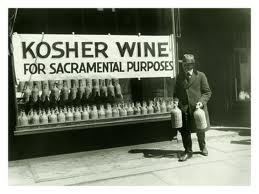
I had the wonderful pleasure of joining Lettie Teague, a columnist for the Wall Street Journal's On Wine, for a pre- Passover tasting. Here's an except from the piece and a link to the article:
The
2010 Domaine Netofa ($20) from Galilee, a Rhône-style blend of Syrah and
Mourvèdre, had lots of lush dark-berry fruit and spicy aromatic notes. Rabbi
Brenner took note of the rabbinical seal on the back label. The wine had been
approved by the Jerusalem High Council, he announced. "I recommend this wine
for all sects of Jews," pronounced Rabbi Brenner.
Of the two
Binyamina wines, we actually preferred the mevushal bottling of the 2009
Reserve Syrah, a grape that seems to do particularly well in Israel. At $19,
though, it wasn't equal to the great bargain that was the 2009 Yogev
Cabernet-Petit Verdot blend, a well-balanced, pleasant red with soft tannins
whose $12 price tag made it not only the best buy of the tasting but
"perfect for communal Seders," according to Rabbi Brenner. Rabbi
Brenner reserved his highest praise for the 2010 Recanati Wild Carignan Reserve
from Galilee, which, at $52, was also the most expensive red. It was also the
most polished—elegant and lush with penetrating dark-fruit aromas. Rabbi
Brenner's advice? "This is the wine you should serve when the Rebbe visits
your house."
For the entire article, click here.
27.3.12
Skittles on the Seder Plate

My friend Jenna, who is a grad student in religious studies at UNC, posted a photo of a Skittles and Arizona Iced Tea communion from the Kairos Church in response to the murder of Trayvon Martin. (see above) I loved the sentiment, and this got me thinking about what we might do in the Jewish community to mark the latest tragic display of injustice and disregard for human life as we remember our time of enslavement in Egypt. (According to Midrash, one of the horrors of Egypt was that the Egyptians cared more about property and construction projects than human life.)
Skittles on the seder plate? Not exactly kosher. First off, last time I checked Skittles culinary backstory, they were made with a beef-derived, non-Kosher, gelatin. (there are apparently some made in the UK that are kosher) Second, they certainly are not Kosher for Passover because of the corn syrup and other products. Also Arizona Iced Tea is loaded with corn syrup - not kosher for passover.
But if there is still no movement on this case by next week, then there is nothing wrong with printing out pictures of Skittles and Arizona Iced Tea and placing them on your seder table.
25.3.12
Hashtag Sigh
Not sure how or why I wrote this song, but I started with the line "Tried to friend you on Facebook" and the rest kind of poured out. Thanks to my friend and neighbor Ben Weiss, who liked the "hashtag sigh" line and encouraged me to write a few more verses and to my friend Richard Stern who liked it when I said "cellular phone." You guys inspire me - I hope you like the results.
21.3.12
Men and Mikvah

The blog of Boston's community Mikveh is cleverly titled "The Mikveh Lady Has Left The Building."
A little piece I wrote, titled "Three Dips Before the Wedding: Men and Mikveh" is currently running here.
5.3.12
Is Every Sperm Sacred? Jewish Perspectives on Contraception

26.2.12
Address to Hebrew Union College - JIR in New York
Posting my February 23rd address to the faculty and staff of Hebrew Union College - Jewish Institute of Religion in New York City. To listen click here.
Gender Trouble: What We Are
Teaching Boys About Being Men and Why It Matters
Rabbi Daniel S. Brenner
Address to Hebrew Union College –
Jewish Institute of Religion
February 23, 2012
First of all, I want to thank Rabbi Shirley
Idelson for extending the invitation to be with you today and to thank Rabbi Carol
Bailin who is a board member of Moving Traditions, and whose exhibition Bat
Mitzvah Comes of Age will be opening March 6th at the JCC of Manhattan. With the
permission of the teachers who are hear today, I want to share a few thoughts
about the Torah portion.
I am the kind of person who
believes that the gender lens is a necessary perspective when reading any part
of the Torah. Or at least that is what I thought before I started to review this
week’s parsha. Planks and lumber and sockets and joints… it is a cross between
Ikea and Home Depot. It is Lego Land meets Shinto Shrine. Not only is the
parsha not about gender - it is not about living beings. It is about the
mishkan, a physical structure made of wood and melted metal and various fabrics
and the most exciting part is a pair of gold winged angels that remind me either
of Ceasar’s Palace Casino or Valentines Day iconography. As my daughter would
say, there is not much “drama” to draw from. And then, in yet another episode in
my rabbinic life of Saved-by-the-Aggadah, I learned that the creation of the Mishkan
actually has an allegorical meaning that is profoundly gendered:
Commenting on the verse “And let them make Me
a sanctuary, that I may dwell among them” (Exodus 25:8). the Midrash in Exodus
Rabbah 33:1 tells a story. A king has a daughter who he is marrying off to the
ruler of another land. When the king’s son-in-law wished to return to his own
country with his new wife, the king would tell his son-in-law: “I cannot say to
you, ‘Don’t take her,’ for my daughter is now your wife. However, I ask of you
that you wherever you go to live that you have a chamber ready for me that I
may dwell with you, for I cannot leave my daughter.” So too, the Midrash
explains that God said to Israel: “I have given you a Torah from which I cannot
part, and I also cannot tell you not to take it. But I request that wherever
you go, make for Me a house in which I will be able to dwell.”
Now we have some rich and rather
intense gendered imagery to play with. Some initial thoughts: First off, the
Torah has just become a young woman, in this case the King’s daughter. The
Mishkan in this allegory is a room set aside for a man that exists in relation
to this woman. Wherever this woman travels, the Mishkan, the chamber, must be
near her.
But isn’t it ironic that the
daughter, who is symbolic of Torah, has no voice? She has no divrei torah. Only
the father speaks, and while he grants freedom to his son-in-law, the young
woman remains an object, or to be more accurate, a desired object. In the back
of my mind I see a masculine God played by James Gandolfini who grants partial
freedom to his daughter, but ultimately does not let her out from under his
shadow.
These are all the initial ideas
that dance in my mind when I read the text with a gender lens. But this is not
the Torah that I want to teach. My goal this morning is to suggest a different
gender lens with which to read this text. One that is related to the lives of
daughters and sons today and one which will tell us something about the meaning
of Torah and Mishkan.
But before I proceed, I want to say
a few words about how I started thinking differently about gender and Torah.
Twenty years ago, when I was a
young rabbinical student at the Reconstructionist Rabbinical College, I had the
great fortune to study with the late Tikve Frymer Kensky. Z’L For those of you haven’t come across Tikvah in
your studies, she was a true trailblazer. She received a doctorate from Yale in
1977 in Assyriology and Sumerology and was one of the first women to academically
challenge the male-dominated world of Biblical Scholarship. She was the first
woman named a scholar of distinction by the Jewish Publication Society. In
Tikvah’s class and at her occasional storytelling sessions on her back porch,
we learned that the roots of Biblical Judaism were not to be found in patriarchy
alone, but in a synthesis of feminine and masculine mythic idioms including lactating
trees, fertility goddesses, and birthing stones as well as the warrior-Gods and
storm gods of the region.
While many of us were busy writing new,
gender-neutral liturgy, Tikvah was busy sharing four -thousand –year-old Hebrew
amulet inscriptions for pregnant women. She loved to talk about ancient
understandings of sexuality and probably the best moment in her class was when
she was lecturing on circumcision and she said: “I’m not a very good artist, could
someone come up to the board and draw an uncircumcised penis.”
It was a wonderful time in Jewish
life in terms of feminist scholarship and new thinking about gender, sexuality,
and Jewish ritual. Leslea Newman came to class one day and read us from her new
book about Heather and her Two Mommies. We all had dog-eared copies of Judith
Butler’s Gender Trouble. And every baby girl born in the community would be
welcomed with a naming / foot washing / brit / new song ceremony that seemed to
go on for five hours. Needless to say, towards the end of rabbinical school
there were lively debates about the merits of Xena Warrior Princess.
That was twenty years ago. And for two
decades now, we in Liberal Jewish circles have taught that gender is a social
construct, that gender is something artificially bifurcated, that gender is a
performance. And you know what, it is all true. There isn’t something essential
about gender. Male and female is not wired in our brains like some blue and
pink software and gender is not in the hardware either. As we all graduated rabbi school, eager to
transform liturgy and communal practice, we envisioned a world that was Gender
free, gender neutral, post-gender.
And then we met teenagers. If you
have not spent time lately with this fascinating sub-species of human, they
tend to travel in packs, subsist on snack foods, communicate through cryptic
digital clicks and spend a great deal of time covering up their various skin
conditions with products extracted from botanical elements. Two of these
creatures happen to live under my roof.
My colleagues and I had thought
that gender roles were not as big a deal anymore for teenagers because we were
diverted by news stories that seemed to point in that direction. We heard about
the impact of Title IX on women’s sports. We knew that girls were doing better
in middle school, even in math. Gay-Straight Alliances were making high school
bearable for LGBTQI students. We had thought that things were getting better and
then as we met teens that were struggling to conform to unrealistic gender
expectations, we started to realize that things might actually have gotten
worse in the last twenty years. We heard a lot of confusion from teens as well
as stories of prescription drug abuse, eating disorders, date rape, an the
messy business of “friends-with-benefits.” Things were certainly not getting much better
for girls, things were getting much worse for guys, and LGBTQI teens were
facing new types of harassment.
Looking at the generation, we
asked: How did a group of parents who all went through school influenced by
feminism end up raising teens who are struggling under the weight of gender
expectations? Did they change? Did society change? What happened?
I want to suggest that yes, the
world is changing, and I want to speak specifically about how teen boys are dealing
with those changes.
The first element of change is
related to the rise of niche marketing and new media. I remember reading a
story in 2008 about how executives had decided that the Disney Channel was
losing tween boys so they launched Disney XD, a channel for tween boys that
would show more violent shows. Or as they said, more “action.” Teen Nick saw a
similar opening in niche programs for tween girls. They added more “drama.” Nintendo
saw a new market and started to program video games specifically for girls, and
developed successful new lines of games that encouraged girls to care for
ponies or make sushi or make sushi for ponies while their brothers hunted down uni-browed
terrorists. Rather than expand gender possibilities, the explosion of new media
actually affirmed old gender lines. The result is that as we have seen the
amount of screen time rise significantly in the lives of tweens and teens,
we’ve also seen the emergence of fairly gender-segregated virtual spaces. With
this has come a rapid rise of both reality television and pornography. These
related genres solidify gender roles and give teens a constant stream of
supposedly “real” men and women, straight and gay, who model what it is like to
be a “real” man or woman. Rather than watch actors in sit-coms or dramas who
can ridicule and subvert their gender roles, in reality shows teens watch
non-actors who vie for popularity in highly gendered environments. For more
than ninety percent of teens their primary source of sex education is hardcore
pornography. This media is providing them with a steady stream of what it means
to be a cool guy or a hot girl. Educators and parents are now stuck with the
task of helping teens to think critically about a world where they are tuned
into what Ariel Levy has dubbed “raunch culture.”
A second factor is related to a
decline in what I would call social intimacy. Robert Putnam’s work in the late
nineties described how communal organizations were breaking down in the
U.S. Since that time, the rise of online
social networking has certainly increased, but the amount of time that teens
spend with friends in what was once called hanging out, away from parents, has been
in sharp decline.
This has particularly been a
problem for teen boys, a dynamic beautifully chronicled in Niobe Way’s Deep
Secrets. She writes about the decline in intimate friendships among boys as
they go through high school, and the sense of loss and isolation that many boys
feel. Couple this with a world in which boys are losing out to girls
academically and fewer boys are going to college and boys are spending
increasingly more time than girls online and you get a picture of the
challenges that we have with today’s teen boys.
What does this have to do with the
Jewish community and how we raise men?
We have an opportunity. More than
70% of Jewish boys have a bar mitzvah, and most of them do so with the support
of rabbis, cantors, and educators.
My own sons went through this
recently. They learned about a social action requirement, they learned how to
give a dvar torah, they led services and leyned Torah. But while they briefly
discussed adulthood, they were never asked what it meant to be a man or what it
meant to be a Jewish man.
What happens during that year and
the next is the time when we have the power to provide guidance for our
community’s teens and to give them peer-centered skills that will help them
during their most dangerous years. In the past year, I have seen how the right
mentors can teach them that guys have more emotions than anger, that having a
six-pack is not going to bring them true happiness, that there is a difference
between kissing someone and kissing with someone. How we train mentors and how
we reach teen boys will be part of the lunch hour discussion that I hope that
you’ll join me for as I speak a little bit about the work that Moving
Traditions is doing with girls in over 100 Reform synagogues in the U.S. and
with boys in over 20 reform communities.
But now it is time to return to the
Midrash. A father marries off his daughter. The son-in-law moves her to his
Kingdom. The father-in-law says “build me a chamber” so I can dwell with you.
I want to read the text from a
gender perspective that is not philosophic, or political, but is deeply
feminist. One of the great insights of second wave feminists was the argument
that we must dredge through the personal, the embodied and messy stories, on
the path to get to the universal. To quote the brilliant Rachel Adler: “I
choose to walk through stories searching for the waters of salvation: the
hidden springs of laughter that well up once we are willing to relinquish the
suffocating security of the dominator or the smoldering grudge of the victim.”
So, I’d like to read this Aggadic
text not as a rabbi or a scholar, but simply as the complicated guy that I am,
to walk through my own story for a moment.
My beloved, Lisa, grew up very
close with her father. The more I got to know Mel, my father-in-law, the more I
appreciated hanging on the back porch with him and drinking beers or shooting
hoops with him in the driveway. Even though golf is not my thing, playing golf with
Mel was a delight. He would always ask me how work was going and help me with
the challenges it brought. He called me boychik. He was proud of me. He wanted
me to be happy. Then I watched Mel face a long battle with lung cancer that
included a decade of chemotherapy treatments and three brain radiations. During
that time, he wanted to be near Lisa and our children as much as he could. We
lived an hour away.
“I ask of you that you wherever you
go to live that you have a chamber ready for me that I may dwell with you.”
We set up a comfortable bed for him
downstairs. His last Yom Kippur he stayed with us and rested on that bed. Through
Mel’s many visits, and our visits to see him and my amazingly resilient mother-in-law,
I got a picture of what kind of father I want to be to my daughter, and I got
to think about what kind of grandfather I might be if I merit grandchildren
someday.
Approaching the text this way, as a
man, Torah and Mishkan are transformed. I am the son-in-law in the aggadah and Torah
is the wisdom I benefit from each day that I am fortunate enough to deepen my
relationship with the person in this world who knows me best. And G-d knows
that revelations happen in the conversations that are the most difficult to
hear. My Torah and I are in dialogue. Mishkan is the place I set aside for the
visits with my mentors, living and gone, who guide me and push me to be a
better partner and father, brother, son, and friend. On my journey they are
with me as long as I take the time to ready the chamber.
I want to conclude with a few words
of theology. The aggadah is a story of a
God who feels the pain of distance and articulates the desire to be close
again. It is a story of a God who once built a home for us who is now
heartbroken and lonely and calling on us for company.
Many of the teens in our
communities are feeling the pain of distance and longing for a closeness that they
once felt. Our role as rabbis and teachers is to build the space, the Mishkan,
for them to gather and to reconnect with Torah. May we each merit the
opportunity to contribute to such a tent.
19.2.12
New Kosher Special

Every once in a while you take risk on an off-the-beaten-track restaurant that has escaped the orbit of Yelp and you discover some unexpected deliciousness. This was the case today, as my family made an excursion to Elizabeth, New Jersey for some Kosher Chinese cuisine. The name of the joint was New Kosher Special and it was replete with specials -- in particular a lunch combo for under six bucks that we all agreed was the best value of any kosher place we have ever been to. We've been to pricey kosher chinese in NY and Florida...the food in Elizabeth was better. My sons are still raving about the Teriyaki Beef. I had the dish above, a Cashew Chicken with extra spices.
The place is low-budget - paper plates, plastic forks, dingy tables, a fan affixed to the wall. But the great food and wonderful manager made it feel like we had discovered a hidden treasure. If you go, bring cash, some quarters for the meters, and an empty stomach. Enjoy!
Subscribe to:
Posts (Atom)