6.10.08

Meeting Elie Weisel


Yesterday I had the fortunate opportunity to speak with Professor Elie Weisel. He was invited by Rabbi Shmuley Boteach to speak at Michael Steinhardt's home and beforehand I sat next to Professor Weisel in the living room. Needless to say, I was very uncomfortable. Most people were coming up to him and telling them how much they enjoyed Night and he would just smile and say thank you. So I decided to skip the accolades and just ask him what he was working on. Weisel responded that he has just completed his 50th novel (in French) "The Mad Desire to Dance" and that he wasn't slowing down. I asked him if he is reading the younger writers and he told me that of all of them he thinks Nathan Englander is the best. I recommended that he read Todd Hasak-Lowy's The Task of this Translator, which he had not heard of, and I promised to send him a copy. Then we talked a bit about Iran -- he was rightfully upset about Larry King giving a place of honor to Ahmadinejad. We spoke a bit more about my current work and then other people came up to him and heaped on more praise.


When he spoke to the crowd at the party, he told one particularly moving story about the funeral processions of his youth. As the body was taken from the house to the cemetary on the funeral bier, a man would parade before the coffin with a charity box yelling out "Charity saves from Death" Weisel wondered -- How is that so? even those who give charity die!


He asked a friend who said -- charity saves from the sense of being dead while one is alive.


He extrapolated from that teaching that to be truly alive is to see beyond the self. It was a beautiful message for these ten days of repentance.


29.9.08

Rosh Hashannah Poem


And in the Seventh Month


And in the seventh month,

on the first day of the month

ye shall have a holy convocation

ye shall do no manner of servile work

it is a day of blowing the horn

and honey cake

and ye shall wear a decent suit

and have trouble parking

and wave to the Freidmans, the Kleins, the what's-their-names,

and the various other members of the tribe who you haven't seen for a year

and who you honestly don't really like that much

and there shall be much responsive reading

and little legroom

and ye shall look repeatedly at thine timepiece;

and minutes shall pass that seem like hours,

and all shall go home and nap.

and ye shall dream of preparing a burnt-offering for a sweet savour unto the LORD

one young bullock, one ram, seven he-lambs of the first year without blemish,

and you shall look down and find that you are wearing a robe that is too short,

your private parts are uncovered,and ye shall feel a draft in thine loins.

And ye shall awake to the sound of horns

the intro of National Public Radio's All Things Considered

And ye shall find that the new year is full of surprises,

The housing market is booming,unemployment is at its lowest point ever,the streets of Baghdad are quiet,the coexistence university opens in Hebron,cancer can be cured with a mix of nicotine patches and pineapple juice,and the feature story is all about the Jews:

They've stopped worrying.

A sweet savor unto the LORD.

Gates of repentance now open


I was interviewed for this holiday piece in the Seattle Times about posting regrets online....a great idea by two guys who work with JConnect in Seattle.

8.5.08

Happy 60th!!!!!!!!!!!!!


The 60 Bloggers project is a co-production of Jewlicious.com and the Let My People Sing Festival . It is published daily for 60 days to celebrate Israel’s 60 birthday. My contribution to this project is below. Chag Samayach!


Eretz Yisrael
 
Eretz yisrael
Motherland
Lactating 
tahini
Lukewarm goldstar
Sachlab
I once curled up under a cliff in the machtesh 
thousand star hotel 
Awoken by the sound of wild gazelles
as they jostled for a choice spot by the spring
 
Ancestral womb land
Your children are spread out from taipei to toledo, 
But they never forget you, tongues cleaving, 
a spoonful of peanut butter, right hands withering
left hands waved into the air swinging like they just don’t care,
feet dreaming of return.
 
You have nice rocks.
Our rock and our redeemer,
Your dust on our toes
A permanent condition
The axis mundi,
Jerusalem
Belly button 
Umbilical cord to the other side
We sing halleluyahs into your cracks.
 
To sip a turkish coffee under the shade of your palms? 
 
To sip a fresh squeezed orange juice on your cliffs that look out over the great sea? 
 
To sip the cool mountain water cascading off your northern waterfalls? 
 
We drink in your mother’s milk, Zion,
At pretentious cafes on streets named for city boy socialists turned farmers, 
Plastic chairs in kibbutzim gone condo 
On the porch eleven flights up overlooking the rarely open museum of the Diaspora,
On the Ottoman era tiled rooftops of your old cities, 
We lift our glasses to you. 
 
Tectonic shifting, trans syro african rifting
Each of your hills and valleys sing a new song unto the Lord on high.
 
May our dwellings on you be open tents
May we give thanks for your yearly gift of dates, 
The goodness of the land. 
And may we forever merit to not only have our 
bones lie in your rocky soil
but to watch our toddlers crawl across your grassy places.


-Daniel S. Brenner


7.5.08

Jerusalem Post Post

Thanks to Andrew S-C over at the NJ Jewish News, there is this interview with your truly running in the Jerusalem Post about the difference between indoctrination and inspiration. Thanks Andy!


29.4.08

Long time no Post


Friends,

My apologies for not blogging! I have been working on the item below for the past many moons and hiring staff and flying back and forth from one place to the next. In the meantime, good old Reb Blog surpassed 10,000 unique visitors. Not bad for a part-time scribbler. So here is an update of my least six months:

Best Show I saw: Passing Strange
Best Book I Read: The Brief Wondrous Life of Oscar Wao by Junot Diaz
Best Movie: Praying with Lior
Best Music I listened to: Faces Down by Sandre Lerche


A $25 million boost for Birthright alumni

Jacob Berkman

Birthright Israel and the Jim Joseph Foundation are hoping a new $25 million initiative can help keep Birthright Israel alumni engaged once they've returned from their trip.


NEW YORK (JTA) – Birthright Israel and the Jim Joseph Foundation are hoping a new $25 million initiative can help create more Jews like Lindsay Litowitz.

Litowitz, 25 and now living in New York, essentially was an unaffiliated Jew when she graduated from the University of Florida in 2004. A free 10-day trip to Israel with Birthright shortly afterward drastically changed her career and Jewish path.

After the trip, she enrolled in graduate school at George Washington University to study economic development. But at a concert in Washington run by the local Birthright alumni community, something clicked: Why was she studying development in western Africa, Litowitz recalls thinking, when she knew so little about her own Jewish culture and language?

She took a leave of abscence from graduate school and moved to Israel for five months on a work study program with Livnot U'Lehibanot, which brings foreigners to learn about Israel and work on community service projects.

Upon returning to the United States, she went to work for Livnot. Now Litowitz is a consultant to several Jewish initiatives, including Birthright.

"It never would have occurred to me to go to Israel; it wasn't on my radar," she said. "Birthright was the gateway and the portal."

Birthright has sent some 160,000 Jews aged 18 to 26 to Israel since it was launched in 2000. It is widely seen as more successful than any modern Jewish identity-forming project in its ability to reach non-Orthodox young adults.

But the challenge has been to sustain the momentum of the Birthright trip and keep the participants from around the world involved in Jewish life. Last summer it created Birthright NEXT to focus on follow-up programming for alumni.

Over the next five years, the Jim Joseph Foundation will give Birthright NEXT some $12.5 million in matching grants to create a network of grassroots organizers to help bring alumni between the ages of 22 and 30 into the Jewish fold, the foundation announced Monday.

"Here you have 20-somethings who developmentally are at a point where they are making very key decisions about who they are, how they will live Jewishly and how they will identify, and this is an extraordinary opportunity to reach them," the executive director of the Jim Joseph Foundation, Charles "Chip" Edelsberg, told JTA.

Combined with another $5 million that the foundation is giving to fund BIrthright trips, the $17.5 million grant is the largest by the foundation since it started making gifts last year.

Birthright alumni still enrolled in college show they are more likely to engage Jewishly once back on campus. Some 40 percent enroll in Jewish studies courses, according to a 2005 study by the Maurice Cohen Center for Modern Jewish Studies at Brandeis, and Hillel says that some 50 percent of its participants are back from Birthright.

But follow-up with alumni of post-college age has been more difficult.

For many years the budget for post-Birthright programming was a relatively limited $1.5 million per year, according to Susie Gelman, the board chair of the Birthright Israel Foundation.

Professionals stationed in key communities reached about 13,000 alumni per year, primarily through the existing community infrastructure and the Jewish federation system.

But Gelman, a strong advocate of the Jewish federation system and the incoming president of the Jewish Federation of Greater Washington, said, "The federation system and Jewish organizations in general have found it challenging to engage many young Jews, especially the unaffiliated."

The Jim Joseph Foundation grant will allow Birthright Israel to build on what existed previously, she said.

"We recognized that we needed additional resources in order to reach out to more alumni and offer them a wider variety of opportunities to explore and strengthen their Jewish identity and sense of connection to Israel and to the Jewish people."

The new Birthright plan will train local directors and station them in 15 cities with high concentrations of Birthright alumni. Each director will hire five fellows, themselves Birthright alumni, in an outreach effort to other past participants.

Birthright's vice president of education, Rabbi Daniel Brenner, will oversee the program nationally.

The program will hinge on how successfully the fellows can gauge what other alumni are doing socially, what they want Judaically and whether they can connect them with the local director.

Brenner says many of the fellows will most likely come from the pool of Americans who have led Birthright trips as counselors because they already have laid the groundwork for grassroots organizing.

"People did not recognize that the most important, energized young leadership from Birthright has already self-identified as such," he said. Some have led five or six Birthright trips and have hundreds of participants in their Facebook profiles.

In some cases, Edelsbeg said, the local directors also will develop their own programming, but the goal is to help Jews who normally would be intimidated by walking into a synagogue or other Jewish institution on his or her own to find outlets within the existing Jewish community.

"It is very clear that the role of the local director is to help young Jews get connected to what already exists," he said. "We do not want to create a parallel stream of Judaism. That is inefficient and irresponsible."

The grant is a natural for the San Francisco-based foundation as it builds upon several other grants, Edelsberg said, pointing specifically to its recent $10.7 million gift to Hillel to create a network of "campus entrepreneurs" charged with finding Jews on campus who do not affiliate with Hillel houses and connecting with them on their own terms.

Until now, Birthright follow-up has consisted of a patchwork of local outposts and periodic programming that even those within Birthright acknowledge has missed a significant percentage of alumni.

Some fear that the $200 million spent to date on Birthright trips might not be reaching its full potential -- a fear compounded by Birthright's desire to increase the number of participants to 40,000 per year over the next five years. That comes to an annual cost estimated at $104 million.

"There is a sense of urgency and importance to this," Edelsberg said. "We want to maximize the investment that has already been made."

The new initiative also will build on successful models like J-Connect Seattle, which is run out of the Hillel of Greater Washington. J-Connect Seattle emphasizes pre-trip and post-trip programming to help build a community out of the 40 young Jews who are on each Birthright tour bus in Israel.

Michael Steinhardt, who founded Birthright with Charles Bronfman, said the Birthright NEXT initiative indicates a shift in focus for Birthright.

Birthright initially was concerned only with getting as many young Jews to Israel as possible and struggling to pay for those trips. But the success of the trips and an influx of money from the likes of casino mogul Sheldon Adelson, who has pledged $60 million for Birthright trips over the past year and a half, has allowed the organization to focus on follow-up as well.

"It is an acknowledgment that from the time we started in 2000 until very recently, the amount of energy and money available for Birthright follow-up was shamefully little," said Steinhardt, the chair of Birthright NEXT. "It wasn't a focus."

Both Birthright officials and observers see the new program as an opportunity to use Birthright as a de facto clearinghouse for outreach.

"The number of people who have gone on these trips means that there is a social network of alumni, regardless of whether they are involved with existing Jewish organizations or not," said Len Saxe, the director of Brandeis University’s Cohen Center for Modern Jewish Studies.

Saxe has conducted the lion's share of research on the effect of Birthright on its alumni.

"The significance of the Jim Joseph gift to Birthright NEXT," he said, "is that there will now be resources to help this nascent and evolving network of alumni organizations."

2.1.08

And now....more poetry!!!

Alt-Neu Jewish Music
Clarinet pointed at the ceiling as if to send a blow dart of klezmer tranquilizer into the heart of the Holy Blessed One
The beret wearing drummer tzit-zitzes his hi-hats
The accordionist crying through his palms
Bass man just thumps thump thump thump thump thump thump
And now the squeal of the mad violinist, curly hair aloft, high on heavenly crank,
A bow-stroked eulogy for eighty thousand lost souls, the murdered violinists.

Behind the concert hall in Chestocowa, in the back lot, under thirty feet deep of dirt and bones, the snuck-in under his jacket violin of a buried Jew begins to vibrate
Hummmmmmmmmmmmmmmm
?Now ain’t that sweet music

9.12.07

My interview in Maariv


Hebrew readers can check out this interview in Maariv
which covers the global hannukah event. The one line that I cracked up about was "the idea was born from the feverish mind of Rabbi Daniel Brenner
for some odd reason they put my photo in as an inset with Mattisyahu ...


and now i can breath

Here is a photo from last night's 8 Hannukah Worldwide event at Webster Hall in NYC. We had around 1,000 folks cramming the dancefloor - a great turnout. The other highlight of the weekend was seeing my beloved's play produced at Montclair State University. Katrina: The K Word was a tour de force -- it captured the intensity, heartbreak and bravery of Katrina survivors. Kudos to Lisa, Sue, and the entire cast and crew!

29.11.07

Crazy Worldwide Hannukah Party

Over the last few months I've been working with the good people over at JDUB records on "The 8" which is a worldwide Hanukkah event this coming December 8th. We are starting to get some
nice press on it


http://www.youtube.com/watch?v=TLatWKvAkHQ

15.11.07

Jews for Biden


Clergy are not supposed to endorse political candidates and I certainly am not about to do so on a blog, but I'm watching the Democratic candidates debate right now and I have to say that while the front runners are all smooth talking - and Richardson is winning a few points for comic edge - Senator Biden is coming across as the strongest of the lot. He is rude at times, I admit, but he speaks from experience and has a knowing smile and knows how to work across party lines. I was searching to see how he relates to Jewish issues and I found this old press release:

It seems like there are quite a few Jews for Biden...

March 12, 2002

Biden Receives Prestigious "Tree of Life" Award From Jewish National Fund

Wilmington, DE -- In front of a packed hall of more than 400 prominent Delawareans at a gala dinner, Senator Joseph R. Biden, Jr. last night received the prestigious Tree of Life Award from the Jewish National Fund (JNF) in recognition of his lifetime of work and devotion to the well-being of the State of Israel. With Republican U.S. Senator John McCain on hand to congratulate him, Biden accepted the award on behalf of millions of Israelis confronted by daily acts of terrorism.

“There can never be any excuse or explanation for terrorism against innocent civilians,” Biden said. “But I believe it is always darkest before the dawn, and I am convinced Israelis and Palestinians will find a way out of the current conflict. Those committing terrorist acts are desperate, and they know the path of violence is not supported by a majority who want to live normal lives.”

NY SUN article about my latest work

A newly hired vice president who is leading the new outreach effort, Rabbi Daniel Brenner, estimated the portion of Birthright Israel alumni who do not now engage in Jewish life at 60%.
But he said his new program presents an "amazing window of opportunity" — both for the Jewish community and for the many who have lost touch with it.
So far, he said, the new initiative has enough funding to support a $3.3 million annual budget, which it hopes to double next year, as well as a growing pool of interested young Jews. Online social networking is one recruitment device outlined in the strategic plan, and Birthright Israel already has one victory.
Rabbi Brenner said that a YouTube video modeled after the well-circulated "Obama Girl" video — this one is titled "Rosh Hashanah Girl," which features a Birthright alumna, singer-songwriter Michelle Citrin — has been watched by 402,000 people.
"You really cannot argue with 402,000 views," Rabbi Brenner said.


Here's the link to the NY Sun piece that ran last month. I meant to put it up.

12.11.07

update from nashville


Loyal readers of Reb Blog,

Please forgive me for taking so much time in between posts! The reality is that taking on a new job has been both wonderful and exhausting and spending time managing an international project and crafting a three year plan for a major educational effort has given me little time to write and reflect on the blog.

There have been many moments that I wanted to post in the last few months -- great audio highlights worth a few words like the sounds of my neighbor Jon Luks tap dancing with Paul Shapiro's Latin Jazz band Midnight Minyan, hearing my friend Ayoub from Face to Face on WNYC, and listening to Michelle Citrin play at PLP in Santa Monica. I also stumbled on a collection of old Israeli dance vinyl...a few classics from Moshiko that are priceless.

I also wanted to write about the show birthright israel monologues which I have been involved in producing. It just went up last Monday night at a burlesque club called the Slipper Room on the Lower East Side and a few of the actors have written about the experience. Vanessa Hidary directed, and she has been exceptional to work with on this project.

While I have not been writing plays or poems, I have been going to a lot of theater, and am looking forward to one show at Montclair State University coming up next month that is based on people we met in New Orleans last Spring. (Go Lisa!)


And one more thing....if you have a minute, check out this amazing animation of John Coltrane's Giant Steps.
It is what I thought "music television" would be like before MTV came on the air. brilliant.
Enjoy.


15.9.07

From the NJJN

New Jersey rabbi's new role begins where free trips to Israel leave off


Rabbi Daniel Brenner has been named vice president of education at birthright israel.


by Johanna Ginsberg
NJJN Staff Writer
05.31.07

As head of interfaith programming for a Presbyterian seminary, Rabbi Daniel Brenner was often on the receiving end of jibes of the "What's a nice Jewish boy like you¦" variety.

And yet, so comfortable had he grown at Manhattan's Auburn Theological Seminary, he acknowledged, that he had to be asked twice before considering a position as vice president of education at Taglit-birthright israel.

"The first time I said, ‘Look I can't do this. I'm deeply immersed in my work at Auburn," said Brenner, a resident of Montclair.

But that was before Israel's war with Lebanon last summer. After the war, when Rabbi Irving "Yitz" Greenberg, his former mentor at CLAL — The Jewish Center for Learning and Leadership, made the second call, Brenner's internal focus has shifted to Israel, where he has family.

"The war got me thinking," said Brenner. "I really want to be part of that dream. I want to stand in solidarity with my family in Israel. Birthright israel is one way American Jews can have the opportunity to stand in solidarity with Israel."

He also began thinking about the Jews he was interacting with through his work at Auburn.

"I did a lot of work with Jews in the context of Muslims and Christians," he said. "Young Jews are trying to carve out their Jewish identities. And they are not finding their places in the Jewish world but somewhere else."

Birthright israel would enable him to access a generation of unaffiliated Jews and help them to connect. "Oh, yeah, this is why I became a rabbi," he remembers thinking to himself as he attended his first birthright israel board meeting.

Brenner begins his new position June 1 and will focus on programs for birthright israel alumni. The program offers free or heavily subsidized trips to Israel for young Jews who have not been there previously on organized tours.

Administrators at the birthright israel Foundation were thrilled with the new appointment. "Rabbi Brenner brings a glowing sense of Jewish excitement to whatever he touches," said foundation president Jay Golan. "He has a broad range of Jewish experience and great respect in dealing with people across the spectrum, whether politically from right to left, or denominationally from Chabad to Reform. He finds commonalities and bridges the gaps in an unusual way."

"For me, it's all about this generation," Brenner said. "How has the Jewish world changed and how are these young people, 18 to 26, seeing the world? How do they do Jewish when they return from these trips?"

Brenner has already crafted his vision for how they might want to "do Jewish." It begins with involving the alumni themselves — 15, to be exact: young professionals from cities across North America — who have already said they want to be more involved.

They will spend three weeks this summer at a retreat in Israel, brainstorming about how to reach the 30,000 young people who go on birthright israel trips every year. The list already includes gatherings like retreats, Shabbatons, and social circles based on common interests, as well as such organized activities as a national day of service learning or a national initiative to celebrate Hanukka.

"I don't want cookie-cutter programs, but options," he said. "I hope as a result of my work, we'll see a flowering of a new generation getting involved in Jewish life."

Birthright israel already offers some post-trip programming, but at a level its founders and leaders consider patchwork at best. Administrators anticipate that Brenner will ramp up the effort.

"Daniel will turn his attention to making sure the vast majority of recent alumni get invited to something within six to eight weeks of their return," said Golan. "Being contacted quickly and with something exciting is a huge logistical piece we are not doing, or only doing on a patchwork basis…. Daniel will move to develop national curricula and programs that can travel to wherever people need them, whenever they want them."

Transcending divisions

Brenner, who serves as part-time rabbi at the String of Pearls, a Reconstructionist synagogue in Princeton, is also a published author and playwright. In 2001, he was named one of the upcoming generation's "best and brightest" by the New York Jewish Week. At that time, he was serving as senior teaching fellow at CLAL- The National Jewish Center for Learning and Leadership. As director of Auburn's Center for Multifaith Education, he applied CLAL's pioneering work in promoting pluralism among Jews to programs involving Christians, Muslims, and Jews. In the aftermath of 9/11, Brenner created programs that he hoped would transcend prejudice and social divisions and build a renewed sense of civic cooperation among the faiths.

Brenner has no illusions about the challenges he faces in his new role, but he's looking forward to meeting them head on. Many birthright israel participants have not become b'nei mitzva — 20 to 30 percent, according to the organization. About 60 percent are unaffiliated or very marginally affiliated.

"This is a group I love to work with because they ask really tough questions. There are no assumptions with this group," he said. "You really have to be absolutely clear about why someone should like to be Jewish. Birthright israel reaches young people at a stage of intense questioning. The Jewish community must step up and speak to them."

Brenner expects to travel back and forth to Israel often, which would make finding time on the pulpit difficult. He will step down from the pulpit at String of Pearls, a decision over which he said, "I'm heartbroken, but I'll have to focus all my energy working with birthright."

Brenner also expects to bring a certain level of intensity to his work.

"I have 100,000 alumni to serve," he said.

But one thing he'll always have time for is writing. Brenner is a frequent contributor to Jewish and religion publications, and his fifth professionally produced play, Driving School of America, premiered at New York's Vital Theater in 2004. "I could never stop writing," he said. "In my heart, I'm a writer. I write for my mental health and my sanity."

What he's most looking forward to is learning about his new constituency. "This will give me an incredible window into the lives of American Jews as they live and not just the core Jews who are raised in our institutions."

11.9.07

Beliefnet Archive's Brenner's Blogs

It is a grey, rainy day on this date of mourning in Manhattan. Six years seems like a long time --- last year the five year mark was a significant milestone and I felt the gravity of the day as I stood outside Trinity Wall street. This year I was rushing off to work, watching a hundred umbrellas bobbing on the sidewalk - life as usual. we move on.

I went to read my 9/11 pieces that I wrote after the attack and that's when I found that there's now an official Rabbi Daniel Brenner page over at Beliefnet, the leviathan of religion websites. Here's what you can find:

Honoring Our Fathers After you've done the ties, after-shave, and golf balls.By Rabbi Daniel Brenner
Build a Mosque at Ground Zero . . . and a church, and a synagogue. An inter-religious center would be a testimony to America's spiritual power. By Daniel S. Brenner
The Future of Foreskins Circumcising my own sons brought me physically closer to them. Why are so many parents willing to forego this important bond? By Daniel S. Brenner
Little Plastic Torahs, Big Revelations On the holiday of Shavuot, we show our love for the Torah--a love not just of the text, but of the very Torah itself. By Rabbi Daniel Brenner
Light in Dark Times This year, dedicate each night of Hanukkah to a set of heroes from the past several months. By Rabbi Daniel S. Brenner
Rebuilding in the New Year A parable for Rosh Hashanah. By Rabbi Daniel S. Brenner
Double Blessing This year is a time to reflect on several types of miracles--American and Jewish, ancient and contemporary. By Rabbi Daniel S. Brenner
Learning from Suffering When we confront death, we confront life's most important--and toughest--questions. By Daniel Brenner, Tsvi Blanchard, Joseph J. Fins, and Bradley Hirschfield

7.9.07

New Poems for Rosh Hashannah

I’ll Stop the World and Melt With You

Same story every year.

The rich man

A big sinner

The pious rabbi

Alone in his study.

How can I atone?

We will go to the blacksmith.

Put all your gold in the fire

Melt it down

Dip in a spoon and drink the molten metal.

The rabbi’s shaky hands tie a blindfold around the rich guy’s head.

Are you ready to pay the price for your sins?

A spoonful of marmalade.


New Year’s Buzz

I can not open the honey.

Liquid Nails

That was what they used to lay the linoleum in the breakfast room.

Thus begins this five thousand seven hundred something new year

congealed crud blocking natural sweetener

I wanted it to be another way

That I would have prepared

Brand new jar,

purchased off a beekeeper,

marked with a homemade label

Busy B Farms

or

Natural Buzz

or the best of all, a label-less product,

little bits of honeycomb suspended in light brown goo.

But I worked up to the very last minute.

Blocked out the sound of each morning’s shofar blast,

Opted out of the self-reflection thing altogether.

Should I take a hammer to the thing?

Immerse it in ice water?

Drill a hole in the top with my Black & Decker?

My beloved hands me a floppy circular piece of rubber

I twist

Open up, Gates of Repentance.

4.9.07

Poem for Rosh Hashanah


Who Shall Live

A layer of Saran Wrap
Protection
A shpritz of lemon juice
Secret
These red delicious will remain white
Without sin.

Who shall live?
And who shall dye their hair?
Who by pestilence?
Who by Pilates?

Nobody knows.
What is this ‘Jeopardy’?
Well it’s
Another year, spaceship earth has made one more elliptical orbit
-Planetarium narrator.
And I’m still here.
We’re still here.

God is the King
May the thorny crown be replaced by something more comfortable,
Say with a sweatband,
Perhaps in size six.

Heed the cry of the shofar!
Heed the blast of the shofar!
It is the cue for the kitchen help,
off with the Saran Wrap.

- Daniel Brenner

24.8.07

Five Truck Stops South

About 5 truck stops South of my hometown of Charlotte, NC (past the Gafney peach and about a dozen Fireworks stores) is the road to Clemson. That road takes you to the Georgia mountains on the Appalachian trail. That is where I was last week, in Clayton, for a Hillel-sponsored conference at Ramah Darom. 

Many highlights to report, one being the opportuinty to lead services with Josh Nelson, 
a young Jazz educator and Jewish music composer. The service we lead was the "creative liberal" 
one - and after I gave a short drash on "tzedek,tzedek tirdof" he broke into the 
Police's "Message in a Bottle." 

You might be thinking that this was corny. But at that moment, overlooking a calm lake and summer evening sky, it was the opposite -- it was serious and moving, and many people remarked that it was the high point for them in the davenning. 

Josh is both an accomplished guitarist and a singer with serious range. He's got a new album coming out with Universal - slickly produced pop with a Jewish message. Check him out


24.7.07

The Third Temple

It is Tisha B'av and I write from the city that sits alone. Jerusalem, last night your streets were filled with pilgrim mourners and police forces, pillow-carrying grandfathers and acne-riddled flag waving teenagers, one guy I saw driving through the Jewish quarter on a Kawasaki. Yid on a Mamluk bike traversing ancient Roman sidewalks. Rak po.

So what is my prayer? I would like one day to see the security fence torn down and the concrete and metal from the rubble be formed by a group of artisans and architects into a third temple. A new har habayit in Jerusalem built not from hewn stones, but out of the very symbol of the fear and division between peoples. Large bulldozers ascending the mountain with their sacrifices, cement blocks of watch towers, highway barriers, barbed wire. This I offer up, a new mishkan.

It will all be transformed, swords into plowshares, the barbed wire untangled to create a mosaic of the milky way galaxy, an olive orchard, a single human cell - twelve mosiacs that line the entry way to the new throne of the Divine Presence. Gates will be on all sides of the new Temple, welcoming those from the Egyptian and Babylonian highways, EZ Pass, and we will bring even those small symbols of fear - security alarm sirens, locks, bicycle chains - all of us pilgrims with wheelbarrows full of such things. we will walk, singing songs of redemption, or simply being content with the new silence. the sound of footsteps is music enough.

For the new Tisha B'av we will feast on Leviathan, spilling a few drops of wine for every year that passed that we let our reptilian blood rule our lives. We were like dreamers, we will say, in the new Eden.

3.7.07

mei yerushalayim eir hakodesh

yes, i blog from der judenstadt! last night I was at the Lab in Jerusalem- old train station now performance space to see Shem Yichud, a midrashic theater piece by Basmat Hazan Arnof...a deeply religious piece about loneliness, prayer, marriage, omelettes. Afterwards, we went to Hadag Nachash's free show...a thousand Israelis of all ages shaking their tucheses to the groovy sounds of funk and hip-hop and Shanon Streit yelling "Nehenim v'mapsutim?" Hebra-Arabic for "y'all having a good time?" Kein v'aiwa.

27.6.07

A Poem

At Any Given Hour
Inspired by Cesaria Evora

At any given hour men are arguing about the path of a ball.
In, out, goal no goal, each has his opinion.

One says “Let’s get back to work”

At any given hour women are talking about their bodies.
Blood, no blood, sick not sick, each has her own opinion.

One says “It is what it is – it will be what it will be”

And soon it is evening.
They come together over food.
Some talk and some are silent.
A few are laughing.

A man beats his wife because of money.
A man sings a lullaby to a crying baby while his wife sleeps.
Across town a woman slaps a child because of lying.
A woman changes the bandages from her husband’s surgery saying ‘Poor thing.’

A few are laughing to themselves.

Water flows down drains, carrying with it secrets, clues, revelations, remnants.
Something creaks, something crashes, but mostly there is the hum of machines and cars and silence.

The great rush of lovers is felt tonight, the wind roaming the streets to give flight to their hair, the young people are behind bushes in the parks, jeans muddied, locked in every embrace imaginable.

The aide from the hospital lifts the spoon to her lips and she tastes.

Yes. Mint chocolate chip.

20.6.07

A photo of Sasson Klezmer


Here they are funkifying the bamboo-ed corner of my suburban lawn behind my humble abode.
Notice the faux grass carpet underneath the drums - remnant of my dreams of a mini-golf course.
Thanks to Jon for the PA system and to Daniel for recommending them.
btw i clicked this photo with my phone - the T-Mobile Dash. I highly recommend this slim, ugly phone to all those who crave multi-tasking devices. I can even play chess on the thing.

Reb Blog is back!


My apologies to all Reb Blog readers for the hiatus. Many things are cooking in my life that have prevented the usual posting. The big news is that after four wonderful years I am leaving Auburn to return to the Jewish world, taking on a new position at the birthright israel foundation and working on an initiative that will foster Jewish community and connection for Jews between ages 18 and 30. There's an article in NJJN on my job switch tommorrow. I am going to miss the multifaith adventures, but G-d willing I'll be having some new ones of my own as I wander the streets of Jerusalem this summer.

In other news, two weeks ago my wife Lisa and I went down to New Orleans, which was an incredible experience (photo to the left is from a NOLA jazz club - thanks Matthias for showing us around!) One highlight was a Soul Rebels concert and an interview we did with the drummers during the set break. Lisa is working on a documentary theater piece about recovery efforts.

And last week we had the band Sasoon Klezmer from Seattle play at a little party celebrating Lisa's new job at Drew University and my new gig. They were funky and freilech. Check them out if they are playing near you.


http://www.njjewishnews.com/njjn.com/053107/njNewJerseyRabbi.html

28.3.07

Jews, Carrots


Check out this wonderful new blog on Jews and Carrots. And matza. And organic produce. And just about everything else to do with "How a Jew Eats." (please steal this book title!) Yasher Koach to Hazon for launching this project.

23.3.07

The Decemberists in March


Last night my beloved and I hit the Loew's Theater in Jersey City (A fantastic palace of Cinema built in 1929...not yet restored...grand and decaying like Asbury Park's Paramount) and we heard the truly wonderful band The Decembrists. We have dug their sound for a long time, but had no idea that they could put on such a raucous, whimsical and at times frenetic live show -- there was a hurdy gurdy, a two person whale puppet, alot of rock lighting wackiness and two sing-a-longs. All this from a band that sings most often about the tragic deaths of folk, mythical or historical characters. Don't miss them when they come to your neck of the woods.

20.3.07

The Corruption of Power


In the days before I jetted out to Arizona for our annual Rabbinical Convention, I hosted Mikey Weinstein, the Air Force Academy graduate who is in a one man battle against the Dominionist Evangelicals in the U.S. Armed Forces, for a meeting at Auburn. He wrote a book "With God on Our Side" about many of the abuses that have been carried out by certain Evangelical officers in the military. He argues that these folks have taken over the military bases and are imposing their agenda on all soldiers.


The first thing to know about the guy whose name reminds most folks of a Life cereal commercial is that Weinstein is a tough guy. His language is coarse, and his physical presence reminds one of the boulders that one sees along the highway headed towards Colorado Springs. He’s in “combat mode” and the one time JAG is now suing the U.S. government in order to stop the Evangelicals. “They are as serious an enemy as Al-Qeida!’ he says. He does not mince words.

It was a bizarre day -- After meeting Weinstein, I went to Marat/Sade, a play from 1968 about a group of mentally ill inmates of an institution putting on a play for the upper-classes about the French revolution. I was lucky to get a ticket to the current production at the Classical Theater of Harlem. (Thanks to my beloved) The show was performed by a mixed race cast who were encaged in a chain-link fence that not only occupied the theater in the round style center stage, but the aisles as well. Imagine the cage as a “w” and the audience sitting in its two valleys. The “inmates” stared at you from behind the fence. They drooled. They scratched themselves. Snot ran down the noses of a number of inmates. And as the play began, the show became a parade of blood, feces, and urine while we witnessed beatings, rape, and murder. My beloved was hunched over for more than half an hour, convincing herself not to vomit. It was certainly the most violent and riveting experience I’ve ever had in a theater.

So what is the connection between the rise of dominionist theocrats and the parade of abuse in Marat/Sade?

I'm not so sure...but the themes of martydom, control, and violence are all in the mix. A very strange day.

26.2.07

Judaica Uganda


This weekend at B'nai Keshet in Montclair, a member of the Ugandan Jewish Community
JJ Keko, taught three songs during services. He did Psalm 92 and 93 and taught a L'cha Dodi. JJ is one of the singers on the Smithsonian Folkways recording (see link). It was great to meet him and to learn from him. We also got to drink the coffe he grows as part of Thanksgiving Coffee Company.

14.2.07

Nation-state Debate

The Nationalism Project is a nifty site which explores debates on the origin of the concept of nation and nationality. I just happened across it while working on the curricula for Face to Face.

9.2.07

Frantic Turtle

I was down at the Bowery Poetry Club last night for a show by Jake Marmer's outfit Frantic Turtle. Marmer, sporting a Woody Allen themed t-shirt waxed poetic about fish soup, gabbais, russian novelists, shimon bar yochai while his laid back band did lots of reggae like things. It was all truly mesmerizing and wonderful. The spirit of Ginsberg lives on.

Here's a link where you can hear their fine work: Frantic Turtle

Afterwards, we were treated to another wonderful act, Plain Hex Quartet.

2.2.07

Mazel Tov Dad!


Saul Brenner, Lifetime Achievement Award in Judicial Politics
Professor Saul Brenner will receive the Lifetime Achievement Award from the Law and Courts Section of the American Political Science Association (APSA) this fall at the annual meeting of the association in Chicago. The award was announced by Melinda Gann Hall, Professor of Political Science at Michigan State University and chair of the selection committee.

Dr. Hall stated: “The Law and Courts field is particularly distinguished by the number of outstanding scholars who consistently have contributed much over the course of their careers. Thus, [Dr. Brenner has] reason to be particularly proud of [his] achievements and this award.” She continued: “ From a personal perspective, I know that I speak on behalf of all the committee members when I say that we appreciate the extraordinary impact [Dr. Brenner’s] work has had on our own. The Lifetime Achievement Award is the only such award given by the APSA for those who study judicial behavior and law."

Dr. Brenner has been at UNC Charlotte since 1965. He is a past recipient of the First Citizens Bank Scholars Medal in 1994, which honors the best scholars at UNC Charlotte. He is the senior professor in the Political Science Department.

1.2.07

A Gem from Reb Rilke

Once the realization is accepted

That even between the closest of human beings

Infinite distances continue to exist

A wonderful living side by side can grow up

If they succeed in loving the distance between them

Which makes it possible for each to see the other

Whole and against a wide sky.

-Rainer Rilke

29.1.07

Torah Mi Garden State


Reb Blog is now featured on My Jewish New Jersey! a nifty new portal of rabbinic rants from the capitol of golus.

25.1.07

Tragically Hip

Nextbook has got a little feature in their Religion section that riffs on my recent Revealer piece. (And while you are there, I recommend reading Shalom Auslander's wacky memoirs.)

Here's their comment:

Services for the Tragically Hip

Questionable efforts to make shul cool continue with indie rock rabbis and Synaplex, a program that organizes Saturday "Tour de Torah" bike rides and "Jewpardy" sessions. The WSJ's Naomi Schaefer Riley takes a critical look at the latter, and gets lambasted by Rabbi Daniel Brenner for arguing that the non-Orthodox need "consultants to sell their religion."

24.1.07

Amiri Baraka hearts Israel


Or maybe not. So last night I got in a public verbal scuffle with playwright/poet Amiri Baraka, who was speaking after his show The Dutchman at Cherry Lane Theater. Baraka, questioned by another audience member about his controversial 2001 poem once again repeated the fabrication that he "read" that 4,000 Israelis were told to "not go to work that day" -- he said that he read it in Ha'aretz and he could not understand why the Jewish people would not let him cite something that he read in an Israeli newspaper (online, so he says) and he said that "now that they are criticizing Carter maybe they'll leave me alone."

I told him that as a rabbi who assisted families in the days after 9/11, and met with many Jewish families at Chelsea Piers and the Armory during that week, that his poem was particularly hurtful. I told him that there was not a single Israeli or Jew that was told not to go to work. I also said that in a free scoiety that there is a place for being critical of Israel, but that his poem simply poured salt into open wounds and did more harm than good. It certainly failed to convince most people that the appropriate response to 9/11 was a critique of empire.

He responded that he had spoken with Foxman and "Nixon's Jewish lawyer" and that he had to prove that he was not an anti-semite and that it was all ridiculous because he was once married to a Jewish woman and his children are Jewish and he had Jewish friends....etc, etc. (He failed to mention that he abandoned his Jewish wife and kids around the same time the Dutchman was produced in 1963)

More importantly, what he did not do was admit that he might have been mistaken. Instead he choose to perpetrate his harmful conspiracy theory. I figure that at this point protecting his fabrication is a matter of pride.

So what did he "read"?

After 9/11 Hezbollah's Al-Manar television did run a report that was on the web which contained a twisted report based on the Israeli ministry's estimated number of Israelis who work in New York City. Rather than claim that 40,000 Israelis work in NYC, Al-Manar reported that 40,000 Israelis did not go to work.

My theory? Baraka got confused....Hezbollah- Ha'aratez...click...click...and a minute later he decides that Israel knew that it was going to happen and might even have been behind it.

The play, by the way, was well done. Baraka was once a great writer and he certainly absorbed Allen Ginsberg's style and transformed it in his own brilliant way.

But forty three years later he is simply a stubborn man with a myopic political vision whose dream of a Black Arts movement has become a faint footnote in history.


18.1.07

Iconia


I was interviewed yesterday by Menachem Wecker for Iconia his blog about religion and art. I speak a bit about Ben Shahn, one of my favorite artists, and what 'religious art' means. To the left is a Shahn piece representing the three stages of a man's/dog's life. The eyes alone are riveting.

12.1.07

multifaith rabbi strikes again

The Jewish Week's Directions Magazine is running my latest piece on multifaith work. It is included in a collection of visions for the Jewish future. You can read it here.

A Bridge Across

About four years ago,the late Rabbi Balfour Brickner invited me up to the Stephen Wise Free Synagogue to meet with a small circle of his friends whom he affectionately dubbed “the woolly mammoths.” Sounds like a good name for a rock band, I thought. It was Balfour’s title for a nearly extinct species — octogenarian male religious leaders who could recall the street protests of the 1950s and ‘60s and hadn’t lost an ounce of righteous anger.

I recall the woolly mammoths because making any suggestion regarding the future of inter-religious relations begins with tracing their footsteps. I was grateful that these battle-scarred clergymen shared their life stories with me and offered me a window into America’s multifaith history. Born during the first great era of America’s interfaith awareness, they were accustomed to the ecumenical dialogues and Thanksgiving celebrations of the National Conference of Christians and Jews.

But during the late ‘50s and early ‘60s, the time when the woolly mammoths were freshly minted rabbis and ministers, they went from dialogue to activism. Most in my generation have heard of Rabbi Abraham Joshua Heschel’s crossing of the cobblestone river of Broadway to speak with the tall steeple Protestants about the need to support civil rights and oppose the war in Vietnam. But he was not alone in crossing boundaries. All of the woolly mammoths had been arrested for acts of civil disobedience (Rabbi Brickner even got in trouble for a few scuffles with counter-protesters), and they had attended numerous prayer vigils and ecumenical gatherings in the name of combating racism, ending war, and promoting a more equitable social vision.

Fast-forward to my life as a rabbi who directs a center for multifaith education in Manhattan. Those tall steeple churches can hardly get a minyan. But hundreds of emergent Evangelical churches and Pentecostal revival halls are hopping. Muslims from Istanbul to Indonesia have established over 60 vibrant religious communities in New York, and Hindus, Sikhs, and Buddhists are all becoming significant players in the life of the city. At the same time, the political landscape has become increasingly complex, riddled with divisive issues such as how to respond to terror networks, how to navigate the culture wars over sexuality and reproduction and how to react to a growing population of undocumented workers. Building coalitions becomes difficult, especially when it is unclear to whom to speak.

Here is a test that I would not recommend actually conducting: Ask any Jewish person you know to name three rabbis in New York City. No problem. Ask them to name three local politicians or business leaders. No problem. Now ask them to name three non-Jewish religious leaders in New York City. My bet is that unless you are talking to a Jewish professional then you’ll have a hard time finding folks who can do it.

My point is this: At the same time that we are more integrated than ever into the life of this city, we are more segregated than ever — New York has a Jewish mayor but only a handful of Jewish kids now attend New York City public schools. The younger generation sees this vividly — the great success of having new Hillel buildings on college campuses also means that Jews have physically removed themselves from the other religious communities on campus. It is a mixed blessing. For all our love of promoting good inter-religious relations, and our desire that non-Jews understand Jewish history and Israel, we often place actual partnerships with non-Jews very low on our list of communal priorities.

So what should Jewish involvement in multifaith work look like in New York’s future?

First off, we need to learn from some of our success stories. The fact that there is no annual or even biannual meeting where lay leaders, rabbis, nonprofit professionals, teachers, and others who have built successful interfaith partnerships get together to address this issue is a glaring absence. We need major players to step up to the plate and contribute the creative thinking and resources to make this happen on a large scale.

Because New York’s religious diversity has radically expanded, a new effort to proactively locate and reach out to new communities is in order. Jewish organizations that focus on public affairs and community relations have limited time and resources. The real potential is to tap all Jewish institutions in New York that are open to new partnerships and encourage their lay and professional leaders to reach out to institutions from other religious traditions. We need to connect to Mexican Pentecostals, to Bangladeshi Muslims and to Sri Lankan Buddhists.

I envision that the Jewish Community Relations Council or a similar organization could launch a citywide effort to track and organize such partnerships and the Jewish press could devote a monthly section featuring the many different expressions of inter-religious bridge building. Ideally, efforts to reach out will be accompanied by an expansion of multifaith education across the Jewish curriculum. Adult education centers, like the Skirball Center, the 92nd Street Y, the JCC in Manhattan and others have already invited in both Muslims and Christians to speak.

This is a good first step. Now every Hebrew school and day school director should ask the question, “What are we teaching our students about the religious other? And why?” Often the most basic school projects — like one I heard about between Manhattan’s Heschel School and the Al-Iman School in Queens — can build meaningful ongoing relationships between communities. If we really desire to be understood by our neighbors and build a city where religious diversity is seen as an asset, then we need at least a hundred of these projects to be nourished.

Remember the righteous anger of the wooly mammoths? Their basic insight was that education and dialogue are not enough. Today, we must not let complex political issues get in the way of building inter-religious partnerships with Christians, Muslims, Hindus, Buddhists and others that respond to the growing inequities in our city and our world. I’ve seen impressive efforts to reform the criminal justice system (I-CARE), to respond to disease (NY Alzheimer’s Association), and to address genocide (Save Darfur) that have harnessed inter-religious partnerships.

The more we build communal partnerships that advance shared social and political goals, the better position we will be in to work on the more divisive issues. That includes issues regarding human rights, economic disparity, sexuality, bioethics and citizenship, as well as issues regarding the safety, security and continued vitality of Jewish communities around the world and in Israel.

Finally, a hope. I envision multifaith engagement that not only transcends prejudice and social division but builds a renewed sense of civic responsibility. The civic pride I felt five years ago, as New York came together in the wake of 9/11, is one of the most powerful forces of community and good will that I have ever experienced. It reminded me of the words of Proverbs 11:11 “Through the blessing of the upright a city is exalted.” When done right, multifaith work not only reconnects us to the wisdom of our own traditions, but renews our faith in our neighbors. In doing so, this work can give birth to a world in which our promises to care for one another are put into action.

Rabbi Brickner, who wrote a fantastic book on gardening two years before he died, would say that it is a good thing that many in the Jewish community have already tilled the soil and planted the seeds. Rather than let inter-religious tensions with Muslims, liberal Christians, conservative Christians and others mar the headlines of the future, it would be best for Jewish communities to water the seeds of these relationships and nurture a new crop.

The Revealer


Reb Blog is taking baby steps into the world of media criticism. I have a piece in The Revealer
today commenting on the idea of market consultant- speak making its way into the mouths of Jewish organization leaders. My piece is entitled: Consulting Jews? Thanks to Jeff Sharlet, the editor (and Buddha Killer) who runs the Revealer show.

11.1.07

Pharaoh's Daughter: a Midrash on Liberation


The Jewish Week is expanding their roster of rabbinic commentators and Reb Blog got called up to the plate this week. (thanks Jonathan)

Here's my drash on this week's Torah portion:


Shabbat Shemot

Revolution By The Nile: Defiance In The Global ‘Egypt’


Fifteen years ago, I was a passenger on a rusty bus headed out of Egypt. Like many of the young Jewish college kids who had found their way to Cairo on a tourist visa, my weeks in Egypt were a revelation to me. I saw thousands of families living in aluminum shacks in an old graveyard. I saw throngs of children impacted by water-borne diseases begging in the streets. I heard screams in the night during a power outage. That was all behind me as the bus winded its way through the Sinai and up ahead I could see blue and white flags waving in the mid-day desert sky. I was headed back home, back to the comfort of my friend’s apartment in Jerusalem, the café on the corner, the cozy chair on the terrace.

The rise from poverty to wealth is one way we continue to view this week’s parsha. We read: “And they cried out to God because of the hard work” [Ex. 3:23], and we are thankful for the outstretched arm of the Holy One that allowed us to elevate our economic status from bottom rung worker to land of milk and honey homeowner. We lean on pillows and sip wine. But sitting on that porch chair, I couldn’t help but flashback to the thousands of poor Egyptians I saw, and wonder: When will they have an “Exodus” of their own?

This concern was at the heart of “liberation theology,” the title given to the South American Christian movement of the 1970s that had its roots in Marxism and used Exodus as a springboard for revolution. Exodus, for Peruvian priests like Gustav Gutierrez, was not about leaving for a promised land, but about transforming nations that had become “Egypt,” into something more than slave camps. Bob Marley sang in 1973: “Today they say that we are free, only to be chained in poverty. Good God, I think it’s illiteracy. It’s only a machine that makes money. Slave driver: the tables are turning!”

To say that Marxist revolutions have not produced such great results would be an understatement. But still, I read this week’s parsha and ask myself: Is there something written in our Torah that is not about leaving Egypt, but about transforming it?

I needed the 1,800-year-old comments of Rabbi Shimon Bar-Yochai to realize that it is all there in Chapter Two. Chapter Two recalls how Yocheved, Moses’ mother, hides her child and then asks her daughter Miriam to place the boy in a basket on the river Nile. Then the text goes into crisp detail about Pharaoh’s daughter’s discovery of the child. And this is where Rabbi Shimon Bar-Yochai’s teachings come into play.

In the Babylonian Talmud, in Sotah 12b, Bar-Yochai asks: Why is Pharaoh’s daughter going down to the Nile? He states that she is going down to the Nile to both metaphorically and literally “cleanse herself of her father’s idolatry.” When she asks her servant to fetch the baby, her servants “warn her that she is violating her father’s decree.” And how does she respond? She miraculously “stretches out her own hand.”

I like to read this together with Ibn Ezra’s 12th century commentary on the verse “And she called his name Moshe, and she said: Because I pulled him out of the water” [Ex. 2:10]. First Ibn Ezra notes that the daughter of Pharaoh gives this adopted baby a Hebrew name, and clarifies that the name she chooses, Moshe, actually means “He who pulls.” Then Ibn Ezra suggests that either she “learned Hebrew or she asked a Hebrew about the name.” So, in other words, not only does she seek to cleanse her father’s idolatry and violate his decrees, but to name his grandson with the provocative Hebrew name “He who pulls.”

The 13th century French scholar Hizkiya Hizkuni understood this to be a bit of prophecy — she thinks that Moses will “pull” the Jewish people out of Egypt. But we might take his idea even further: Moses will also pull apart the system of oppression that suffocates Pharaoh’s daughter and the Egyptian people. Like the German Christian martyr Sophie Scholl who opposed the Nazi regime, Pharaoh’s daughter engages in a defiant act that both reaches out with compassion to the oppressed and aims to save the soul of her nation. In the end, her act destroys not only her violent father and his entire army, but the system that made Egyptians into snitches, prison guards, and taskmasters.

So what do we learn from this week’s parsha? And how does it relate to the continued presence of “Egypt” — slavery, poverty, and hard labor - of our day? Are we truly free when four million people (most of them women) are being trafficked between borders? I sense that the Torah includes Pharaoh’s daughter’s story to teach us that it is not only the Jewish people who suffer under the “Egypts” of the world and must boldly defy the Pharaohs, but all those who are forced into submission or silence. Even those in the royal courts. The Torah reminds those of us in cozy chairs that we all must go down to the Nile, cleanse ourselves of the desire for God-like power, and take the abandoned poor into our arms.

29.12.06

Sitting Shiva for James Brown


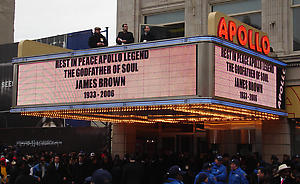
I was up at the Apollo Theater in Harlem last night to pay my respects to the Godfather of Soul, James Brown. While I did not get to view his body - the crowds were seven blocks long and there was a guest list for the viewing during the hours I was there- I did speak with a couple of local women who had spent all day waiting in line and had just come out who were lamenting the fact that he had a "European mortician do his hair." While they loved his last outfit, especially his shoes, they felt that the "White media would focus on his hair." Their words reflected so much of the fear of easy stereotyping that Brown's presence evoked - he was raw, super-bad, a sex machine - although he could bring it down and transform into a smooth soul singer for a ballad, he always had a hard-livin' rasp in his voice. I happened to be standing next to a young Black man from Rock Hill, South Carolina, and we started talking. He was shocked to see a man in a yarmulke in front of the Apollo, and when I told him that I was from Charlotte he just flipped. "A Jew from Charlotte in front of the Apollo? damn. I'll remember this day." I also met an Elder from a local Apostolic Church. When I told him I was a rabbi, he asked if I could use my clergy card to get us both inside. Note to self: find out where to get a clergy card.

James Brown was and will always be one of my musical rebbes. WFMU's Dave the Spazz did a wonderul tribute to Brown and tonight, before shabbes, I'll be playing my James Brown discs and vinyl to usher his superbad soul to the next world. Zichrono l'vracha.

27.12.06

Shaking Hands with Gerald Ford


The day was May 20, 1975 - I was finishing my first year of kindergarten with Mrs. Goldberg at the Charlotte Hebrew Academy and my father and I walked from our house down to Freedom Park in Charlotte, North Carolina to hear the President speak. Ford spoke at the bandshell, the same place I'd later hear the local Beatles-act the Spongetones and party with my junior high school friends. Afterwards my father rushed me down the center aisle, past the security guards, so that I could see the President. Ford gave me a big smile, reached out and shook my hand. Someone said to me "don't wash that hand, young fella!"

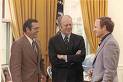
Since we always washed hands before we ate - for both religious and hygenic reasons - the comment seemed to me, little almost- six- year- old me, as being pretty stupid. And now I am happy that I did wash my hands. I pulled up Ford on the ol' Wikipedia today to see a color photo of the fromer President hamming it up with Donald Rumsfeld and Dick Cheney. Ford was the one who boosted both men's careers, giving them both the power that they would eventually abuse. Thankfully, Bob Woodward recorded him expressing his regrets.

I'm sorry for his family, and all those who mourn him, but I'm glad that I washed that hand.

15.12.06

5,000 Hits?


Yes, folks, more than five thousand people have now stopped by and spent a minute or two in the Reb Blog universe. Thanks for visiting!


Daniel

12.12.06

Hanukkah Poem


Bougies Pour Hanukkah

Picture Antiochus the fourth
A large and hairy Antiochus the fourth
Constipated
It has been three days
A loser on the Egyptian front

A thought bubble rises
I’ll go crush Jerusalem
Win a few style points
Get a fresh supply of women

Has the story been told from the pig’s vantage point?
The crate opens:
The Temple of the Jews? Yee-haw! I’m free at last!

Irony: the pig is the new Isaac.

No one can spell Hannukah, but it is easy to explain:
We eat this because you cook it in something else which reminds us of something else

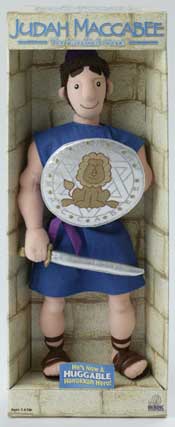
Judah Maccabee
Warrior-hero
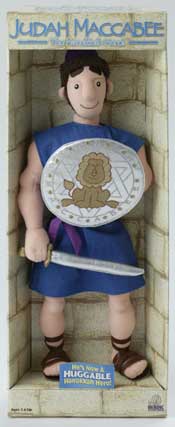
You are now hollow milk chocolate
Annually decapitated

At one point in the rebellion someone sat, face in hands, weeping:
My brother has been crushed by an elephant


-daniel s brenner

1.12.06

Oy Vey! The Rabbi is Gay! A Children's Tale for All the Conservative Synagogue Educators Who Might Need a Little Extra Help Next Week

A few years ago, I was fortunate to work closely with a Conservative Rabbi, Benay Lappe, who spent her years at JTS in the closet. I learned about the enormous pain that she went through as she had to hide her identity. She chose JTS beacuse she wanted to learn talmud, to be in an environment that cared about Jewish law, and to be part of a movement that valued tradition. I am sure that there are others like Lappe, in the Conservative movement and in Orthodoxy who are struggling to be practicing Jews and to be both psychologically honest and mentally healthy regarding their sexuality. In part, I wrote this story with them in mind. I hope that you enjoy it.

P.S. Thanks to Jewbiquitous, the Jewish Robot and BloggingBaby for blogging about this piece.

OY VEY! THE RABBI IS GAY!

A story for children by Rabbi Daniel S. Brenner

Last year, on Rosh Hashannah, our synagogue got a new rabbi.
"He's better than the old rabbi," Sarah Spitzer said to Bill Steinberg, " He's got a beautiful voice and he remembers everybody’s name!" Everyone was happy with the new rabbi.
Everyone except Mr. Birnbaum. Mr. Birnbaum always sat in the back row so that he could talk to his friends during services. He didn’t have anyone to talk to at home. His wife had died many years ago. But when he went to synagogue, he had many friends.
"I heard that the new Rabbi is not married" Mr. Birnbaum whispered to his friends Sarah Spitzer and Bill Steinberg, "Don’t you think that a rabbi needs a wife?"
"He’s so handsome, " Sarah whispered back, " I wonder if he’s dating anyone? I should give him my niece Karen’s phone number. Don’t you think so, Bill? " "Oy! I think that you two should try to stay out of other people's business", Bill replied.
But Mr. Birnbaum was curious. " Is he divorced? Does he have a girlfriend?" Mr. Birnbaum was suspicious. So he came up with a plan.
That night, he called Sarah Spitzer. Together they drove to the Rabbi’s new house. But they did not go into the driveway or ring the Rabbi’s doorbell. Instead, they parked around the corner from the Rabbi’s house, behind some bushes. Then Mr. Birnbaum and Sarah Spitzer crouched down low so that no one would see them.
From the car, they spied into the Rabbi’s house. They did not see the Rabbi. What they saw was a tall man, lying on a green sofa, reading a book.
"Who is that tall man?" Mr. Birnbaum asked Sarah. "And why is he in the Rabbi’s house?"
"Shhh! Keep quiet," Sarah said, "the Rabbi’s car just pulled into the driveway!" Mr. Birnbaum and Sarah Spitzer watched through the window as the Rabbi walked into his new house.
The tall man got up. He put down his book and gave the Rabbi a long hug and a kiss. A long kiss.
"Oy vey!" Mr. Birnbaum exclaimed, "the Rabbi is gay!'
"Well, I guess I won’t be giving him my niece Karen’s phone number!" Sarah joked.
"This is not a time for jokes," Mr. Birnbaum said, "This is serious! I don’t want our synagogue to have a gay rabbi. This is a family congregation!"
"Why didn’t he tell us that he is gay?" Sarah asked. Mr. Birnbaum was upset. "I don’t know." He said, "I’m going to call the board members right now!"
The next night, the board members had a secret meeting to discuss what they would do. Mr. Birnbaum suggested that they should fire the new rabbi and get someone who isn’t gay. Bill Steinberg said "There is nothing wrong with being gay, he’s a great Rabbi." Sarah Spitzer said: "I’m not sure what we should do."

Soon everyone in the congregation heard the rumor that the Rabbi was gay. The Rabbi noticed that people were not as friendly to him as they were before. Sarah Spitzer used to stop by his office to drink coffee and tell jokes. But now the office was quiet. The Rabbi asked Bill Steinberg what was wrong. Bill said "there are many rumors going around about your private life."
The Rabbi was upset. He spent many nights worrying about what he should do about the rumors.
The next week in synagogue, the Rabbi said, "I have a special announcement to make."
The congregation was dead quiet. "What will he say about the rumors?" they thought.
"I want everyone to know that I am a gay Jew," the Rabbi said, "and that I am proud to be gay. When I first came here, I was afraid to tell everyone because I thought that you would not understand. I know that it can be hard to welcome someone who is different into your community. But in this community everyone should have a place, every type of person and every kind of family. I feel that it is time for you to meet my partner, Michael."
The crowd turned as a tall man stood up and said "Shabbat Shalom" to everyone. No one moved. Many people felt uncomfortable. Then Sarah Spitzer stood up and said "Shabbat Shalom!" to Michael. Michael smiled and everyone in the congregation came up to him, wishing him "Shabbat Shalom!"
Everyone except Mr. Birnbaum. Mr. Birnbaum marched out of the synagogue.
Sarah followed him out. "Why are you leaving?" she asked Mr. Birnbaum, "I think that the Rabbi was brave to say what he said."
"Sarah," Mr. Birnbaum said, "this synagogue is changing too fast for me. I’m leaving!"
Weeks passed. Mr. Birnbaum never came back to the synagogue. Instead of talking with his friends in the back row, he stayed at home and looked through his old photo albums. One album he looked through again and again. It was from his wedding. It was a small wedding. Mr. Birnbaum’s parents refused to attend. They did not want him to marry Mrs. Birnbaum because she wasn’t from America. She was born in Egypt. But Mr. Birnbaum was in love. He married her and they were very happy together.
Sarah Spitzer and Bill Steinberg missed seeing Mr. Birnbaum in synagogue. His seat in the back row was empty. They spoke about him when they drank coffee with the Rabbi and his partner, Michael. "Someone should try to talk to Mr. Birnbaum," Sarah Spitzer told the Rabbi.
But who would try to talk to Mr. Birnbaum?
The Rabbi decided that he would try. He drove to Mr. Birnbaum’s house.
He rang the doorbell. Mr. Birnbaum opened the door just a crack to see who it was.
"Hello, Mr. Birnbaum!" the Rabbi said. But Mr. Birnbaum shut the door. The Rabbi rang the doorbell again. "Mr. Birnbaum, I want to talk to you! " the Rabbi exclaimed, "I know that you are still upset!"
This time Mr. Birnbaum opened the door. He waved his finger in the rabbi’s face. "I don’t want to talk." Mr. Birnbaum said. "I don’t want to have anything to do with you people!" "Why?" the Rabbi asked. "A man should be with a woman! Isn’t that the way that God meant it to be? How could you, a rabbi, live with a man?"
"I believe that God wants people to be with the people that they love," the Rabbi said, " and I love Michael. I was all alone before I met him. But Michael changed my life and I love him with all my heart and he loves me. That is what God wants."
Mr. Birnbaum turned his head and closed the door. He sat down in his chair and looked through his photo albums. As he looked through the pictures, he thought about some of the words that the Rabbi had said-- "God wants people to be with the people that they love." Mr. Birnbaum thought about his wife. He had once said those exact words to her. He said them on their wedding day.
The next week at services, as the Rabbi sang "Oseh Shalom," he looked out to the back row of the synagogue.
Just then, Mr. Birnbaum walked in the door. He found his old seat, sat down and whispered "hello" to Sarah Spitzer and Bill Steinberg.
As soon as the the service was over, Mr. Birnbaum walked up to the Rabbi.
He looked into the Rabbi’s eyes. "Shabbat Shalom!" he said. They shook hands.
This made the Rabbi very happy.
THE END

22.11.06

In Trust

Heather Grennan Gary, an Indiana based writer has an excellent piece on multifaith education in this month's In Trust magazine. It gives those outisde of the seminary world a better idea of the work that we do and the impact that it is having beyond New York. From the article:

This was particularly impressive for the Church of God group, which included several Latino students. "It was wonderful to have them go to a synagogue for the first time ever and meet a Latino rabbi," said Rabbi Daniel Brenner, director of Auburn Theological Seminary's Center for Multifaith Education in NewYork City, who helped organize the visit. "It broke so many stereotypes. They were really engaged and they felt very welcome."